Collections by topic / Plantation Society
At the start of the 19th century, a series of political and economic events altered the commercial balance of the island, until then dependent on growing coffee, cloves and cotton.
In 1804, the loss of Saint-Domingo, an important supplier of sugar for mainland France, opened up the market to Reunion, while reinforcing the island’s decision to adopt a plantation economy focused on export. The very destructive cyclones of 1806 and 1807 also led the plantation owners to develop this new crop, which little by little replaced spices and food crops, also weakened by the loss of the l’île de France (Mauritius island) in 1810, an important market for agricultural products from Reunion.
The island, which had to define its role in the new liberal and highly competitive economy in western Europe, saw an acceleration of its industrialisation with the import of machinery and engines. Madame Desbassayns’ two sons, Charles and Joseph, were among those who instigated these changes.
Having studied chemistry with Vauquelin, Charles Desbassayns set about improving a number of industrial processes. In 1815, he set up the island’s fourth sugar factory in le Chaudron in Saint-Denis. At the time, a number of commentators considered it to be the first true industrial sugar factory. In 1817, Charles’ brother equipped it with a steam-driven crusher, the first on the island. A large number of factories were built on the basis of his advice and under his direction. At the same time, Joseph Desbassayns set about developing a rational agricultural system which became a model for all large estates. His efforts to improve the growing of sugarcane led to his being given the title of Baron by Charles X, while Charles Desbassayns became president of the General Council and the Reunion Chamber of Agriculture.
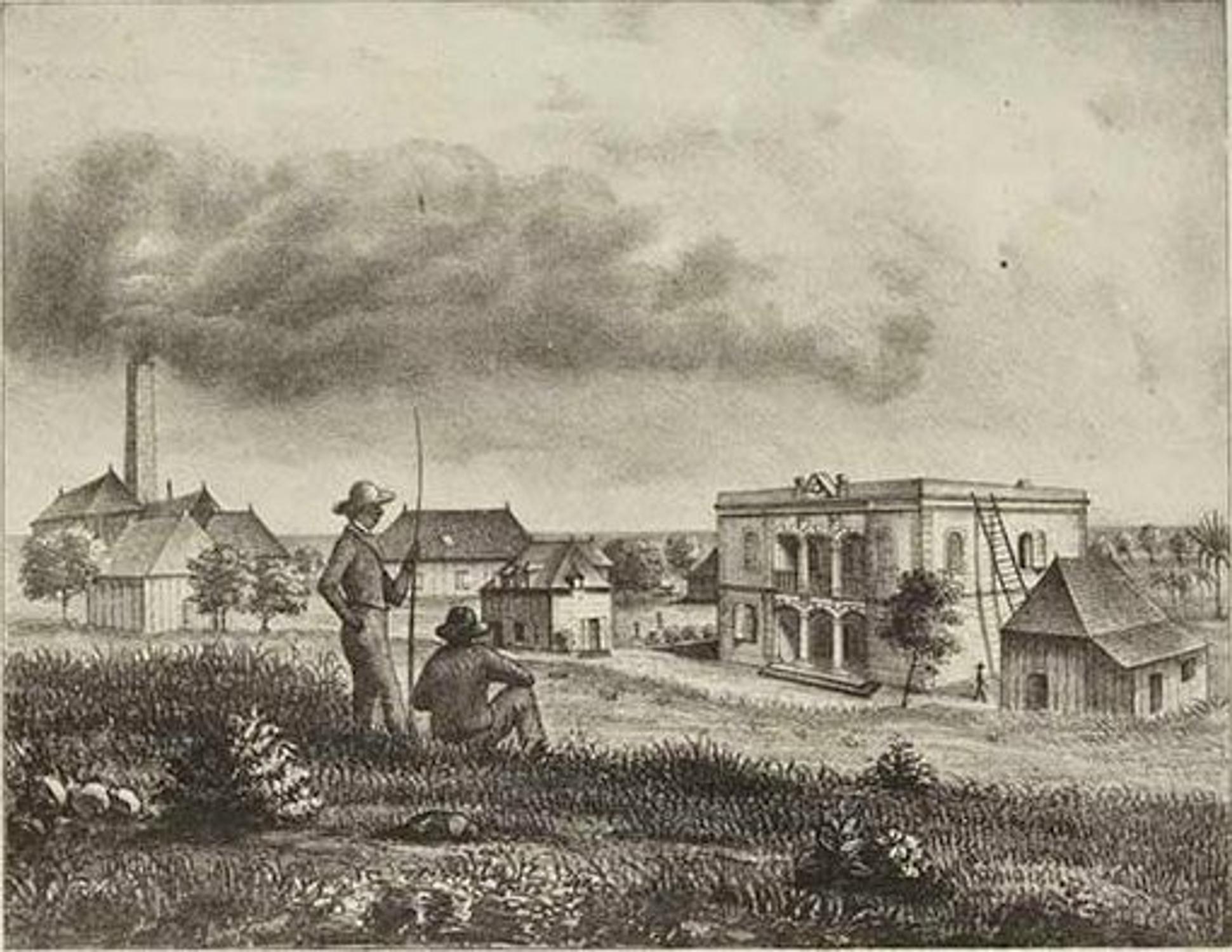
At the end of the 18th century and up to 1846, the Desbassayns estate, a plantation located in the district of Saint-Paul in the west of the island, was one of the island’s largest colonial estates, administered for over 40 years by Marie Anne Thérèse Ombline Panon-Desbassayns (1755-1846), a key figure of the history of Reunion. In 1845, when the prosperity of the estate was dependent on sugarcane, 295 slaves worked there: commanders, domestic workers, agricultural workers (‘Noirs de pioche’) and specialised workers (‘à talent’). On this lithograph, we can recognise the smoking chimney of the sugar factory. Antoine Roussin produced two lithographs of the estate: the 1847 version here represents two slaves in the centre, replaced by the representation of a charming lady wearing a crinoline and carrying a parasol in the later version, edited in 1883.
Inv. 1998.8.7.1
Souvenir de l'île Bourbon N° 36 / Habitation Desbassayns (St-Gilles)
(Memories of Reunion island N°36 / The Desbassayns estate, Saint-Gilles)
Engraving by Dureau based on a drawing by Louis Antoine Roussin
Lithograph, 1847
H. 23,6 cm x L. 33,4 cm
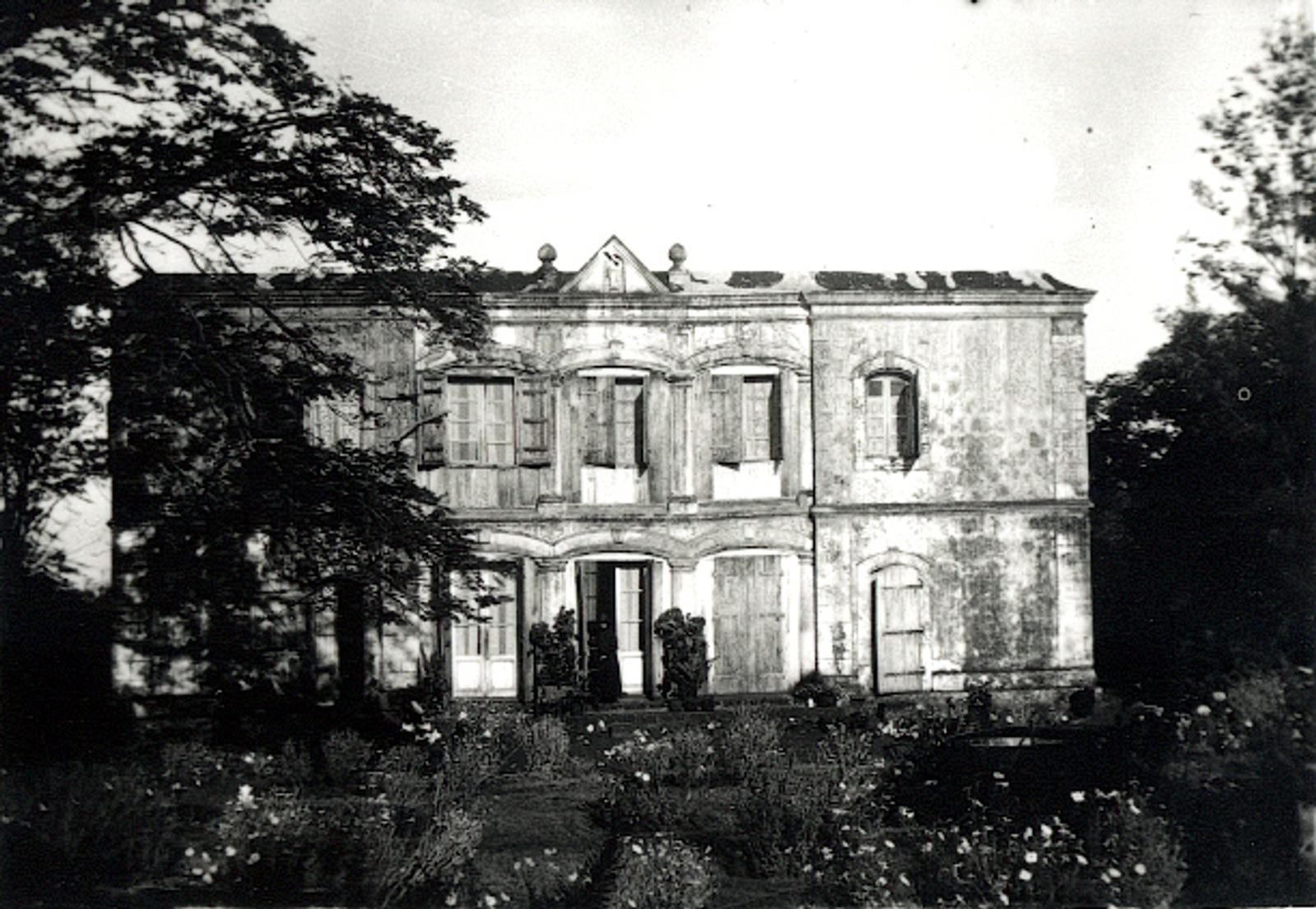
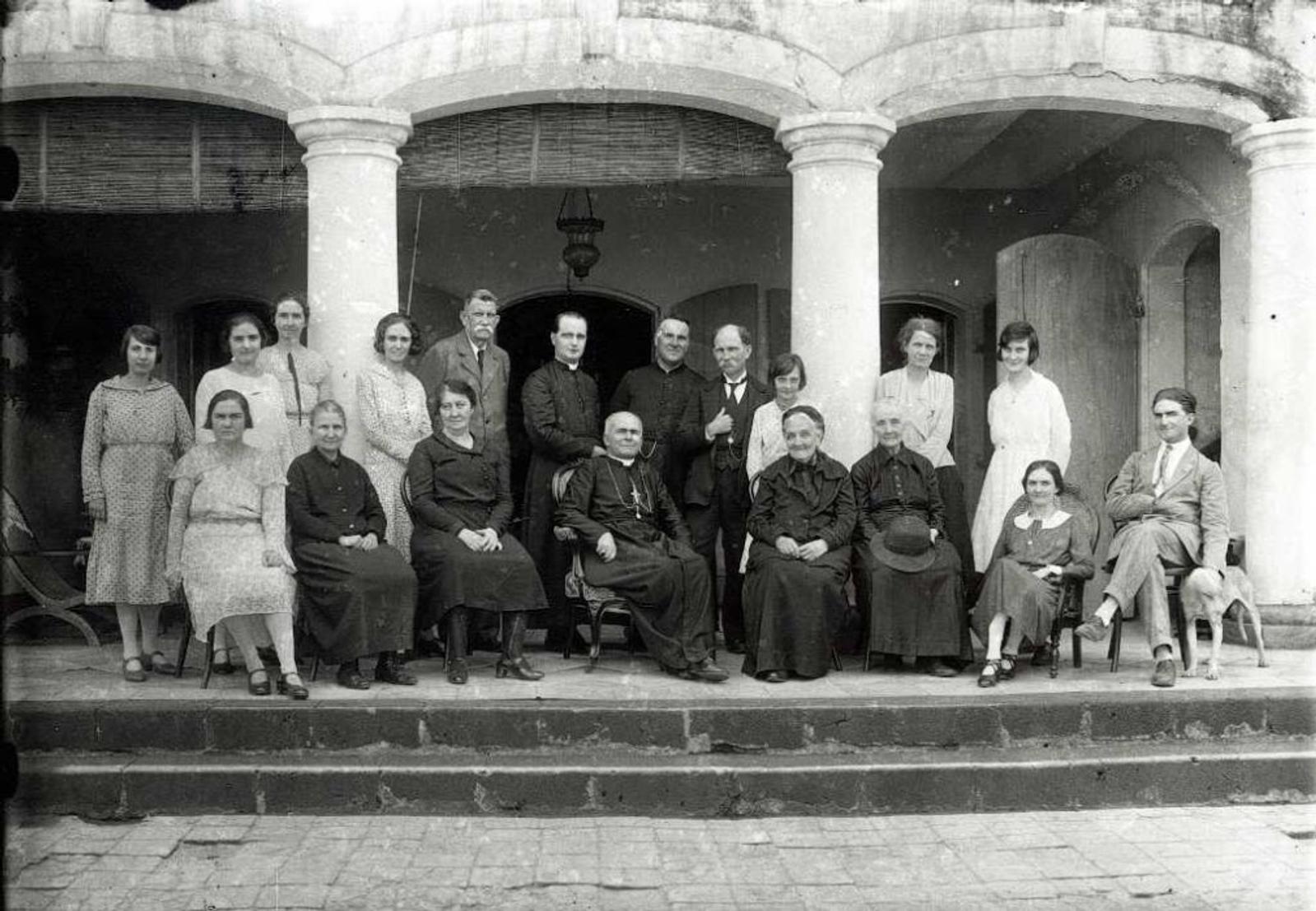
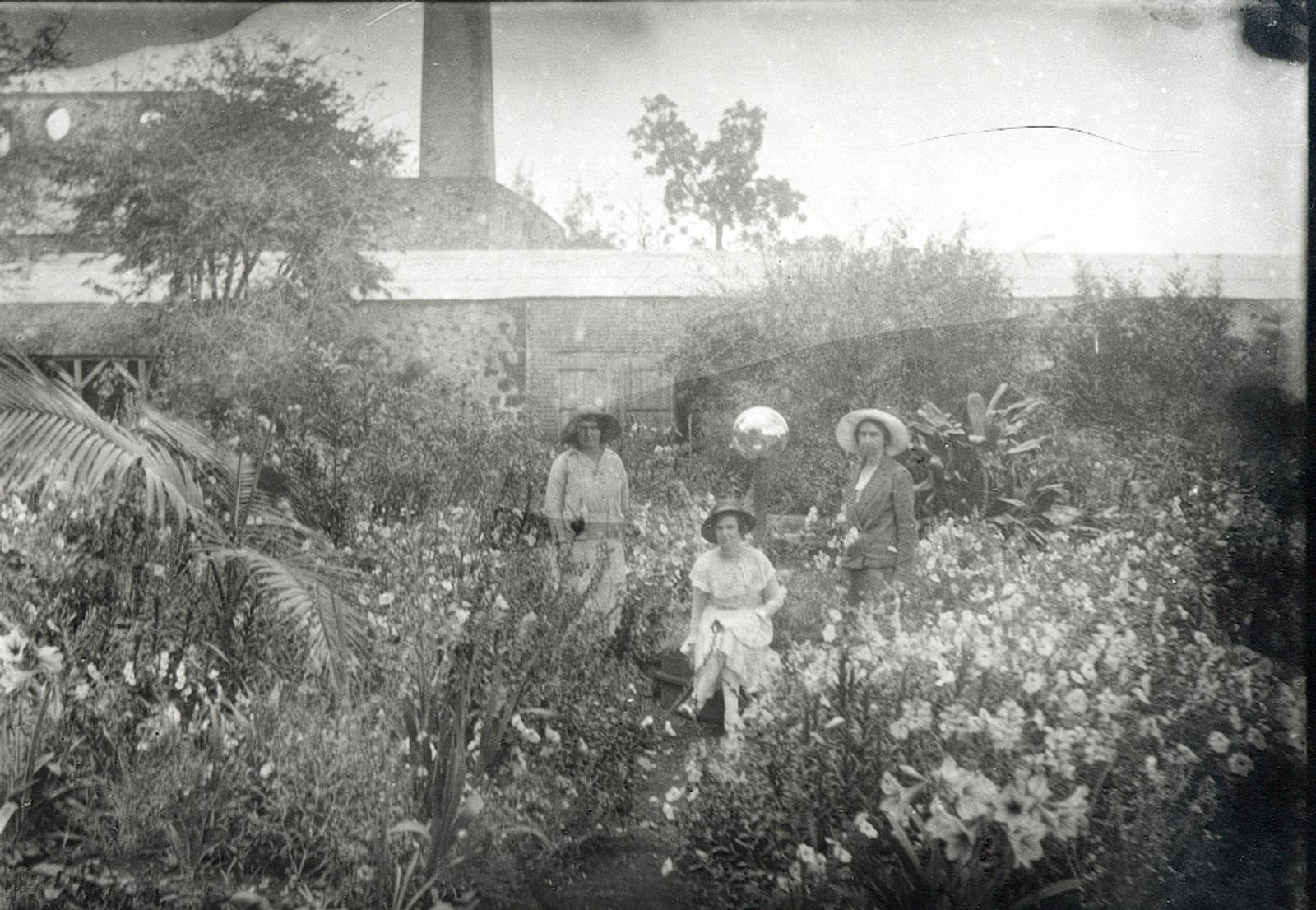
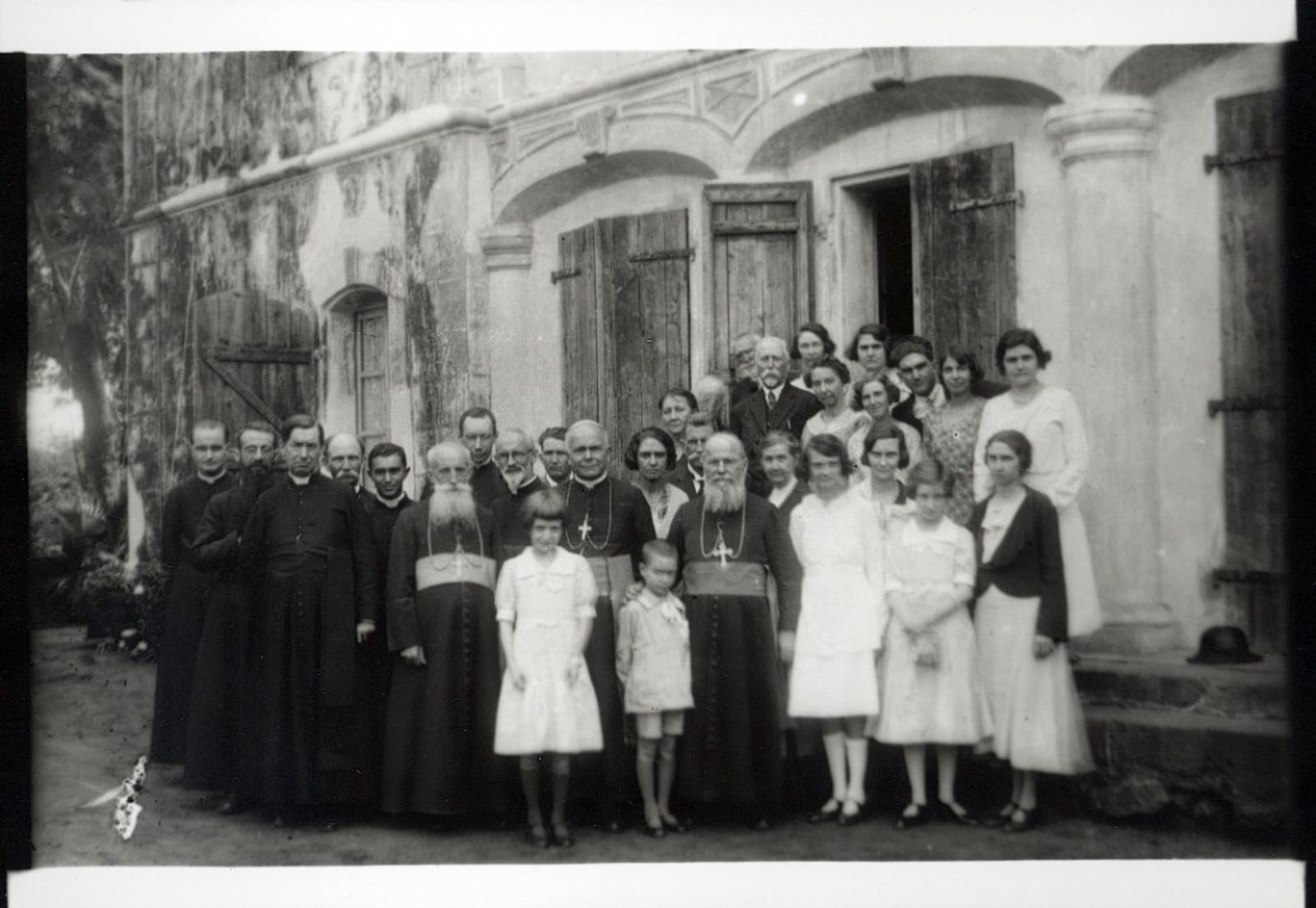
This set of glass plates comes from the family collection. The images reflect important events in the life of the former downers during the 1930s, notably the celebration of Saint-Michel’s day on 29th September. The bishop of Reunion was a guest for the occasion and a lavish meal was organised in an improvised hall (‘sale verte’).
These old photographs also give us an idea of the state of conservation of the main house, with the facades showing important deterioration of the cladding. These documents also give us a more precise idea of the organisation of the gardens surrounding the house, in particular the flower beds around the pond, a combination of plants typical of Creole gardens.
Inv. 2002.2.1 à 15
Set of 15 glass photographic plates
Photographer unknown, 1st half of 20th century
Inv. 2002.1.6
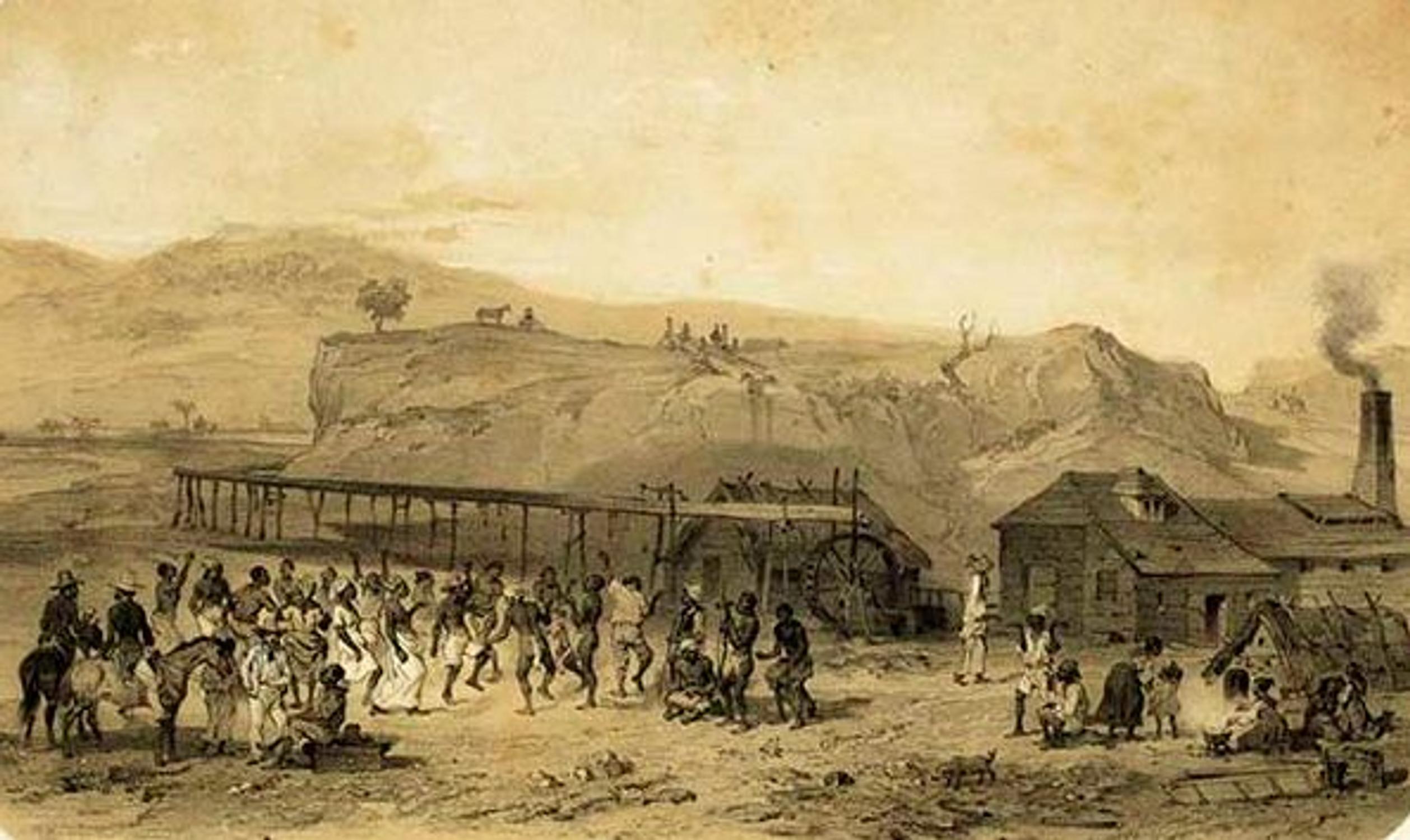
The shéga, African dance, Artist’s album
Adolphe Jean-Baptiste Bayot, around 1847
Based on a drawing by Etienne-Adolphe d'Hastrel de Rivedoux
Chromolithography on paper
During his stay on Bourbon island between 1836 and 1837, Hastrel de Rivedoux (1805-1874) built up an important collection of drawings, published in luxury editions of lithographs as from 1847.
His plates show human types, as well as the colony’s most remarkable sites and landscapes, and mainly focus on the district of Saint-Paul, which was probably where he was garrisoned. He also focused on the changes taking place on the island, producing drawings of the main bridges and important irrigation canals installed by the island’s sugar producers.
Here, we can see slaves dancing the séga, in the version similar to the maloya, a dance originating in Africa. Three musicians are accompanying the dancers, beating out the rhythm on a bobre (African string instrument), a drum and a xylophone.
On the right of the picture, we can see the sugar factory the slaves depended on, which belonged to Monsieur Saint-Georges, as well as the factory’s sugar mill, powered by a wheel.
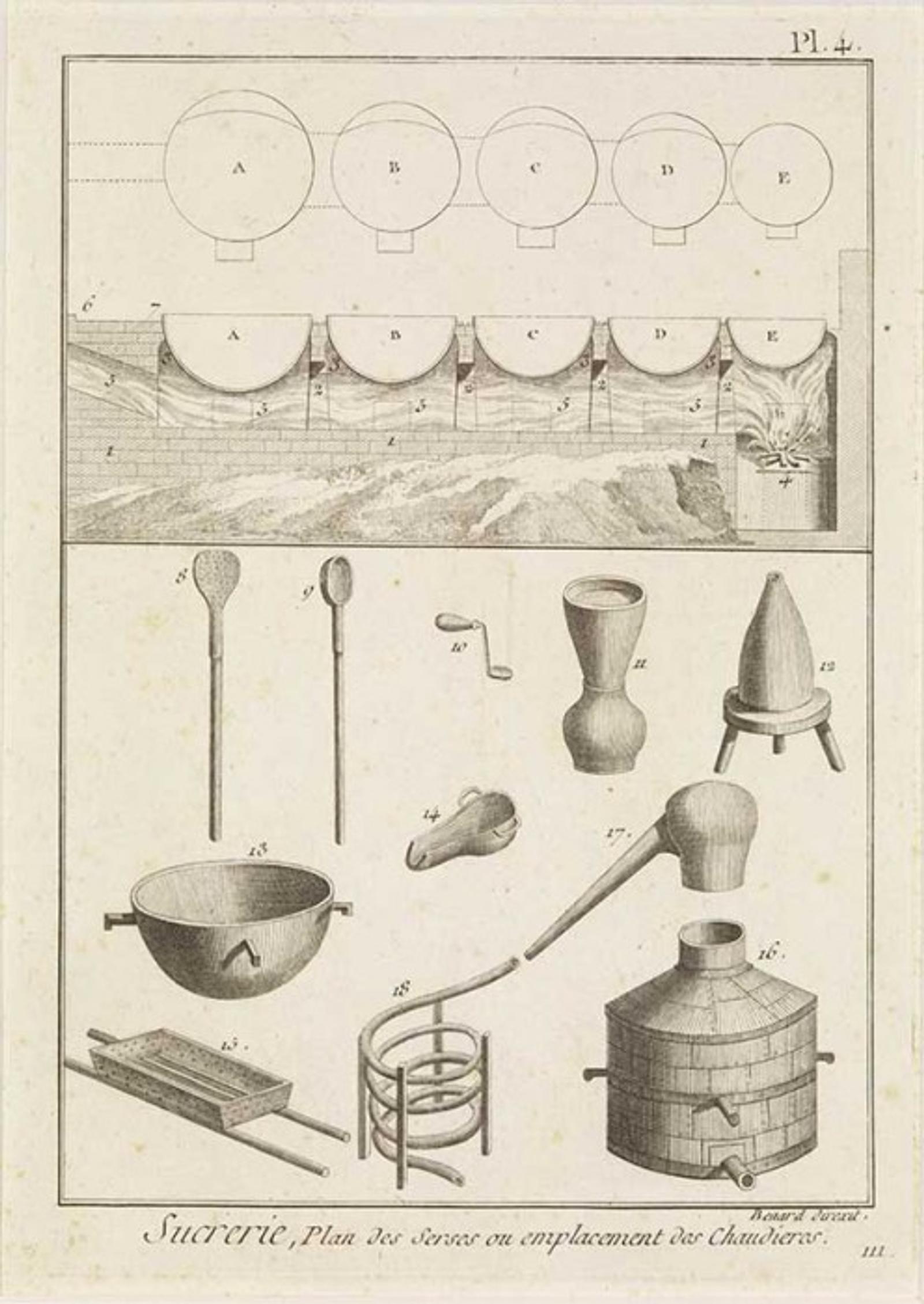
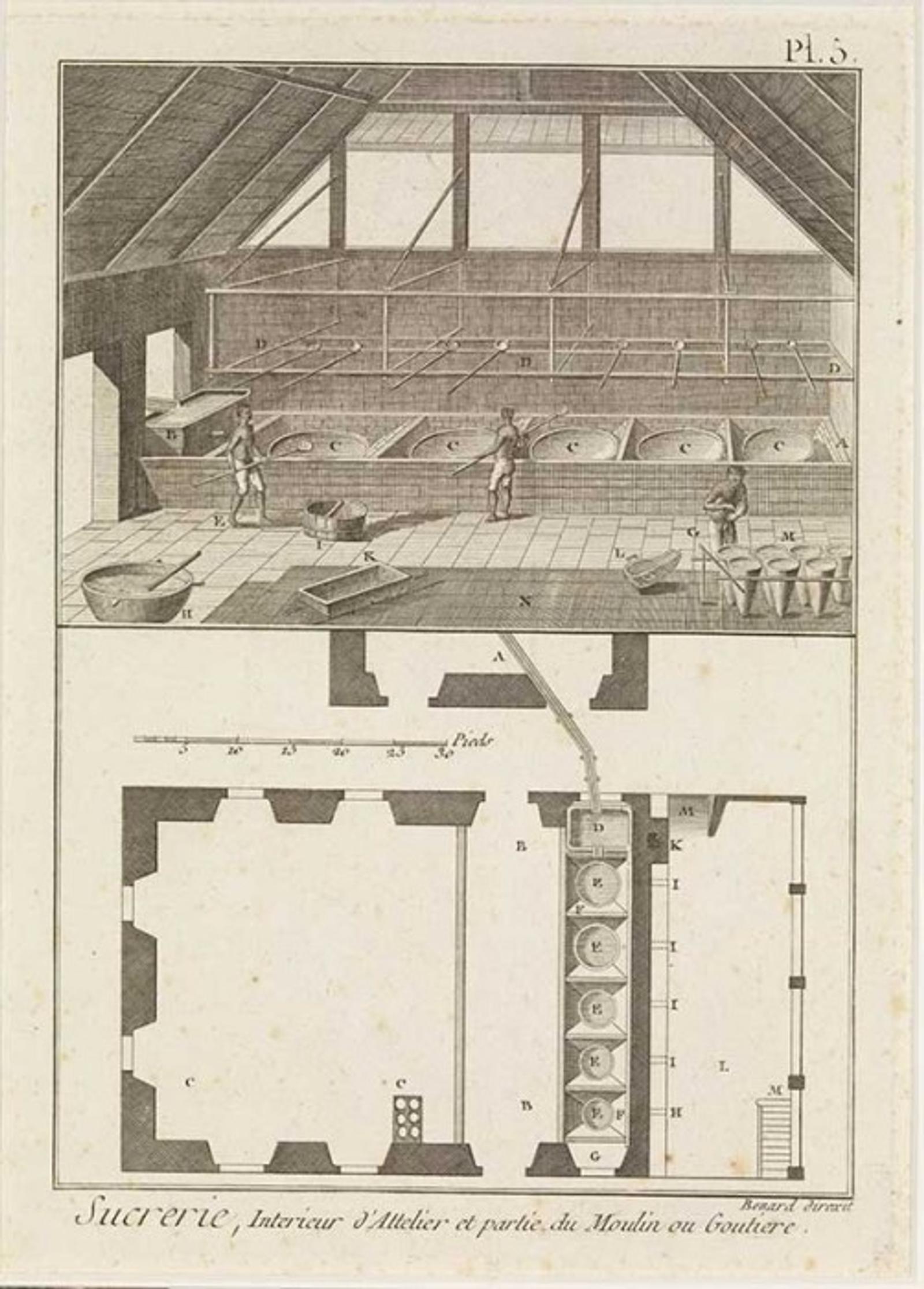
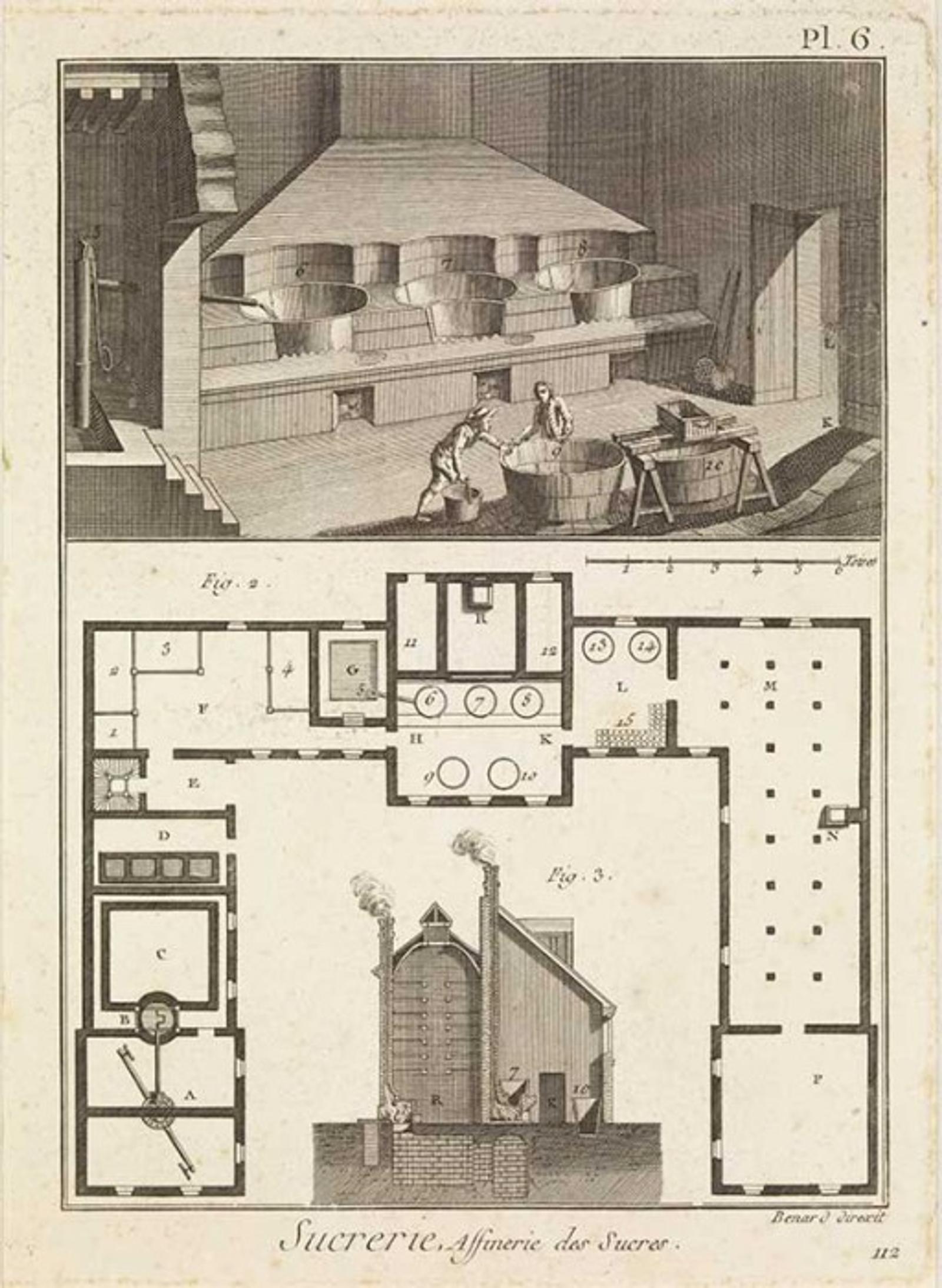
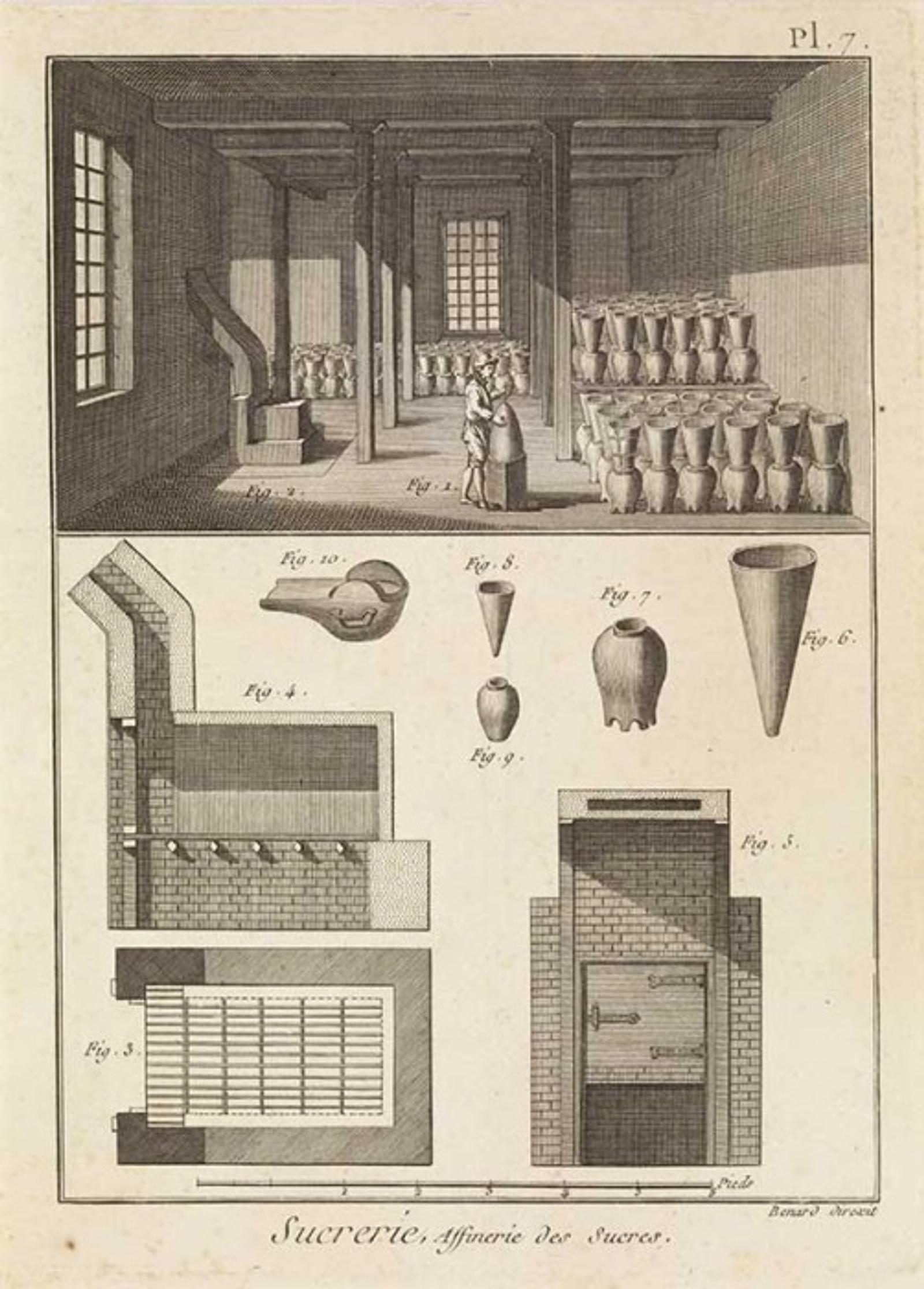
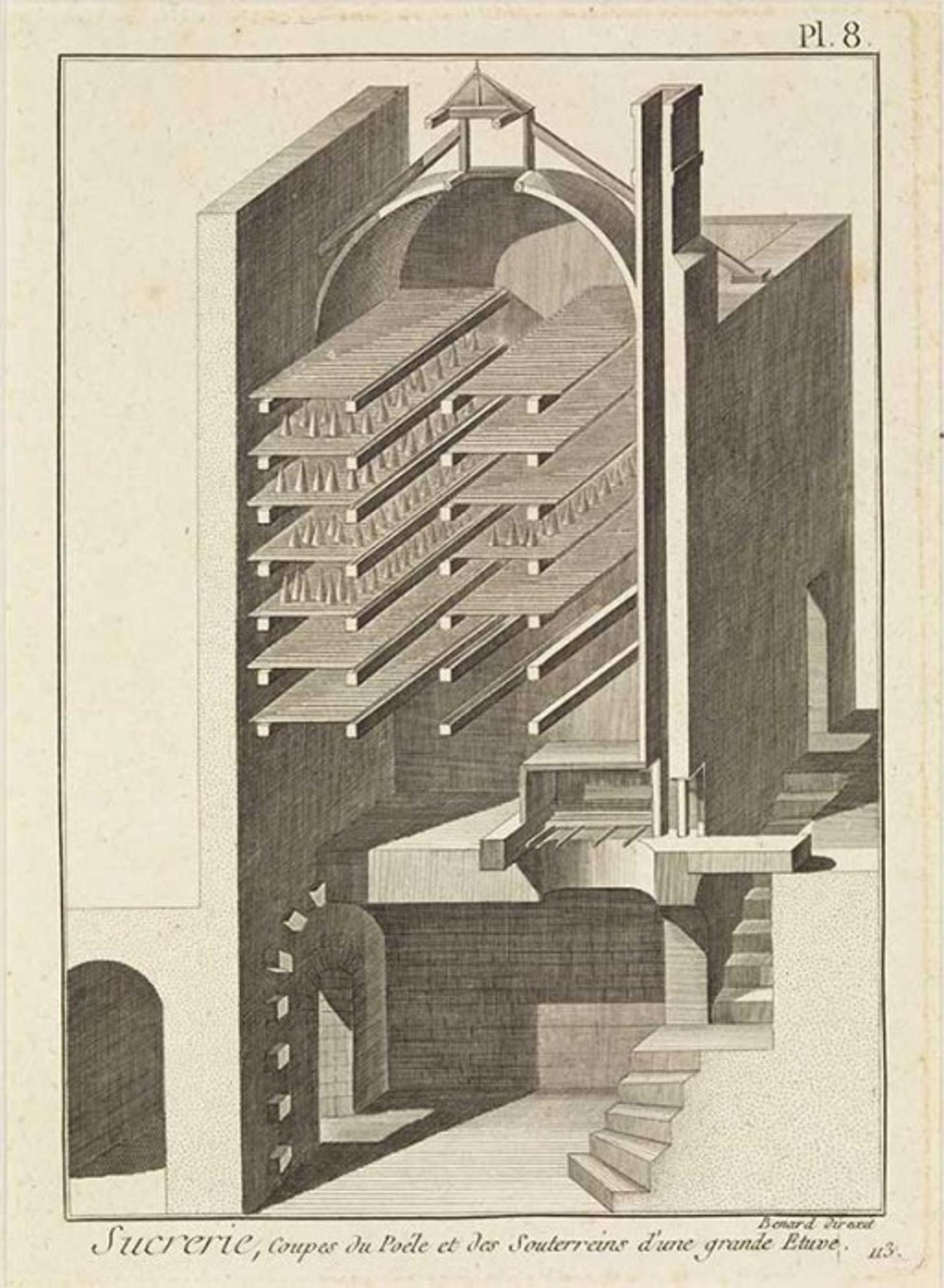
Between 1715 and 1772 was published the Encyclopédie ou Dictionnaire raisonné des sciences, des arts et des métiers (Encyclopaedia or dictionary of sciences, arts and trades) by Diderot and d'Alembert, consisting of 17 volumes of texts, with 11 volumes of plates. Through this essential publication, the authors’ aim was to codify the progress made by human knowledge and invention and also to explain the world in a rational manner and through resolutely scientific research.
During his first stay in mainland France between 1784 in 1786, Monsieur Panon Desbassayns sent to Bourbon island 39 volumes of the Encyclopaedia (Geneva edition), which he had bought for 240 pounds.
Diderot’s encyclopaedia became a model for others and hardly was it finished that a large number of authors of encyclopaedias decided to do the same, continuously including new discoveries. For example, the Encyclopédie méthodique was published by Panckoucke between 1782 and 1832. The sugar-cane boom, as well as the corresponding development of factories to refine it, partly explains why these eight plates from the encyclopaedia are devoted to the analysis of sugar-production technology. Though theoretical, the engravings do give us a glimpse of the architectural structure and organisation of the first refineries constructed on the island. Constructed later on, the sugar factory set up in Saint-Gilles-les-Hauts was equipped with a steam engine as from 1825-1827, thanks to the collaboration of the engineer Wetzel.
Inv. 1992.24.1 a 8
8 plates from the Encyclopédie méthodique
Intaglio
Panckoucke edition, 1785
Directed by Robert Benard
 Slavery and indentured labour