The Villèle historical museum was set up by the Departmental Council of Reunion in 1974 on a vast colonial property, the former Panon-Desbassayns estate, one of the most important heritage sites on Reunion island.
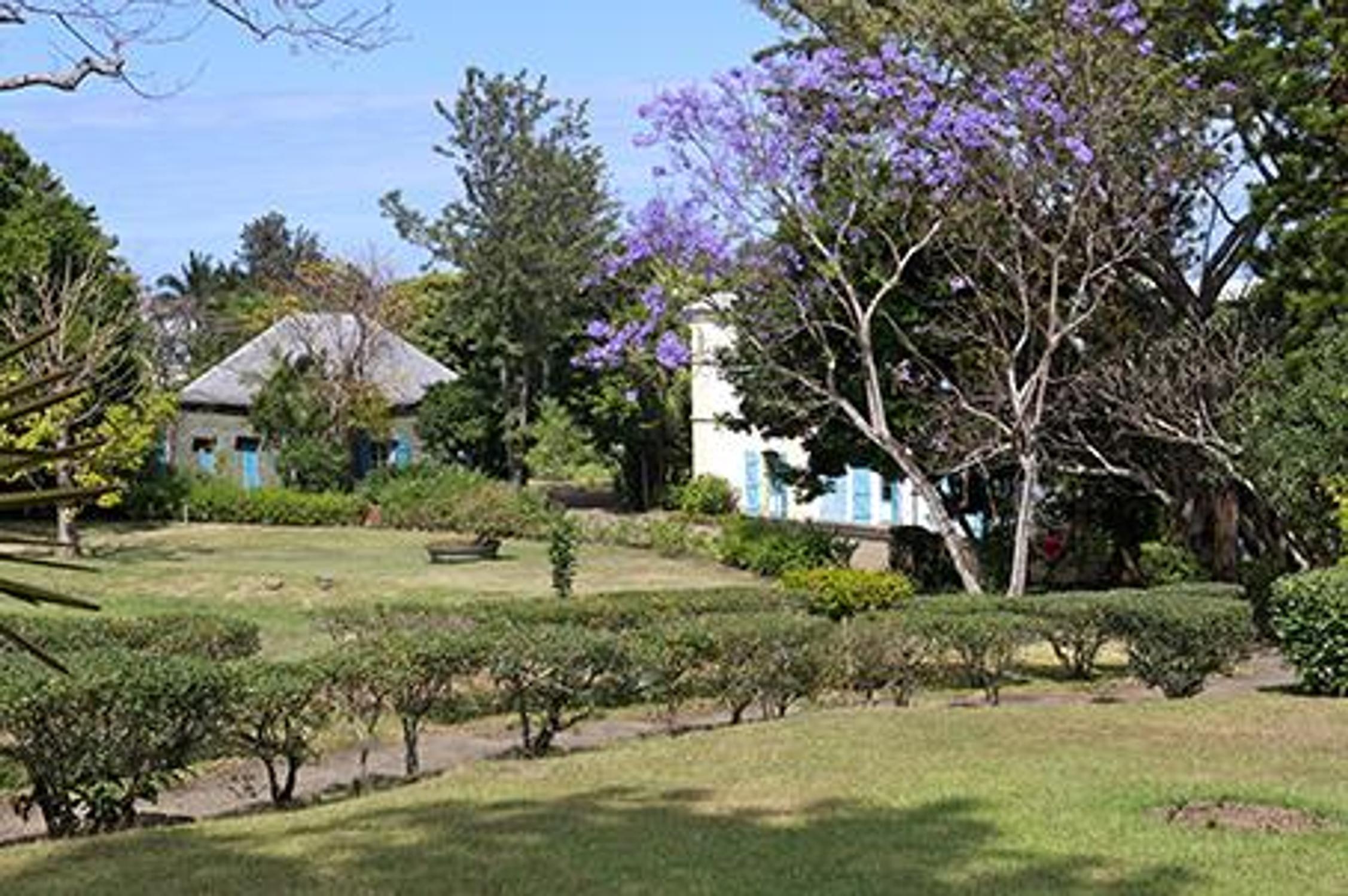
Located within the district of Saint-Paul, this vast and diversified group of buildings, the island’s first museum site, reflects the prosperity of a Creole family that marked the history of Reunion during the 18th and 19th centuries.
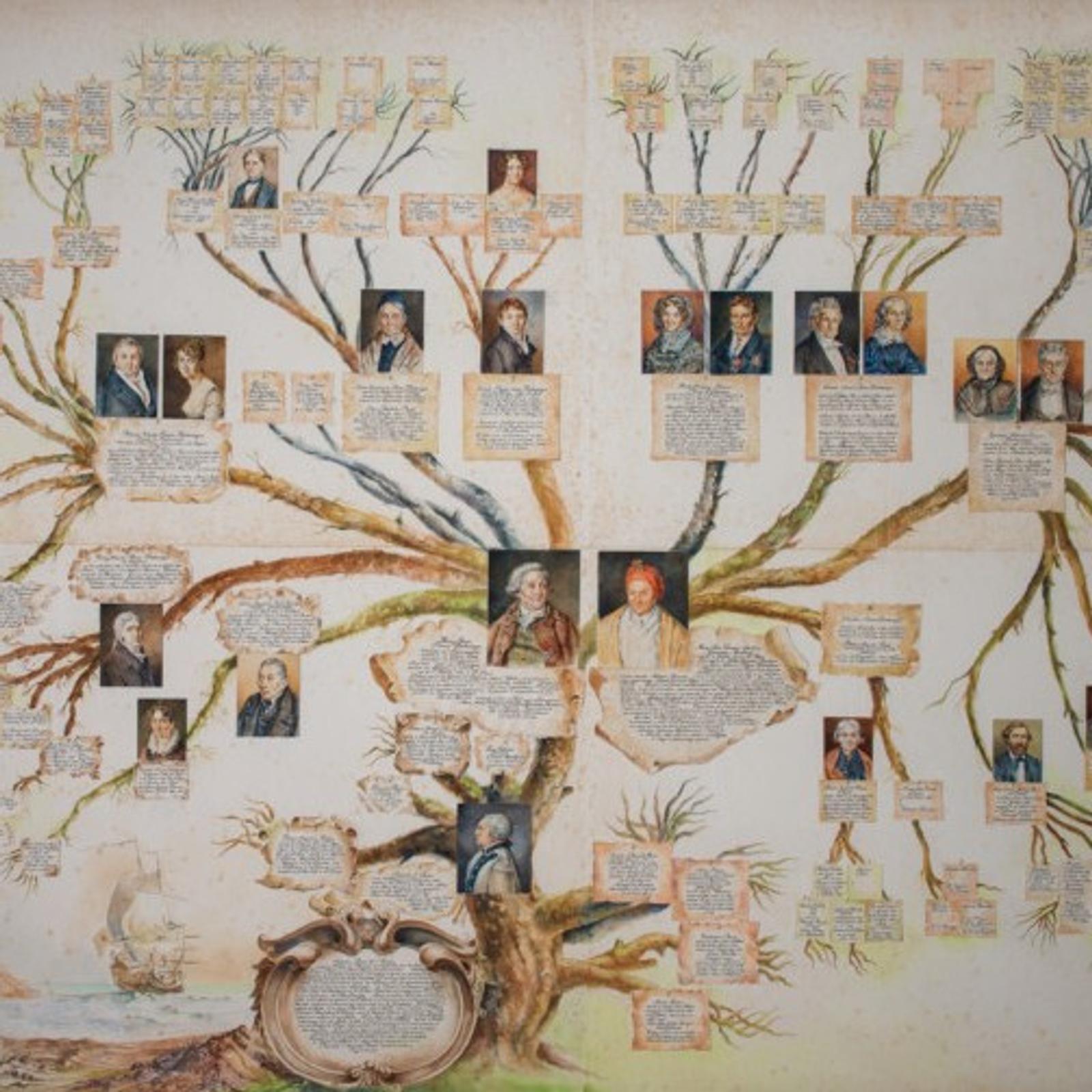
An emblematic and very controversial figure in the history of Reunion, Madame Desbassayns (1755-1846) managed with a firm hand this large estate, so characteristic of the island’s plantation economy during the period of slavery.
The mansion
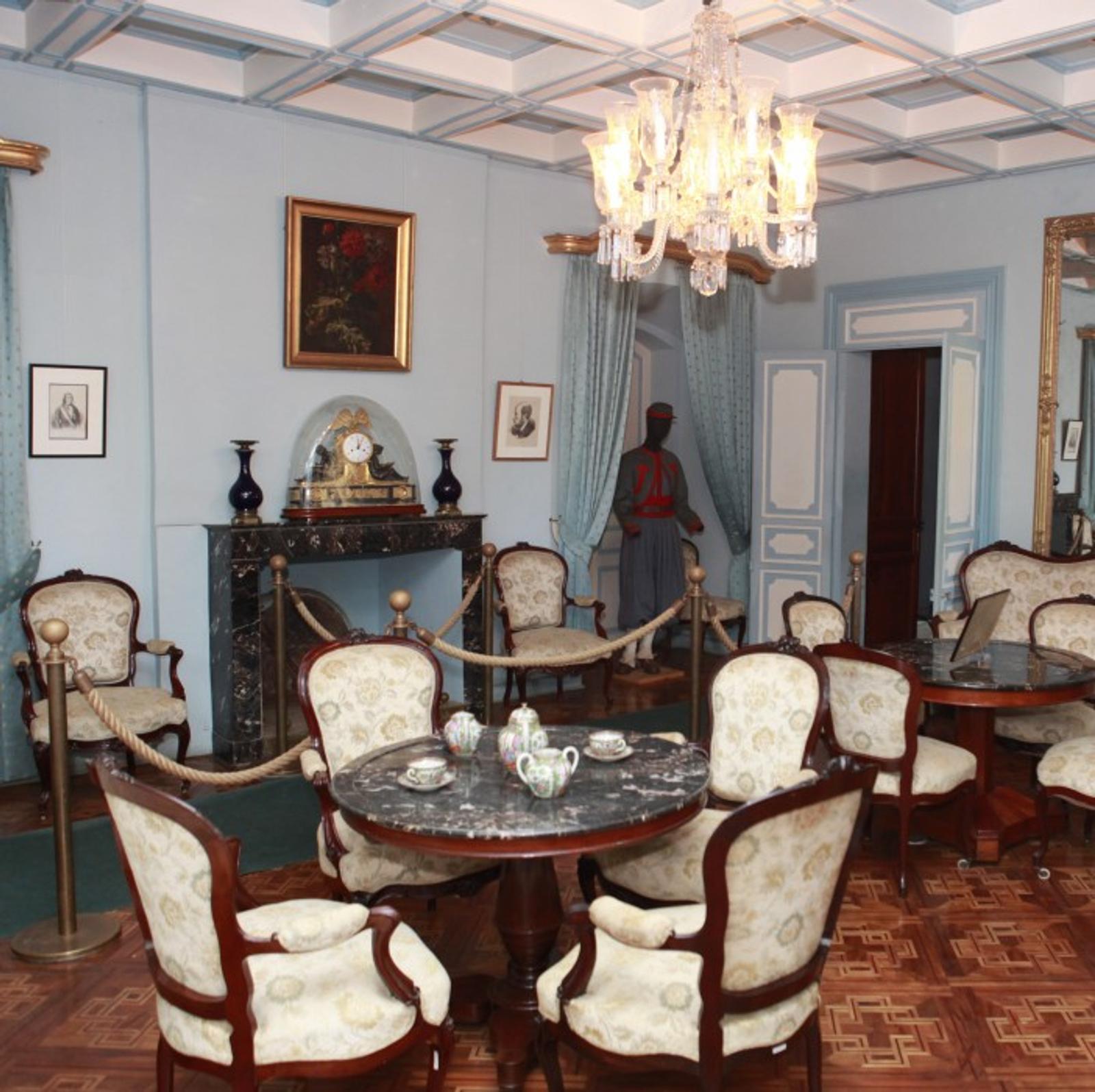
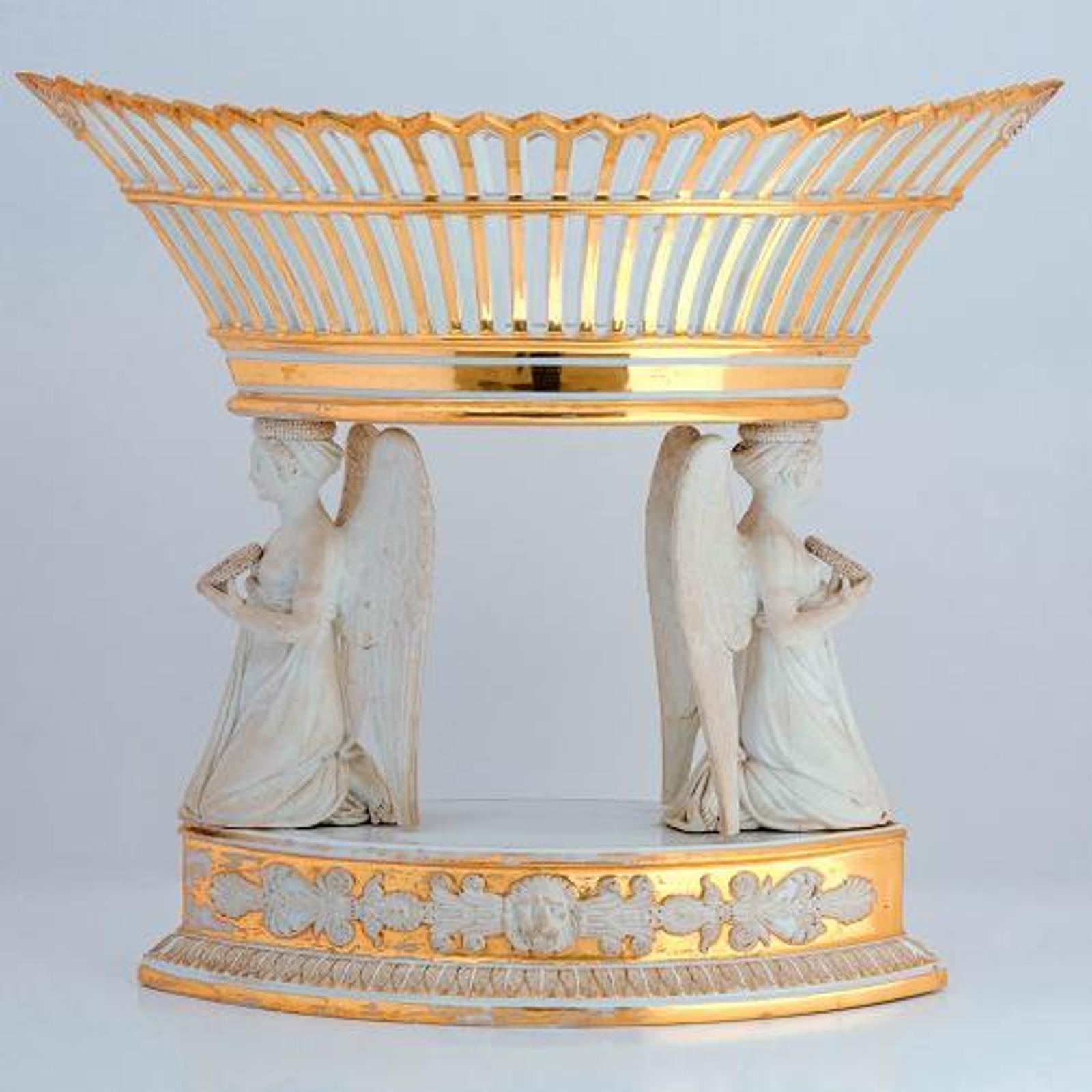
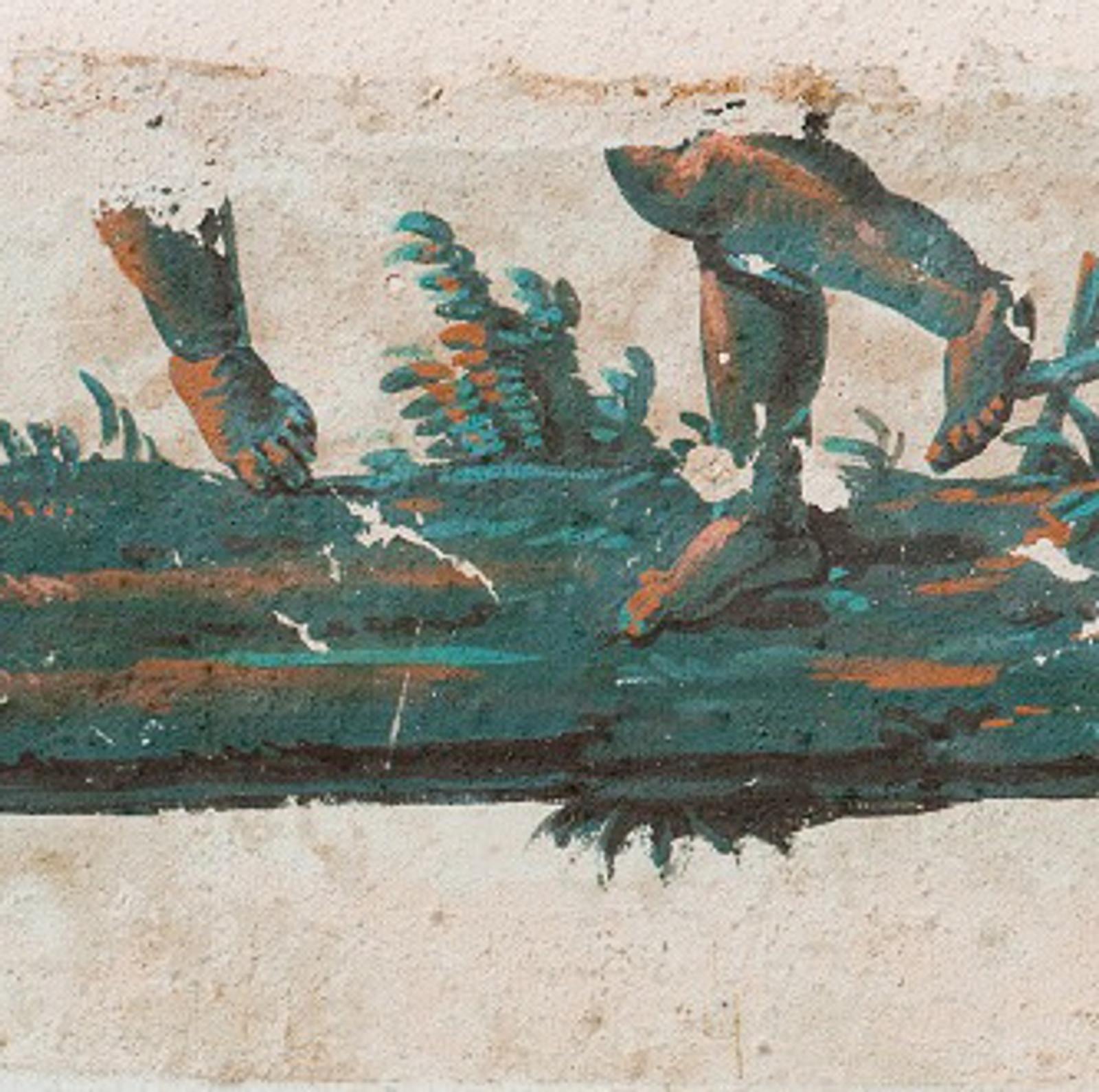
The furniture and decorative objects displayed recreate the way of life of this rich bourgeois family, who lived on the property for over 180 years. Two dynasties followed one another, the Panon Desbassayns Family during the first half of the 19th century and their descendants the Villèle family until 1973.
A selection from the permanent collection is on display in the seven rooms of the ground floor: etchings, engraving and lithographs representing old maps, portraits, landscapes and domestic scenes, all iconographic landmarks contributing to a better understanding of the development of Bourbon island, marked by the history of servile labour (slaves and indentured workers).
Accessible free of charge, the first floor of the mansion regularly houses temporary exhibitions of an educational, historical or artistic character, designed to give a better understanding or make more explicit the complexity and wealth of the history of Reunion island, whose the multifaceted identity has been forged through the contributions of different cultures, originating in Europe, Africa and Asia.
The kitchen
The kitchen, used to prepare the food for the masters of the estate, is situated close to the main house. In Reunion, the kitchen was often placed apart from the house in order to reduce the risk of fire and avoid the inconvenience of the smoke caused by burning firewood for cooking. A single-storey stone construction, the building has a gable roof roof and consists of two rooms, the kitchen itself and then the larder or storeroom where the provisions were stocked.
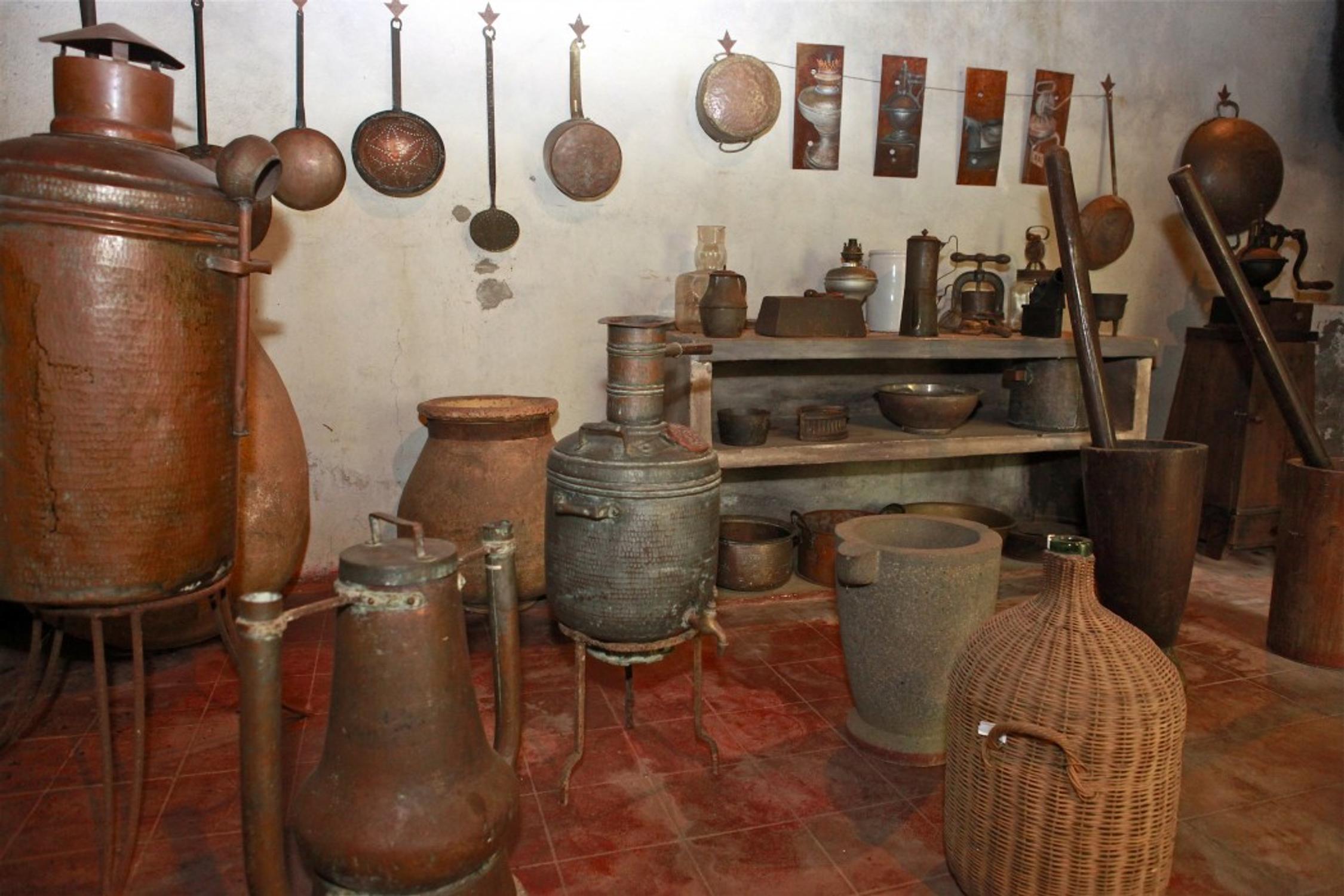
In the kitchen, facing the entrance, an imposing fireplace occupies virtually the whole width of the wall. Here, the meals were cooked using firewood. It was used until the 1970s. Today, a number of household utensils are displayed behind a glass partition: corn mills made of basalt, terracotta jars used for conserving ingredients, cast-iron cooking pots, copper kitchen utensils used for preparing ingredients and large glass bottles for conserving liquids.
Before the abolition of slavery in 1848, there was also a kitchen where the slaves’ meals were prepared, but up till now the exact location of this building has not been defined.
The slave hospital
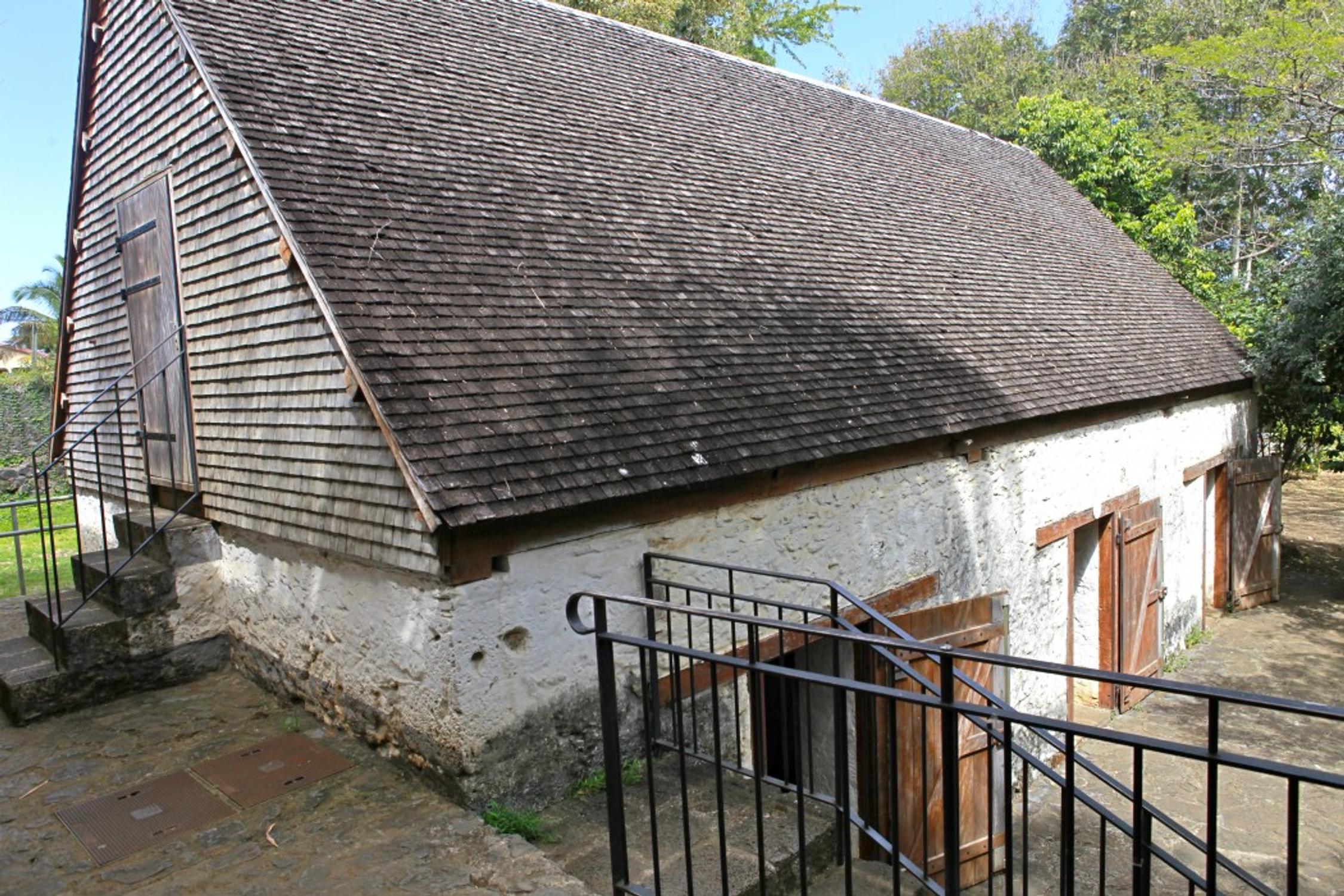
In addition to the two storerooms making up the long building, further down the slope is a small stone building which used to be the hospital. The construction is very basic, with three small windowless rooms on the ground floor leading on to each other and two further spaces upstairs under a gable roof. In 1996, a memorial room was created in a one of these spaces, with the names, ages, ethnic origins and functions of the slaves working on the property inscribed on basalt slabs. The very thick walls, approximately 60 cm, are coated with lime. This coating was commonly used in the 19th century to prevent the development of certain diseases. However, for the process to be truly effective, the whitewashing needed to be renewed each year.
Even when sick, the slaves were kept occupied, assigned to tasks compatible with their state of health, such as the manufacture of jute sacking used for transporting sugar. One slave was assigned to the hospital, working as the nurse and overseeing the patients’ work.
In Madame Desbassayns’ will, drawn up in 1845 and which lists all the slaves and the tasks each carried out, it is noted that the nurse was called Véronique. Aged 71, she was a Creole and was estimated to be be worth 500 francs at the time, or an amount slightly higher than that of two oxen from Madagascar with their cart. Genealogical research carried out in 1998 by a local association made it possible to trace her descendants, who were given the family name of Carlot after she was freed in 1848.
The sugar factory
In the 1820s, when a prosperous sugar industry developed in Reunion, Charles Desbassayns encouraged his mother to build a sugar factory on her property in Saint-Gilles-les-Hauts. Right from the start, when it was opened in 1824, the sugar factory, equipped with a steam mill for crushing the sugar cane, was considered by the contemporaries of the family as a model structure. In 1837, there were 27 sugar factories listed in the district around Saint-Paul, but the one in Saint-Gilles-les-Hauts was the only one to use this new from of energy. A hydraulic wheel, a pumping system and pipes were installed to the enable water, drawn 100 metres lower down in the gully of ravine Saint-Gilles, to be used.
Partly destroyed by a cyclone in 1932, the factory was never reconstructed. During the same period, the upper part of the large chimney, still standing, was also damaged.
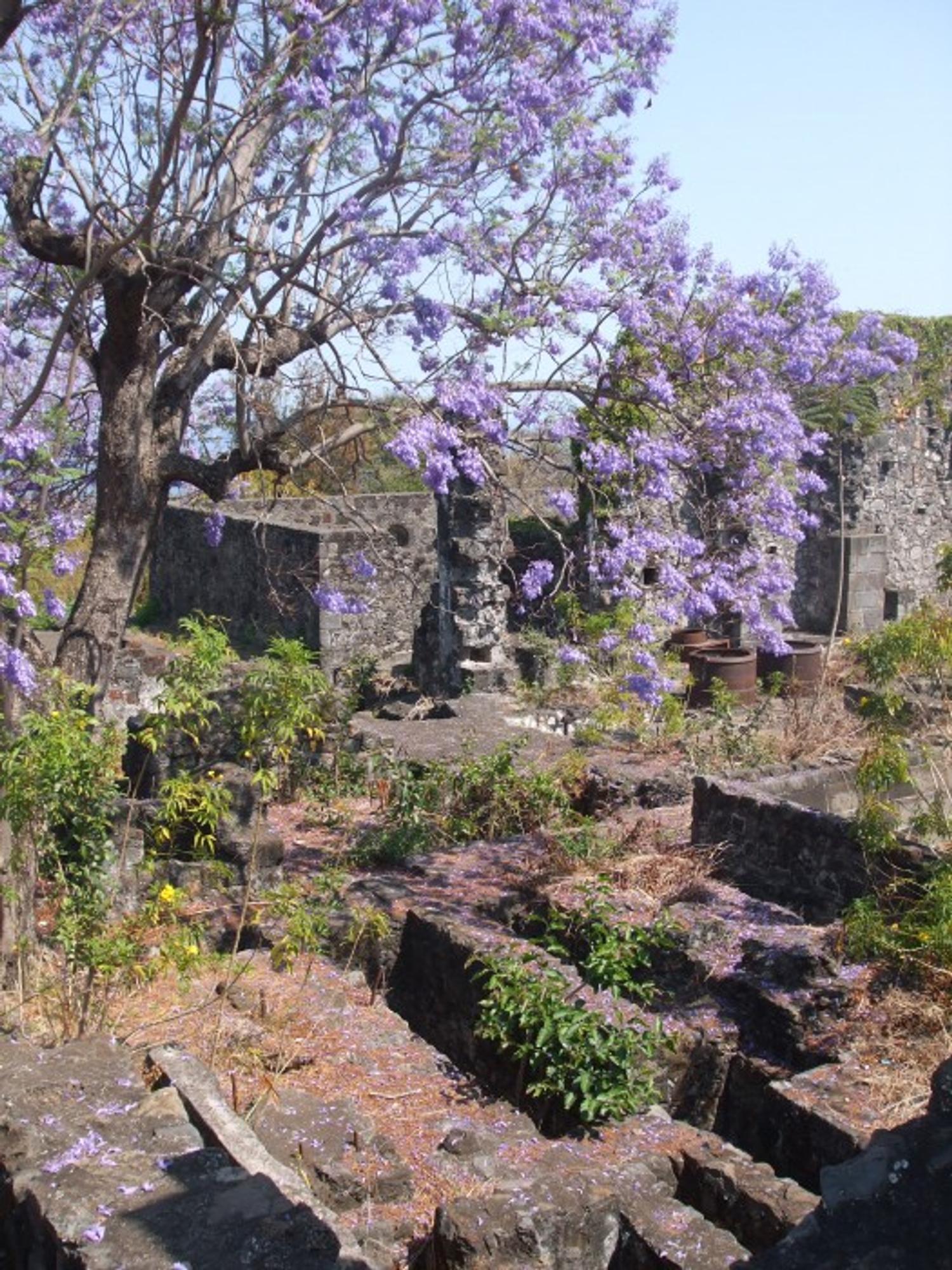
Even though it is difficult on the current site to localise the seven buildings mentioned in Madame Desbassayns’ will, the vestiges of the four constructions still standing today bear witness to the different stages of sugar production, from crushing the cane to crystallisation of the sugar, as well as boiling the juice of the cane, referred to as "vesou".
WARNING ! Unsecured site. Access inside not permitted. Please stay in the area around the site.
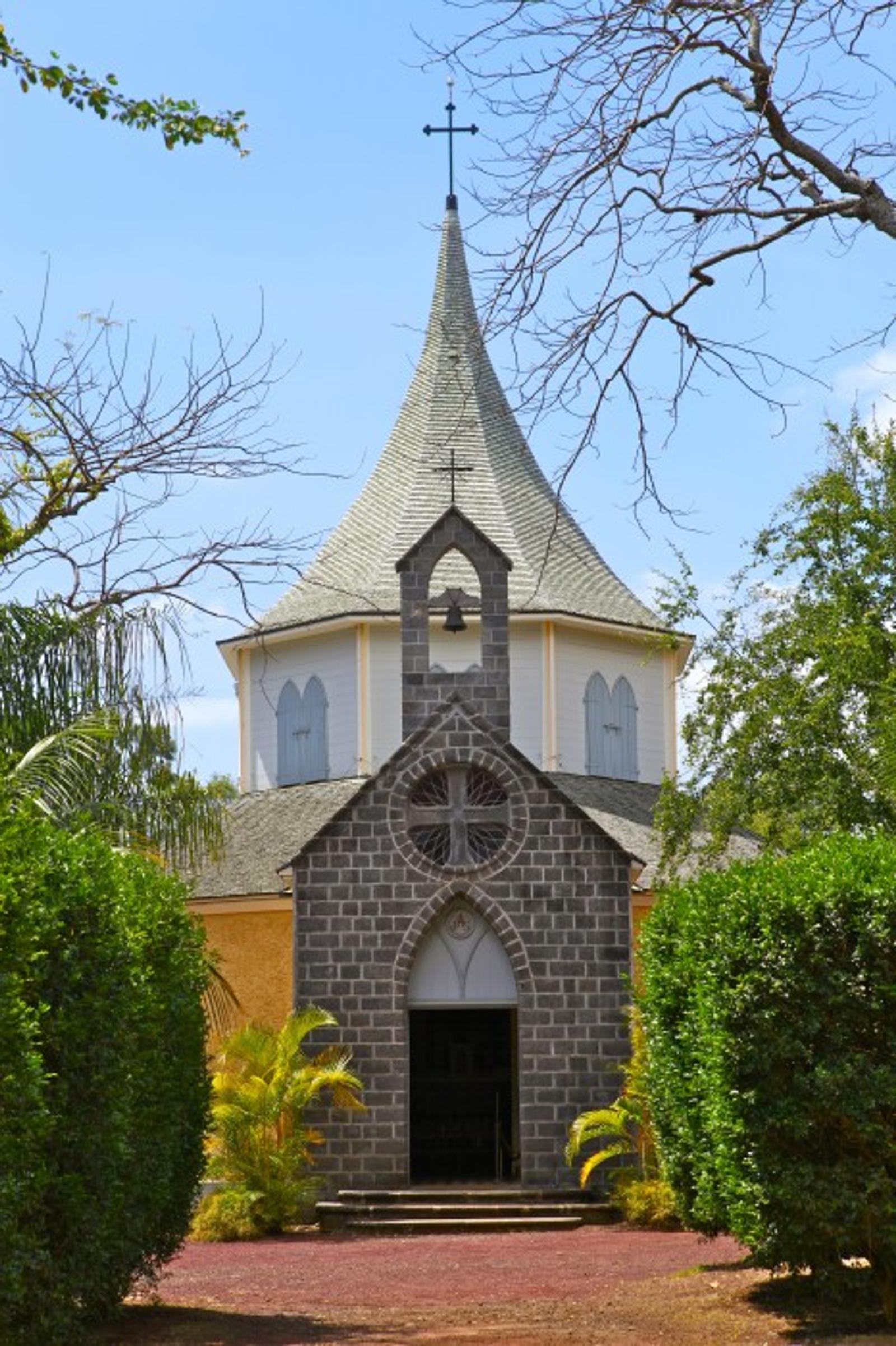
The chapel : La Chapelle Pointue
The chapel marked the beginning of the fashion for Neo-Gothic religious architecture in Reunion. Financed by Ombline Gonneau (1755-1846), the widow of Henri Panon-Desbassayns, this domestic chapel was used to evangelise the slaves working on the estate.
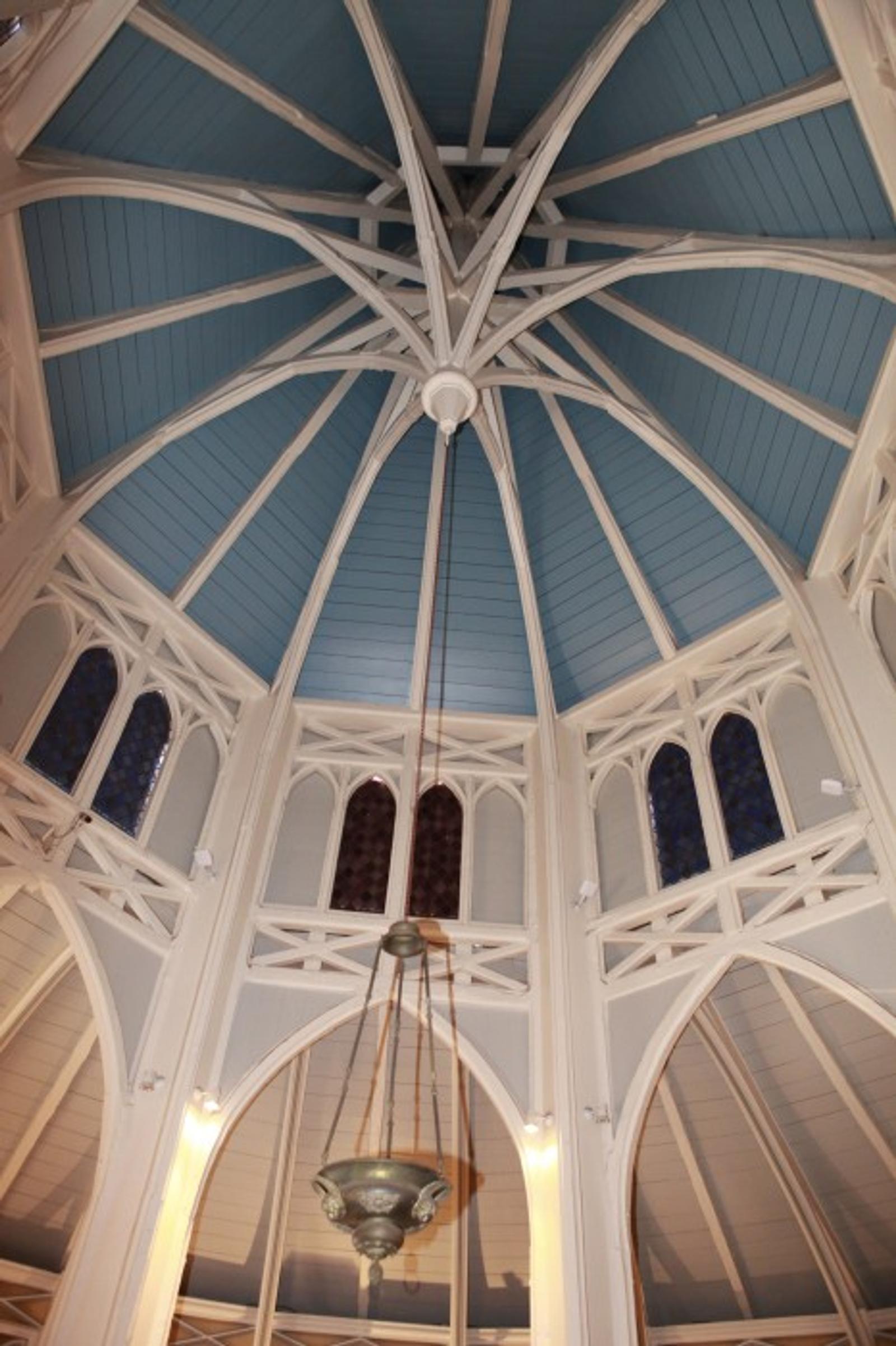
Constructed between 1841 and 1843 on a low hill visible from several spots in the surrounding area, the building is of remarkable design. A porch leads into the rotunda, topped with a roof lantern and a roof loosely inspired by Chinese pagodas. There are discrete signs of influence dating back to the Middle Ages, reflected in the lancet arch at the entrance, topped with a rose. The lancet arch is also repeated for the windows of the lantern.
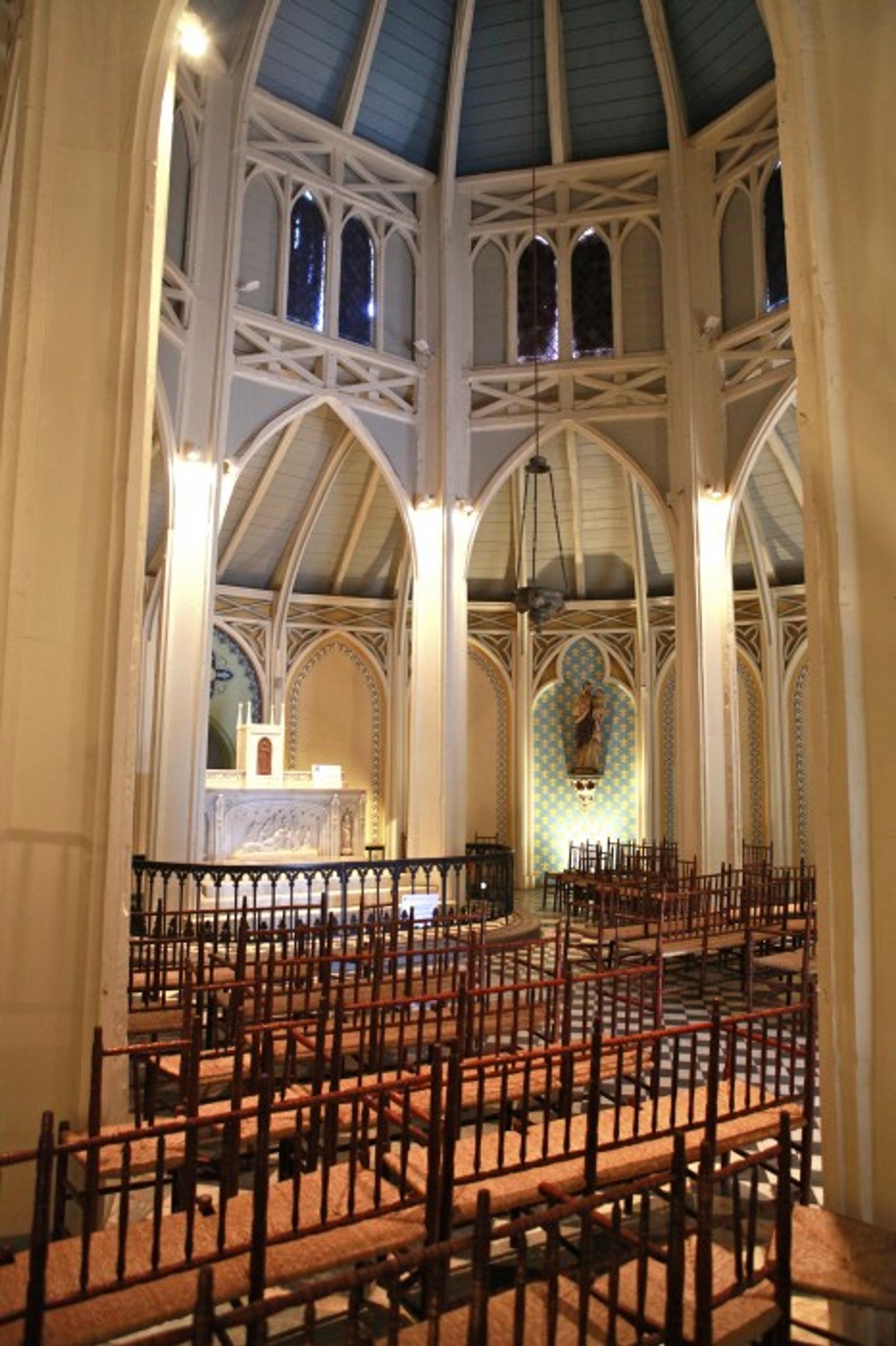
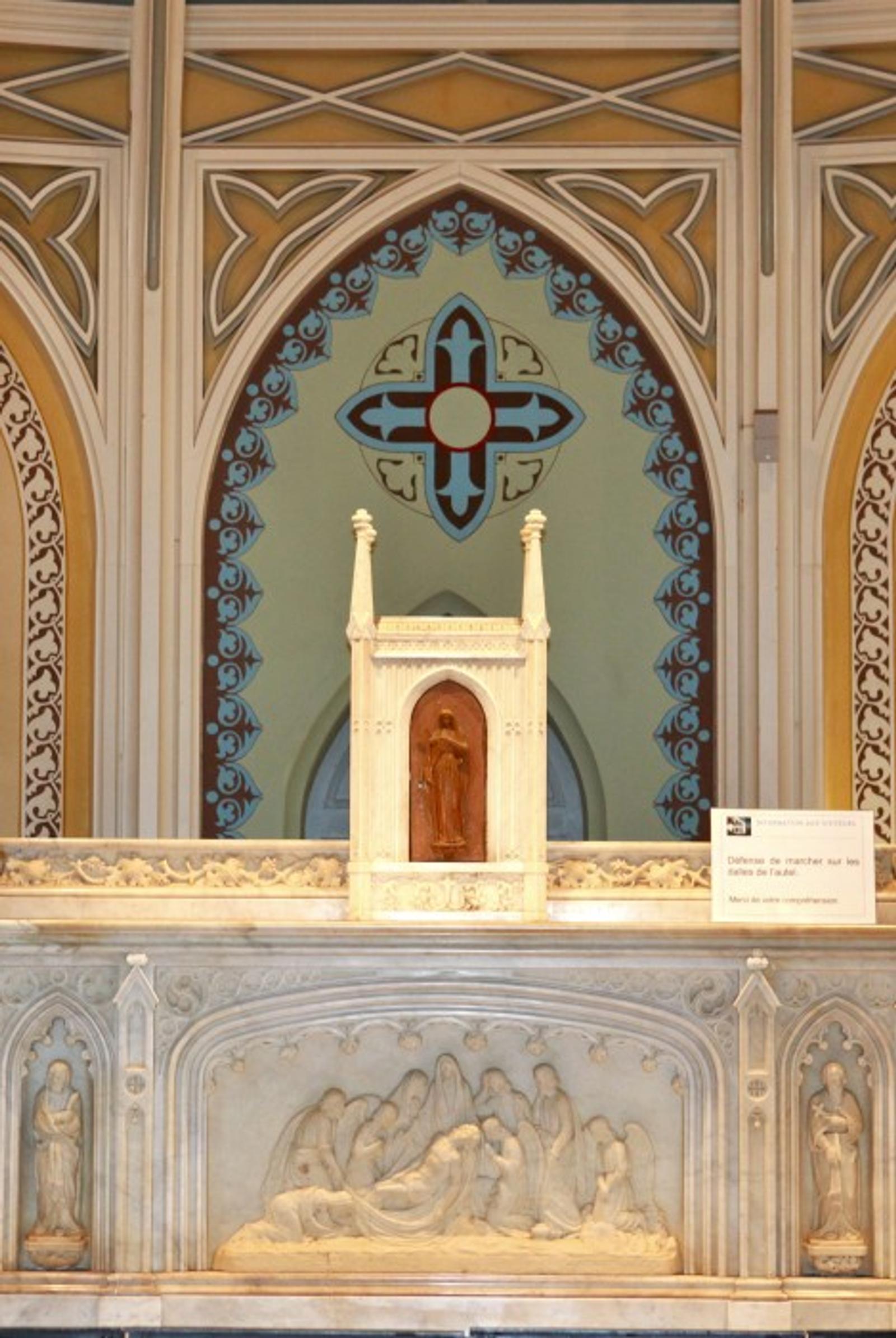
Inside, a remarkable altar of white Carrara marble is reminiscent of late 15th-century Gothic sculpture. Manufactured in 1845 in Nantes by the sculptor Bousquet, it is decorated with pinnacles, ‘cabbage leaf’mouldings and has a decoration of arched mouldings and low-relief sculptures in the round. On 4th February 1866, Madame Desbassayn’s tomb was transferred to the chapel and placed at the foot of the altar.
In the early 1880s, interior decoration consisting of timber arched mouldings and Neo-Gothic frescoes was applied to the walls of the rotunda, the work of a Jesuit priest accommodated by the Villèle family between 1883 and 1885.
After being totally destroyed by a cyclone in February 1932, the chapel was reconstructed exactly as before during the following year, with just minor changes (creation of four arched doors in the walls of the rotunda and a sacristy behind the altar). The decorative arched mouldings were not reproduced. The chapel remained in this condition for 70 years.
In 2003, following important renovation work, the monument was once more restored to its late 19th-century condition, with its rich interior decoration. The role it played in the history of slavery in Reunion and its architectural and aesthetic interest led to it being listed as a historical monument in 1970.
In 2018, to mark 170th anniversary of the abolition of slavery, the emblematic sculpture entitled Trois Frères (Three brothers) by the artist Plante-Rougeol, was installed at the heart of the chapel.
Digital guided tour, an application of the Villèle historical museum 

Visit the site on visite-virtuelle-reunion.fr