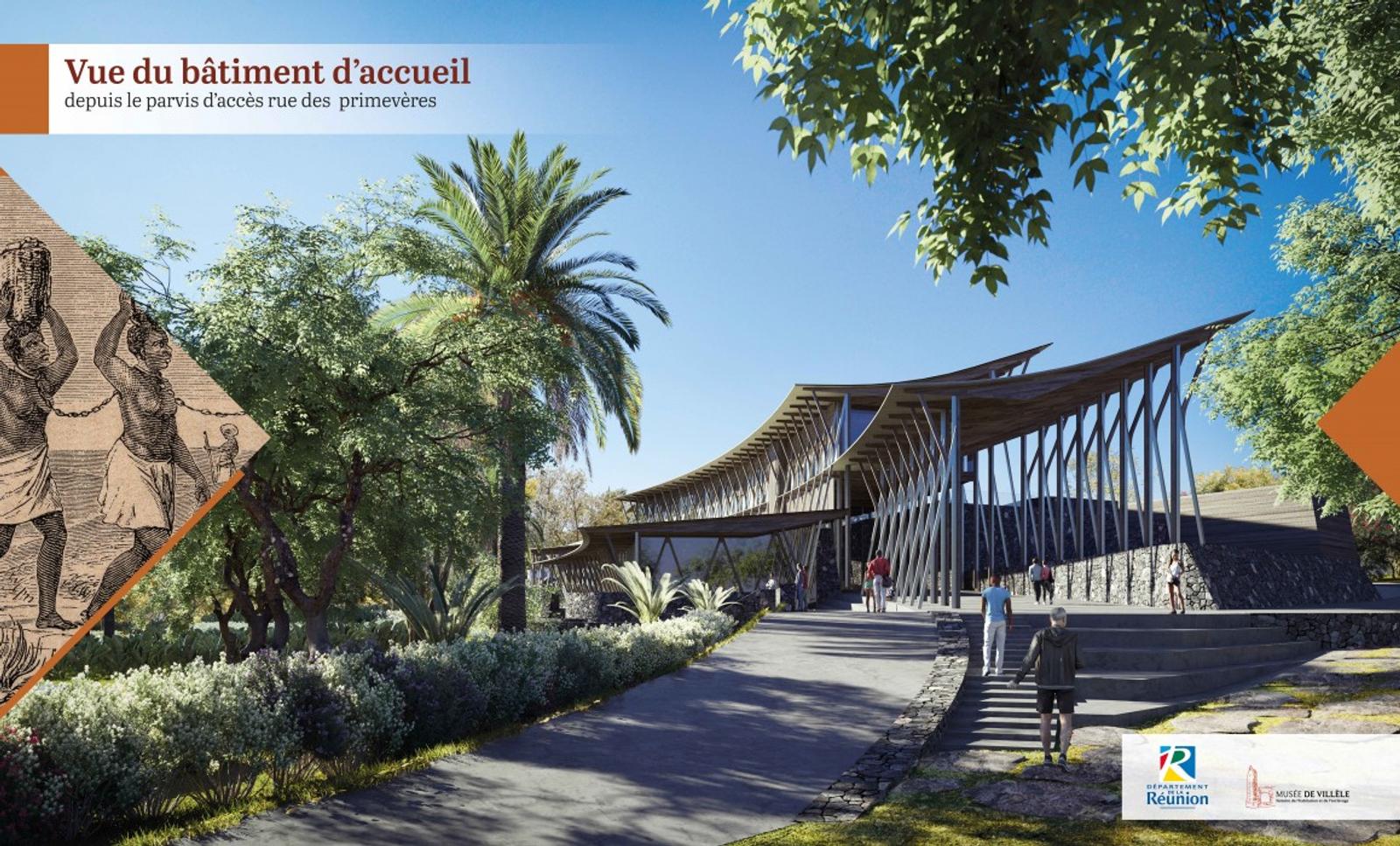
Towards the new museum of the estate and slavery
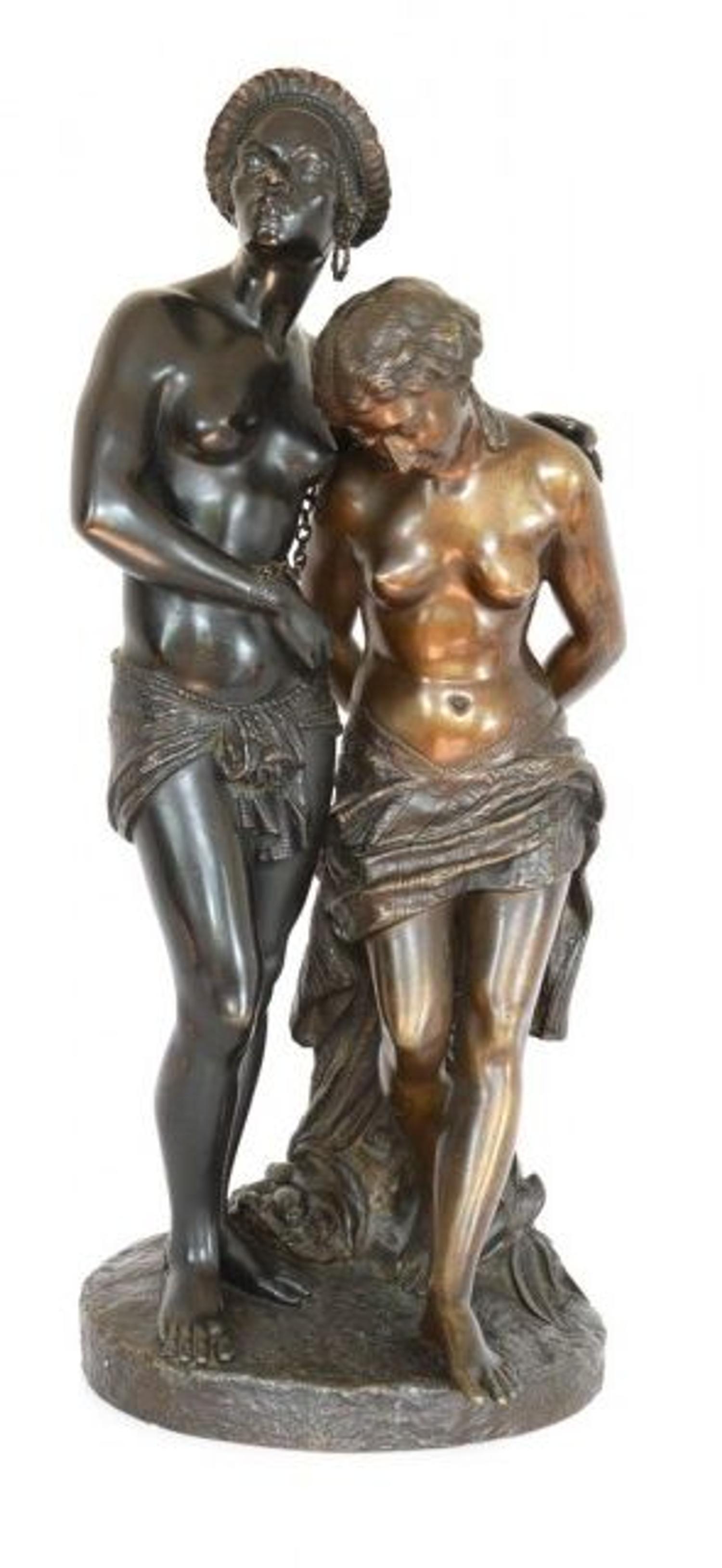
Les deux esclaves, (The two slaves) Edmond Louis Auguste Lévêque, 2nd half 19th century
Rehabilitation of the entire site and its museography
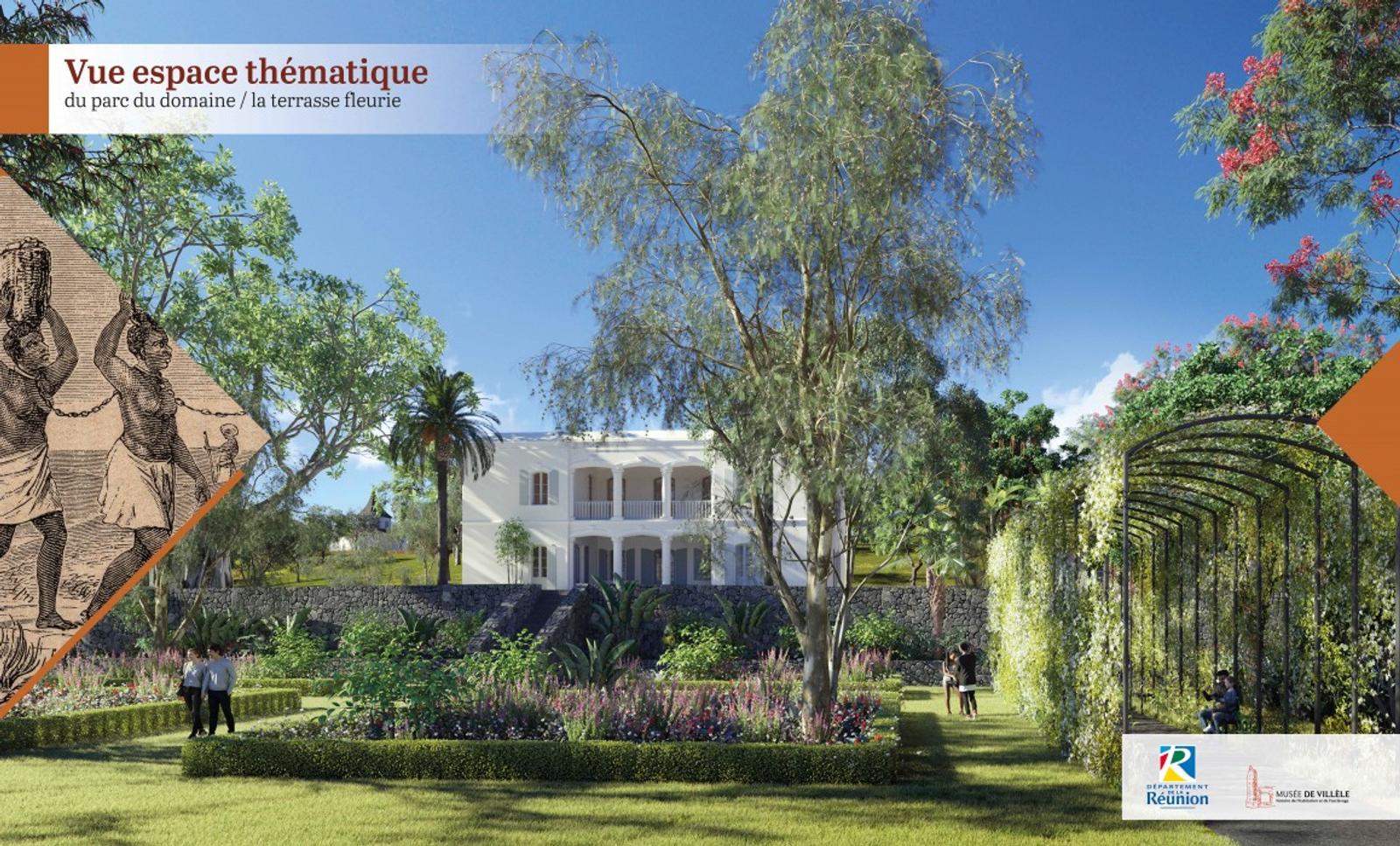
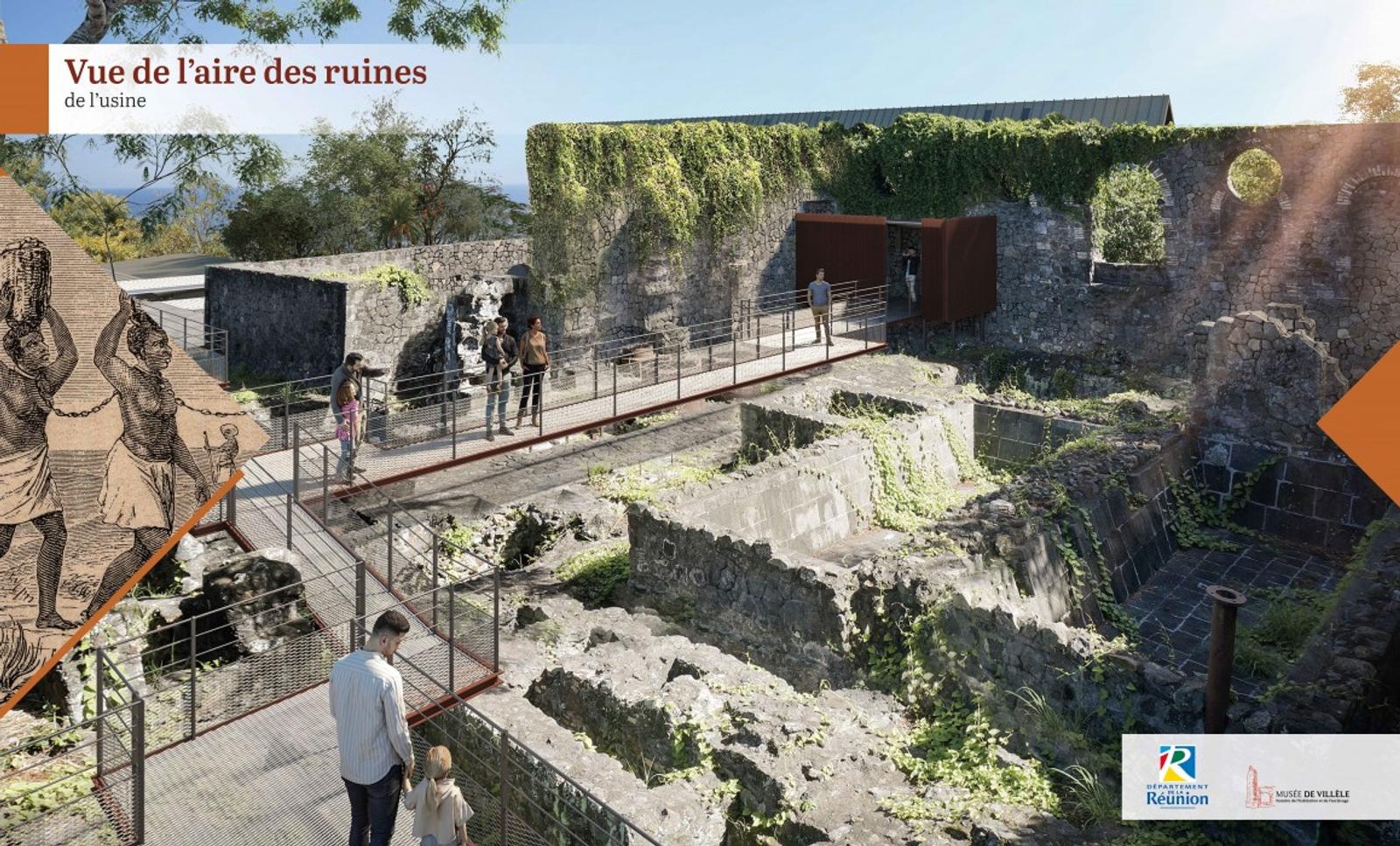
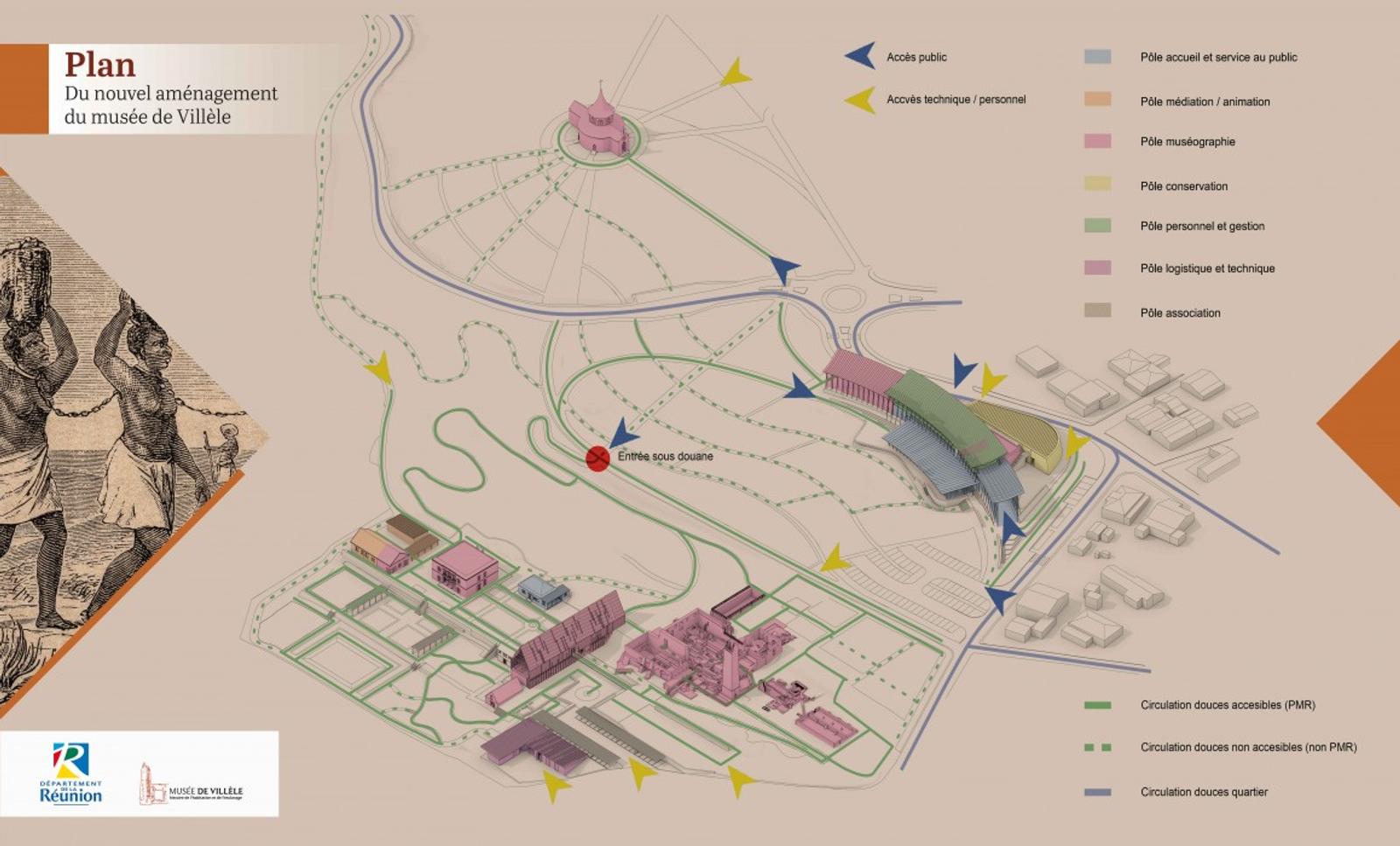
Without setting aside the roots of its creation or abandoning its original name and with the perspective of following the tendency of 21st-century museums to be better integrated into the island’s museum landscape, the Villèle museum is to become the museum of the estate and of slavery. The museum space will be the entire site.
Within the scientific and cultural project of the museum, its renewed museographic program will give an account of the history of the estate since it was created during the second half of the 18th century until the 1970s and will devote particular space to the issue of slavery in Reunion, a question that no other museum on the islands has, to this day, treated. Taking as a basis the material and immaterial traces still to be found on this vast estate, new itineraries for visits will be deployed, covering the entire estate and including all the renovated, restored or rehabilitated heritage constructions and spaces.
The museum will evoke the history of all the actors who contributed to the prosperity of the estate, the masters, the builders, the Panon-Desbassayns and de Villèle families and all those who were its lifeblood: the slaves, the indentured labourers and agricultural workers.
It is by fully assuming the history of its constructions, retaining the connection with the Villèle neighbourhood and opening out onto the history of slavery in the world, as well as becoming a place of excellence regarding historical knowledge and a focus for visiting tourists, that the Villèle museum will assert itself as a space of learning, reflection and citizenship, where individual and collective identity is raised into question and the encounter with others may be constructed.
Appeal for sponsors
Supporting this important project aimed at rehabilitating the Villèle museum can enable a company to consolidate its position locally, while bringing a new meaning to its daily activity. Through this large- scale cultural project, the sponsoring company can contribute to the general interest, while personalising and enriching its image. The company will reflect positive values able to federate its collaborators and partners.
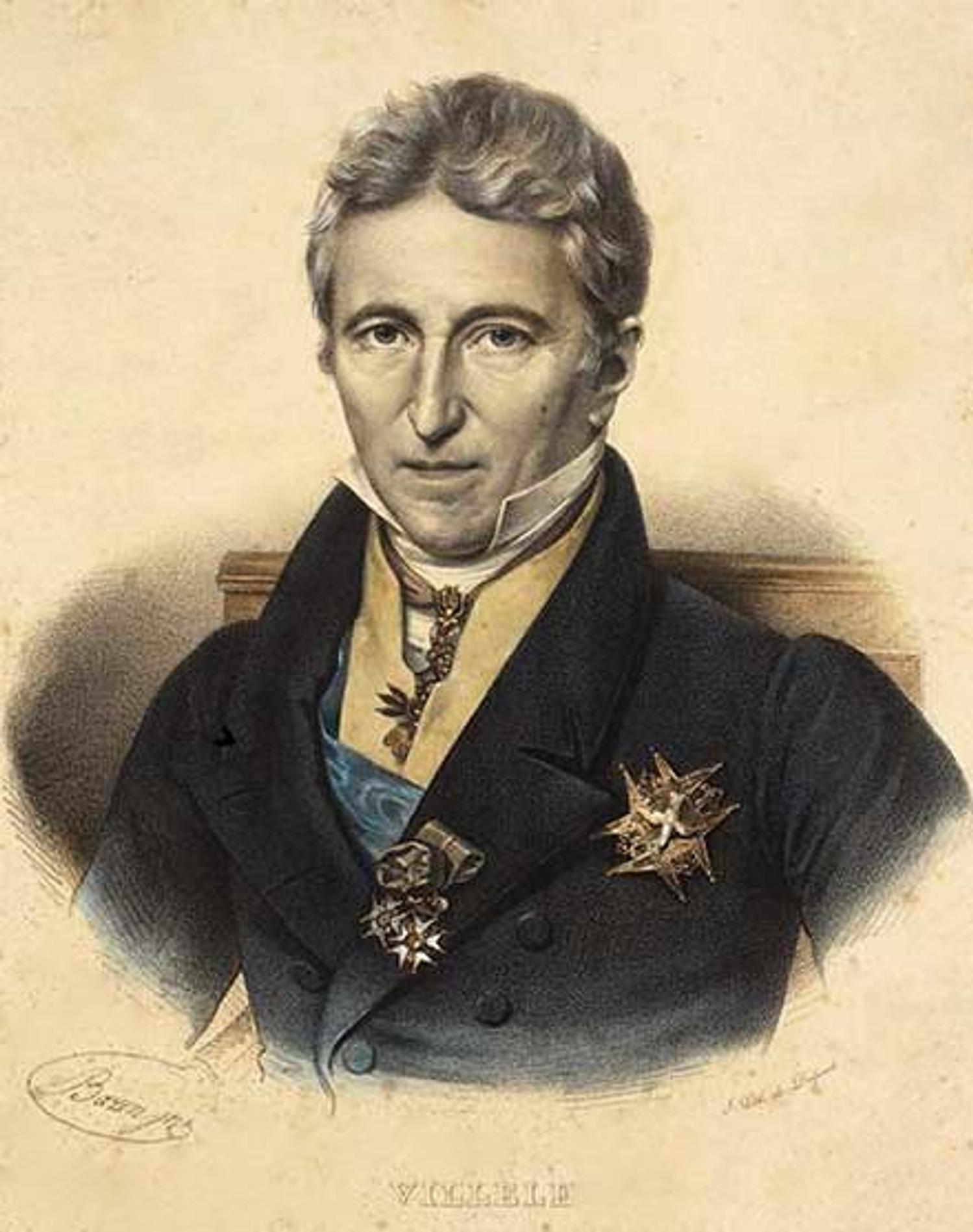
Villèle ( Joseph de), lithography by François-Séraphin Delpech, 1st quarter 19th century.
For more information:
Jean BARBIER
Chief curator of the Villèle museum - 02 62 55 64 10
jean.barbier@cg974.fr
Richenel HUBERT
Contact person for sponsorship, cultural service of the Departmental Council of Reunion Island 02 62 90 32 48 / richenel.hubert@cg974.fr