From mansion to museum
The Desbassayns estate covers a vast area built up during the second half of the 18th century by a rich Creole family, the Panon Desbassayns, who united several concessions.
Over the years these Creole landowners constantly increased the size of their plots, all more or less wide strips of land, stretching from the legal limit on the shore up to an altitude of 1400 m in the mountain regions. In 1780, the Desbassayns estate was estimated to cover approximately 306 ha, 420 ha in 1791, achieving 492 ha in 1845, which included 277 ha of agricultural land concentrated around Saint-Gilles, worked by 295 slaves who were replaced by over 200 indentured workers after slavery was abolished in 1848.
The death of the widow Desbassayns in 1846 signalled the end of the prosperity of the estate, which was passed down between its heirs, fruits of an alliance with the de Villèle family, nobles originally from Toulouse.
The crisis facing the sugar industry in the Reunion during the second half of the 19th century and lasting up to the 1970s did not present a threat to the physical unity of the estate, but imposed changes to its management structure, with, notably, the creation of the Société anonyme de Saint-Gilles, a public limited company set up in 1927, purchased by the Crédit foncier colonial bank in 1960 and renamed Sucreries de Bourbon 10 years later.
When the Departmental Council of Reunion purchased the vast estate in Saint-Gilles-les-Hauts in 1974 from that descendants of Ombline Desbassayns for the symbolic amount of one French franc, the notarial deeds of the sale included the project to create a historical museum on the estate. After the Natural History Museum (1854) and the Léon Dierx museum (now art gallery) (1911), the historical museum of Saint-Gilles-les-Hauts then became the island’s third museum and the first to be set up after the island became a French department.
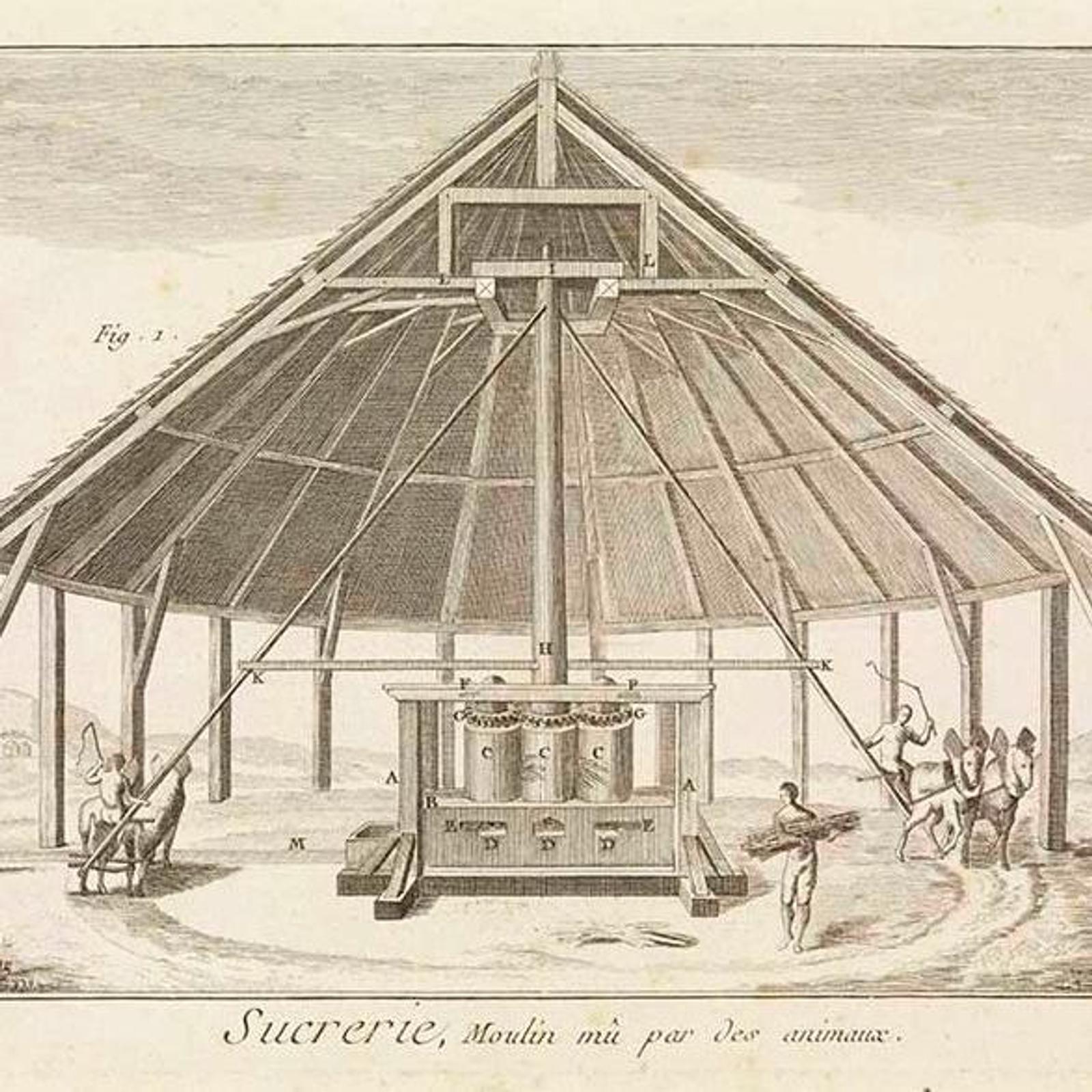
Reunion’s first ‘museum site’, the whole estate consists of a vast area covering approximately 10.5 hectares and has been registered on the additional list of French historical monuments since 16 June 1997. The entire estate has been classified since 12 December 2019. It consists of six main architectural structures: a traditional Creole kitchen, an outhouse with wooden tile cladding, a ‘hospital’ for the slaves, a domestic chapel, as well as a sugar factory, all vestiges of the activities that used to be carried out on the Desbassayns estate, organised around the mansion, the architecture of which drew inspiration from models in Pondicherry.
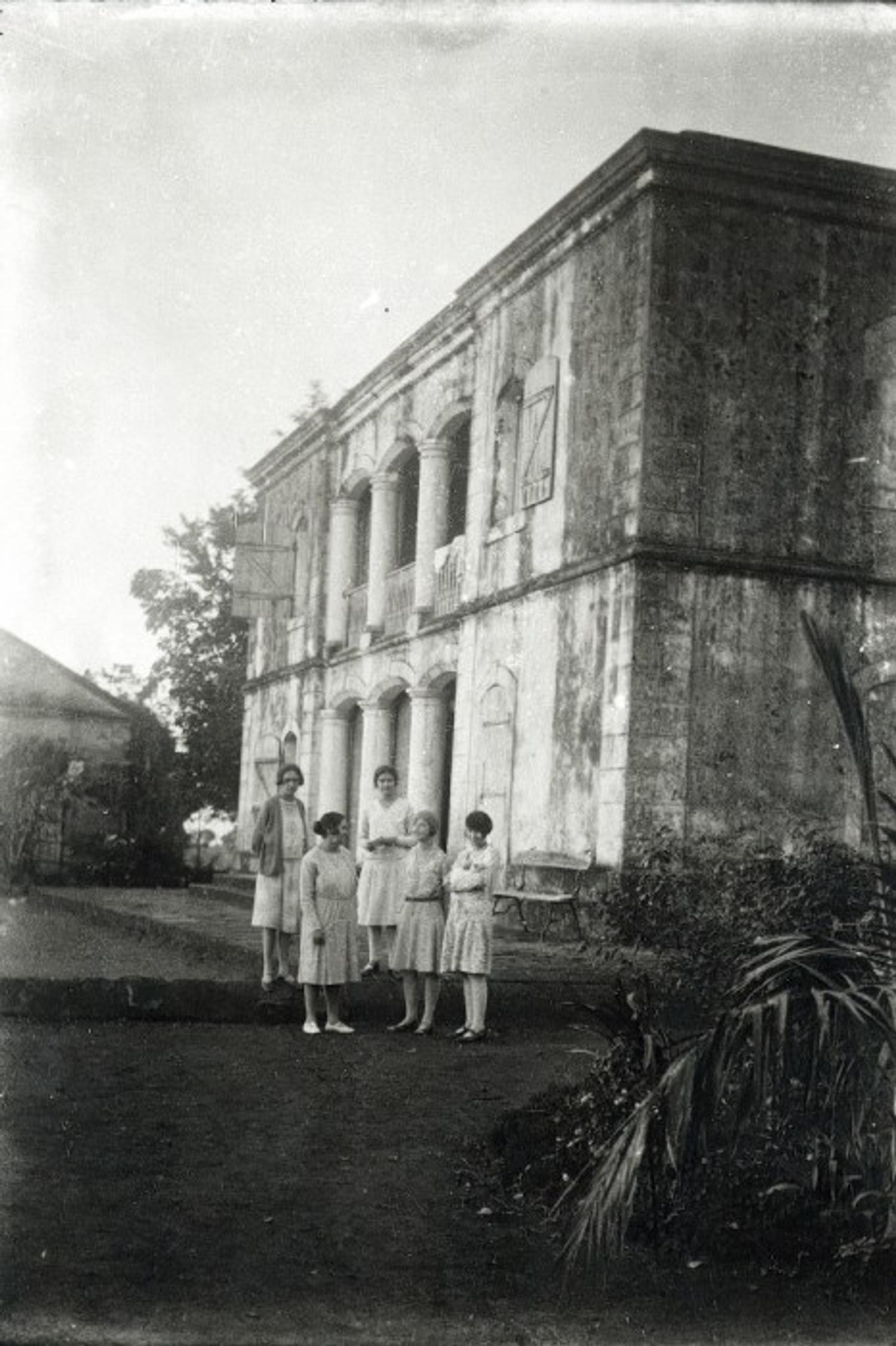
Desbassayns House: portrait of women in front of the west façade,
anonymous, 1st half of the 20th century
Photographic glass plate
18 x 13 cm
The collections of the Villèle museum
In 1974, when the Villèle museum was set up, the Departmental Council of Reunion purchased an initial collection consisting of furniture from the family mansion, representing 80 elements on the inventory. Most of the furniture, such as the Louis XVI chest of drawers and two corner-cupboards, the clock referred to as ‘la pendule des maréchaux’ (marshals’ clock), the dining table and the Louis XV-style sitting room furniture, is displayed in the seven ground-floor rooms of the museum.
The museum was also enriched through the acquisition of collections from the historical section of the Léon Dierx museum set up in 1911, thanks to donations made by the rich families of factory owners and the descendants of former military nobility.
A number of elements from this collection are still conserved today: weapons, including a sword that belonged to the lieutenant Sicre de Fontbrune who lead the troops troops during the siege of Madras, another sword that was a gift to commander Jean-Baptiste Azéma, as well as the pistol belonging to François Mussard, a famous hunter of fugitive slaves. During the same period, the guitar belonging to Célimène, a popular female poet referred to as ‘the Muse of Trois-Bassins’, was also added to the collections.
Six model boats were acquired in the 1970s, reproductions of 18th-century ships manufactured on Mauritius Island by the company Comajora.
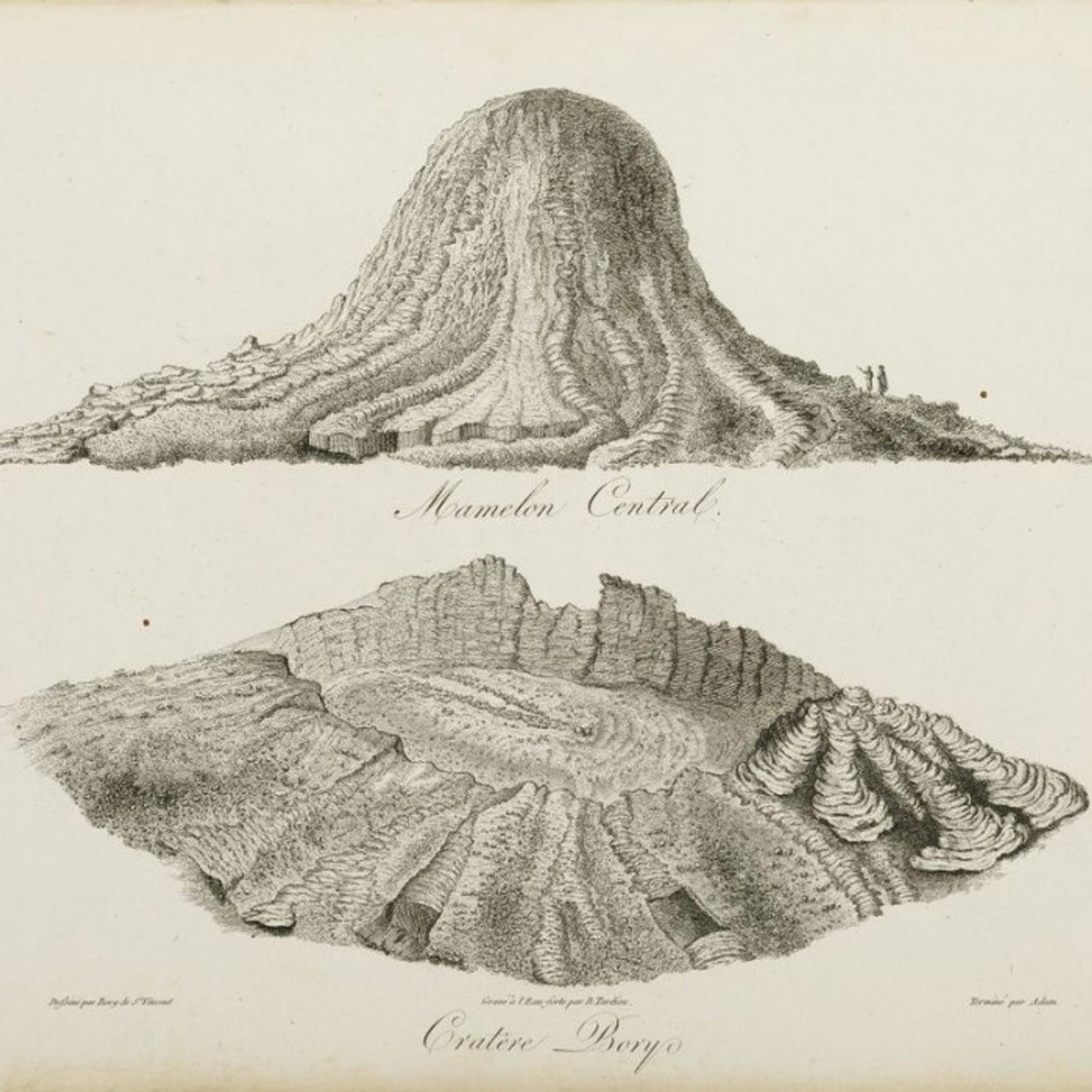
After 1989, the historical collection of the Villèle museum was developed thanks to regular acquisitions such as etchings including a series of 26 lithographs by the Mauritian Artist Robert Edouard Pitot, as well as richly illustrated works such as Voyage autour du monde by Cyrille Laplace, or the charming drawings depicting of views of Saint-Paul by the abbot Barrère.
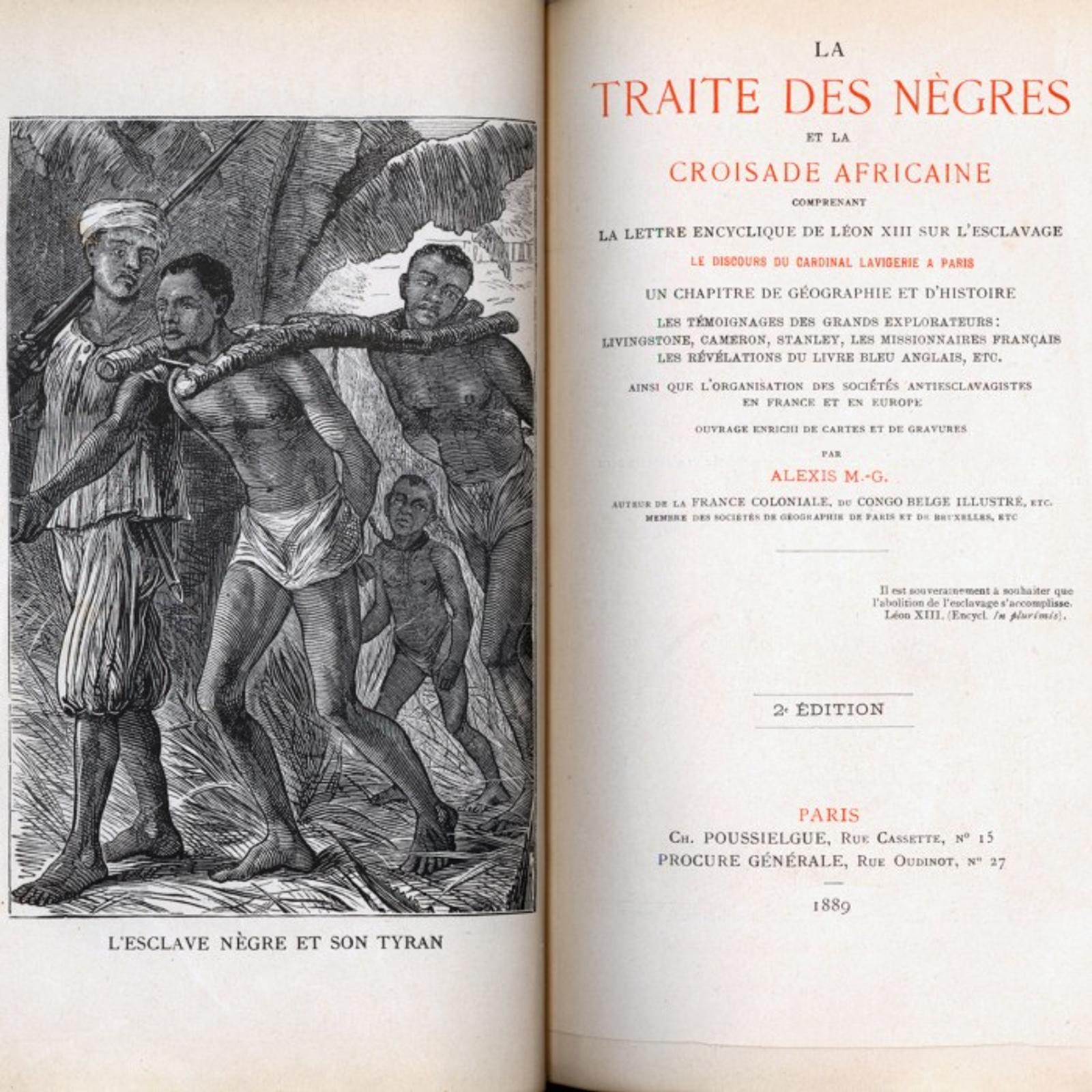
In the years 2000, several donations were made by the Villèle family. These included silverware, the portrait of a minister and the Saint-Louis cross, the medal awarded to Henri Paulin Panon Desbassayns. An important donation made in 2012 by Anne-Marie and Michel Polenyk represented an important contribution to the collections, with over 2000 different documents: etchings, French, English and German journals, maps, historical postcards and photographs, as well as bibliophile works including a large number of accounts written by explorers who travelled through Southern Africa.
Visit by topics
Six important topics are proposed, placing the collections in their historical context.