Collections topics / Voyages of exploration and colonial conquests
In the collections of the Villèle museum, this topic essentially focuses on exploratory voyages which followed on from the important discoveries made by European countries (15th to 17th centuries), initiated by the Portuguese, who were the first to pinpoint the position of Reunion island on the world map drawn up by Cantino (1502). The island was initially given the Arab name of Dina Margabim, ‘Island of the West’.
Benefiting from the many technical innovations applied to navigation and motivated by the new philosophical and scientific currents of thought, which placed reason and experience above belief and faith, the number of important exploratory voyages increased as from the 18th century. This was the period of mapping, the study of customs and traditions and of fauna and flora and when important scientific theories were sounded out in their context.
As during the age of discovery, these long voyages were also the opportunity to open out new maritime trade routes and reinforce or establish new colonies.
This topic around the voyages in the Indian Ocean zone, as well as on the African and Indian continents, is an essential element of the strategy of the Villèle museum, enabling contextual study of the history of Reunion and its cultural development.
See the collection
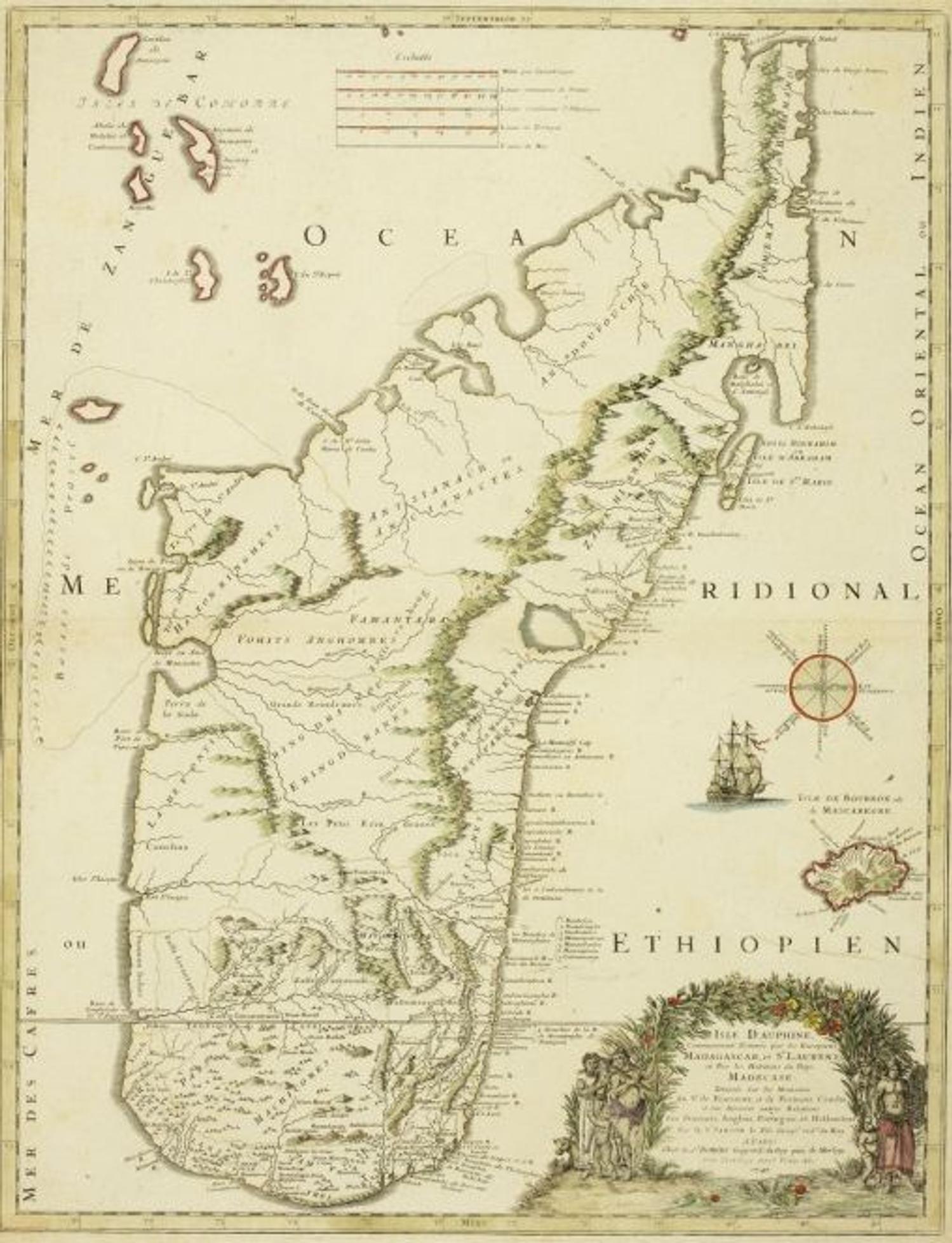
Inv. 1995.40
Isle Dauphine, communément nommée par les Européens, Madagascar et St Laurens et par les habitants du pays Madecase...(Isle Dauphine, commonly named by the Europeans, Madagascar and St Laurens and by the inhabitants of the region of Madecase...)
Mapped by Guillaume Sanson, 1667
Printed by Sr. Robert, king’s geographer, quai de l'horloge, with a 20-year privilege, 1741
H. 62 cm x L. 42 cm
It was in 1642 that Cardinal de Richelieu submitted his letters patent to the ‘East India Company’, with the aim of “trading and negotiating in Madagascar".
Colonisation of the island was not easy due to the prevalence of fever, as well as the early colonisers being attacked by mistreated populations. The massacre perpetrated by the inhabitants of Fort-Dauphin in 1674 saw the end of this first attempt at colonisation.
The small number of settlers who managed to escape were evacuated to the recently-formed colony on Bourbon island.
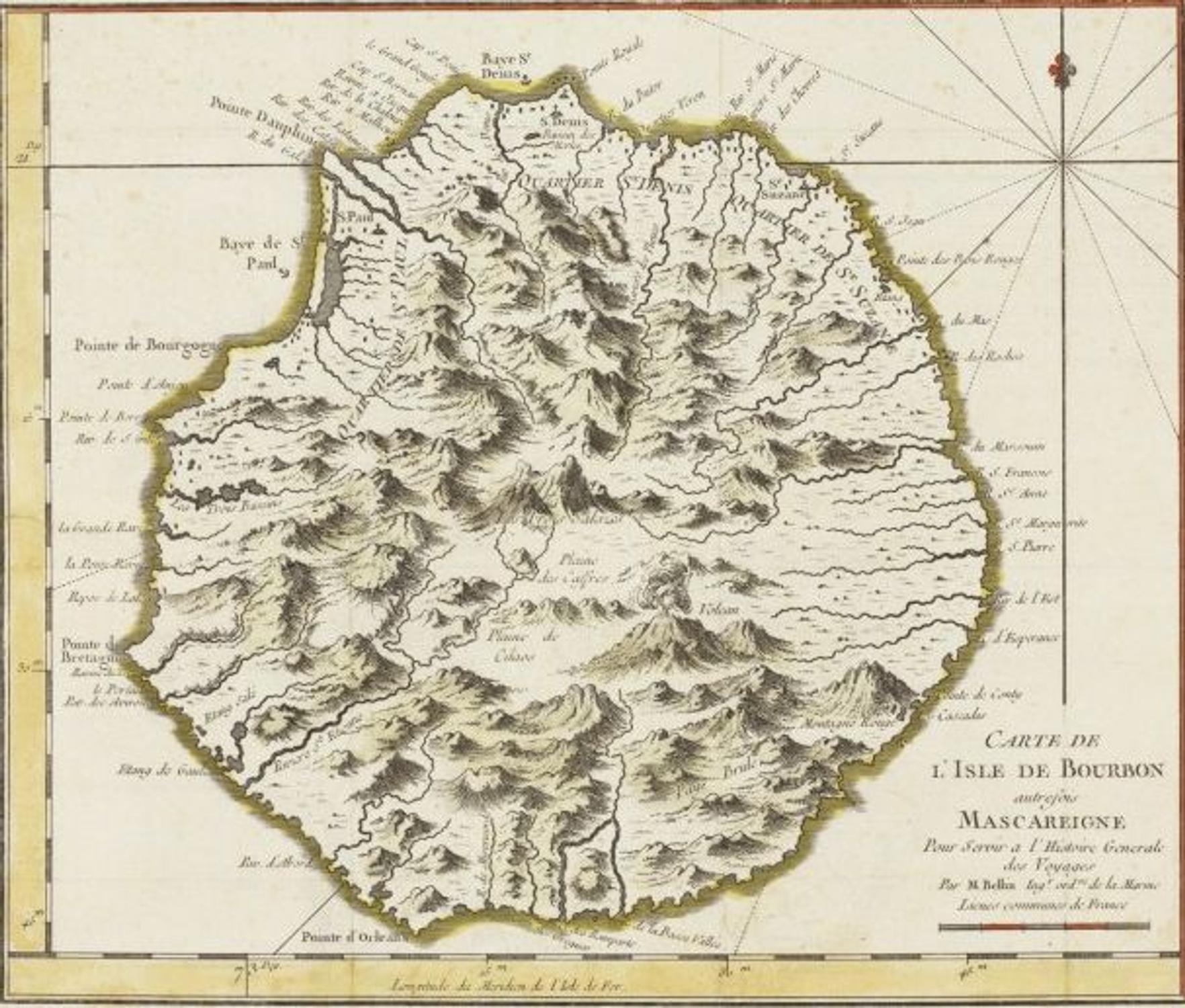
Mapped under the names of Santa Apolonia and Mascarenhas around 1520, the island bore the name of Bourbon from 1649 to 1793 and from 1810 to 1848, then was named La Réunion by the 1793 revolutionaries. Napoleon 1st gave the island his name, Bonaparte, from 1806 to 1810.
The map presented here shows has an original shape, with imprecise outlines far removed from reality. The three oldest districts are mentioned (Saint-Paul: 1665, Saint-Denis: 1689 et Sainte-Suzanne: 1704). Immediately preceding the Revolution, the island had 6 districts and 11 parishes.
Inv. 1992.2
Carte de l'isle Bourbon autrefois Mascareigne pour servir à l'Histoire Générale des Voyages, (Map of Bourbon island, formerly Mascareigne, for use in the General History of Voyages) by M. Bellin Ingr, on order of the French Navy
18th century
Enhanced etching
H. 27 cm x L. 27 cm
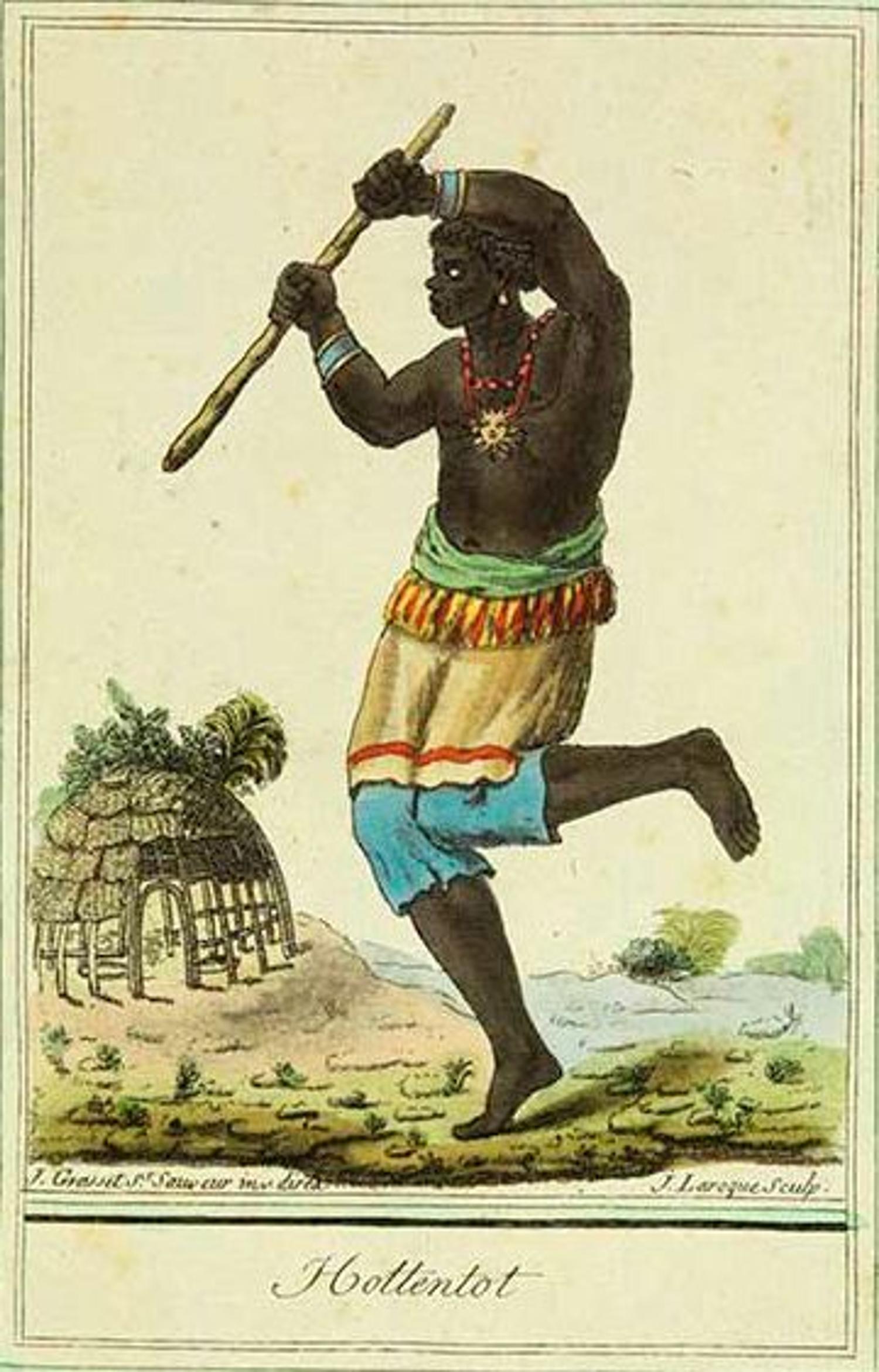
“The land of the Hottentots, situated in Africa at a latitude of 23 to 55 degrees and a longitude of 36 to 16 degrees, is perhaps the only region in the new world that Europeans can truly claim to be their property: they arrived as thieves and conquerors in most colonies, but bought the right to settle on their land from the Hottentots themselves. Van-Tikbec, traded with these people to obtain ownership of the Cape for the sum of 15,000 florins, and the savages retired further back into the hinterland. However, in 1660, the application of the treaty gave rise to bloody wars that soon ended through the signature of another transfer.”
Extract from Encyclopédie des voyages, contenant l'abrégé historique des mœurs, usages, habitudes domestiques, religions, fêtes, supplices, funérailles, sciences, arts et commerce de tous les peuples… « Hottentots, Namaquas, et sauvages de la terre de Natal », (Encyclopaedia of voyages, containing a historical summary of customs, traditions, domestic habits, religions, festivals, punishments, funeral rites, science, art and trading of all peoples, “Hottentots, Namaquas, and savages of the region of Natal”), Vol. 3 T. 4 J. Grasset-St-Sauveur 1796, published by Deroy, Paris.
Inv. 2002.4.10
Hottentot
Engraved by J. Laroque around 1796
Published in l’Encyclopédie des voyages... (Encyclopaedia of voyages) Vol. 3 T. 4, J. Grasset-St-Sauveur
Published by Deroy, Paris, 1796.
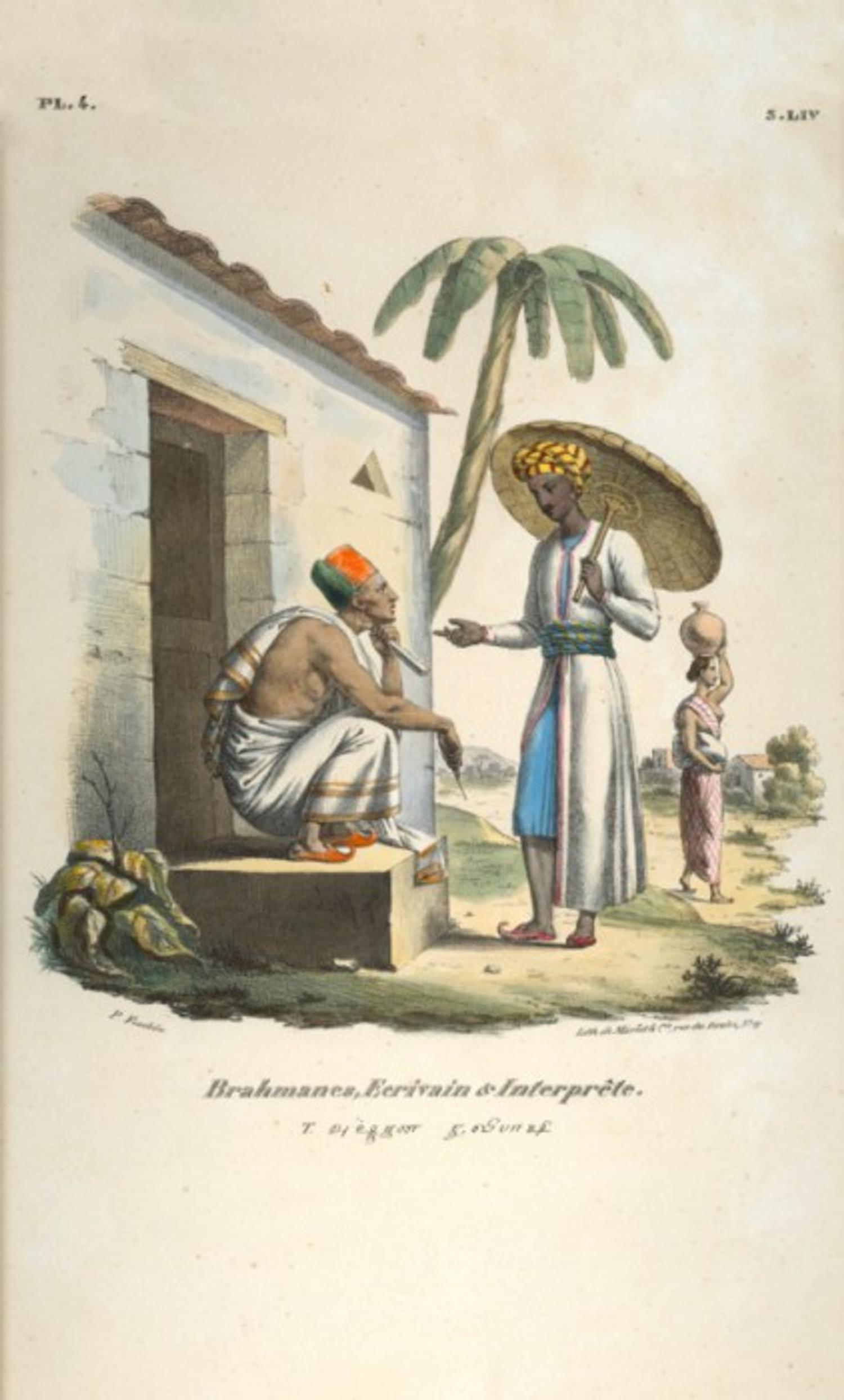
"It is an uncommon curiosity to be determined to know what you possess; one is hardly curious to know what one hopes to possess or what one no longer possesses. So Europeans in general only began to study the origin, the early civilisation and the ancient traditions of the tribes of America when this great country was preparing to break the chains of its relations with Europe; so the French, for so long settled along the east coast of the vast Indian peninsula, waited until they had lost all their possessions, with the exception of just one town, before they took into any consideration the traditions and beliefs of the indigenous population, to understand that European civilisation is absolutely not essential for its prosperity.”
Extract from L'Inde française, ou collection de dessins lithographiés représentant les divinités, temples, costumes, physionomies, meubles, armes et ustensiles, des peuples hindous qui habitent les possessions françaises de l'inde. (French Indian colonies, or a collection of lithograph drawings representing divinities, temples, costumes, physiognomies, furniture, weapons and utensils of the Hindu people living in the French possessions of India). 1827-1835, Published by J. J. Chabrelie, Paris.
Inv. 2003.10.1 à 26
Set of 26 engravings
Chromolithographs, 19th century
Various artists, including indigenous (Mouchis),
Under the direction of M. Géringer
Lithograph Marlet et Cie
H. 41 cm x L. 28 cm
Published in ‘L'Inde française...’ 1827-1835, Published by J. J. Chabrelie, Paris.
 . Paul et Virginie