Johanna Grégoire | Residency "Patrimoine et création" (Heritage and creation) 2021 at the Villèle museum
BAGASS! Enhancing residue
First stage
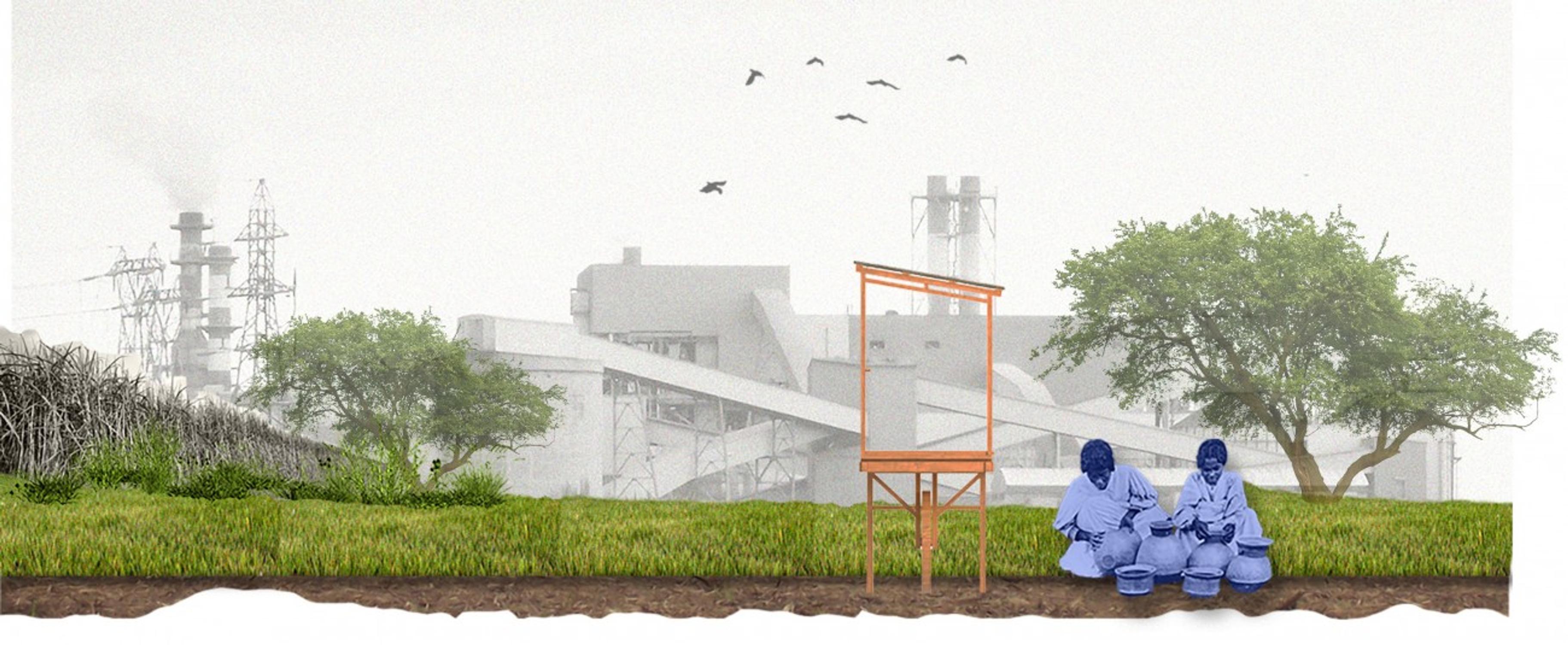
Between archives and fiction, Johanna Grégoire, 2021
Digital collage
Archive documents
Jean Legros collection
Context
In this era of low tech and all the issues this raises for artists, designers and architects, we can legitimately consider that the residues of agricultural production deserve to be put to new uses.
Bagass! is integrated into the geographical context of the neighbourhood of Villèle, situated at the heart of the former estate of Madame Desbassayns in Reunion. The Villèle museum is one of the rare places bearing witness to a past which has left us with just tenuous remains. This type of estate was the basis of a society of which the model has continued to evolve, leaving Reunion with a heritage: that of sugar-cane.
A link between this very recent past and modern industrialised society, the issues related to the manufacture and those of the process of development are treated here through the prism of design. Bagasse – the residue from sugar-cane remaining after the juice has been extracted – becomes a basis to work with. Through the process of harvesting, transforming and enhancing, integrated within the society of the island, Bagass! aims to turn agricultural waste into a resource.
Johanna Grégoire
Transmission
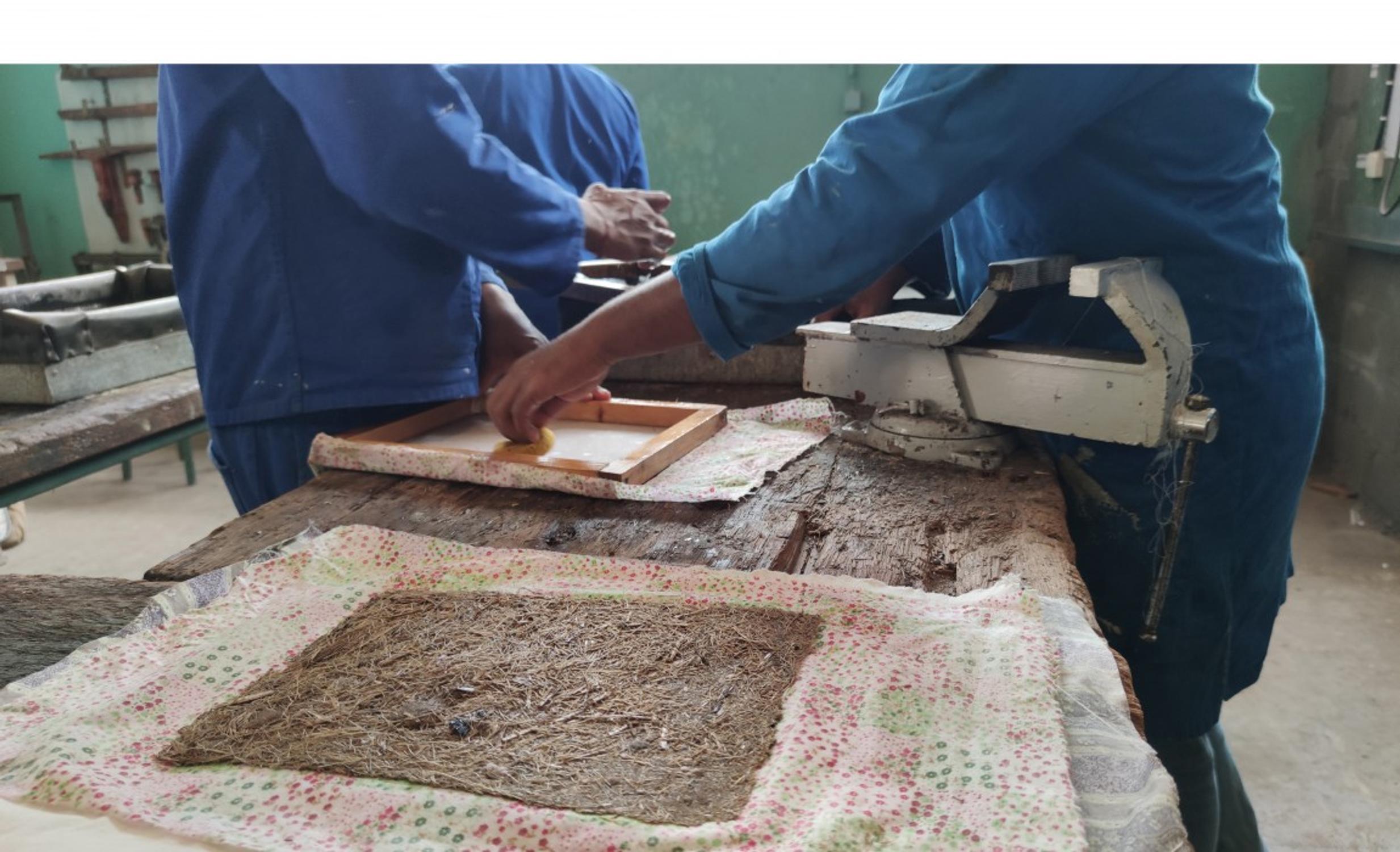
"Spending several weeks full time at the Célimène Gaudieux junior high school in La Saline, my project consisted in transmitting to young pupils the act of creation using a waste product, creating a space for sharing, with the aim of exploring the idea of ‘doing it oneself’ and personal creation, based on manipulation of a locally-produced residue: bagasse.
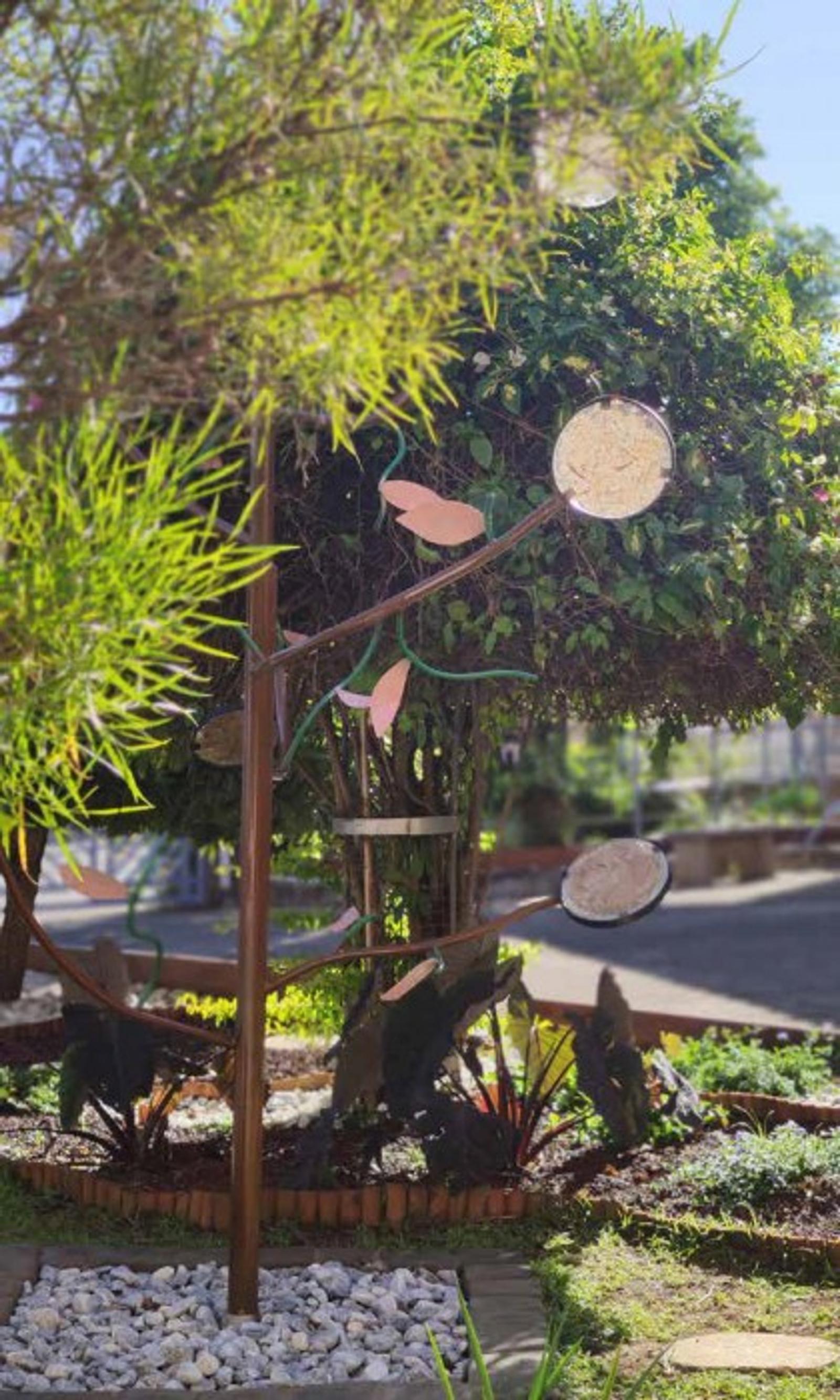
In the context of the project, we focused on the production of an object in an imaginary utopian territory. As part of the competition for enhancing their school yard, the high-school pupils analysed the notion of a ‘Zen garden’: a peaceful space used to slow down and meditate. Using manual handcrafting techniques, we created a ‘tree of life’, a shady place to gather, open to discussion on all topics.
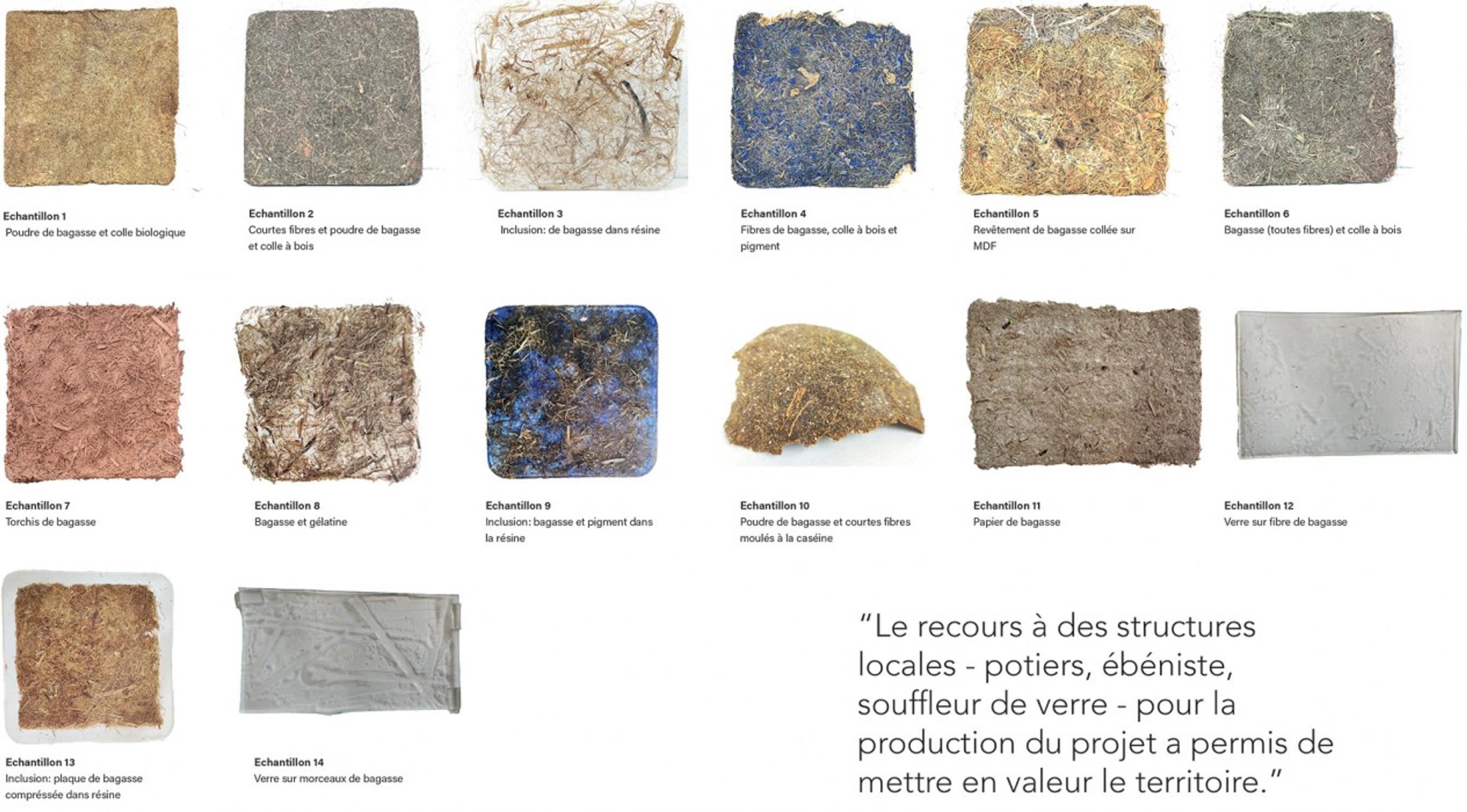
Over ten sessions, we carried out a series of experiments around the residue that we dried, mixed, coloured and compressed. These processes led us to a collective analysis of formal propositions and enabled us to define issues linked to the resistance of materials: combining bagasse and resin creates a material that is resistant to various climatic conditions and invites us to observe the character of sugar-cane fibre.
As a designer and through a process of upcycling, I led the pupils, simply and creatively, to consider committed society topics such as ecology and circular economy, as solutions to the difficulties inherent in the context of insularity."
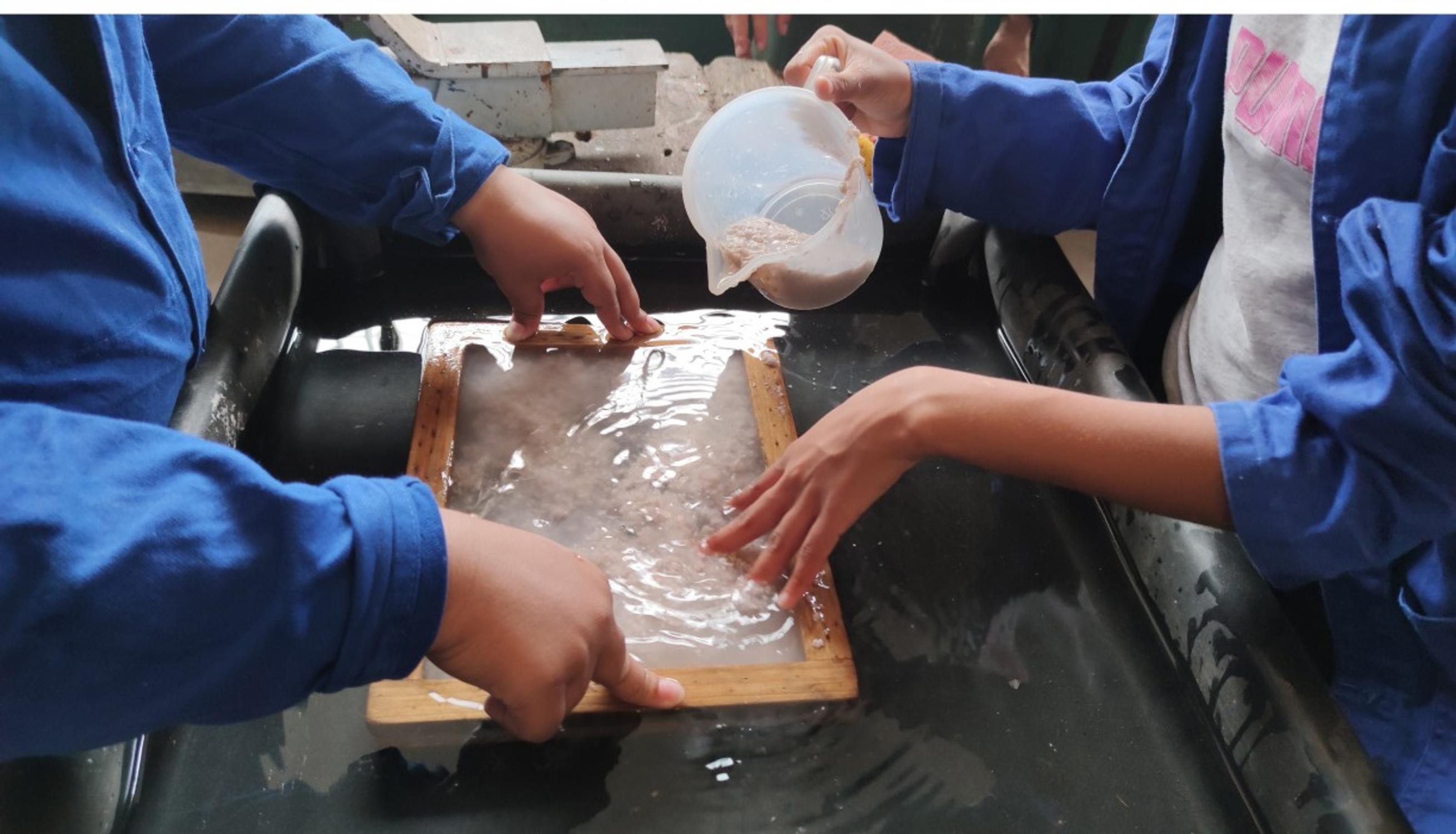
"Creating shade,
using bagasse,
making waste visible...
The collectively produced object
reflects a multitude
of identities focused on a common project."
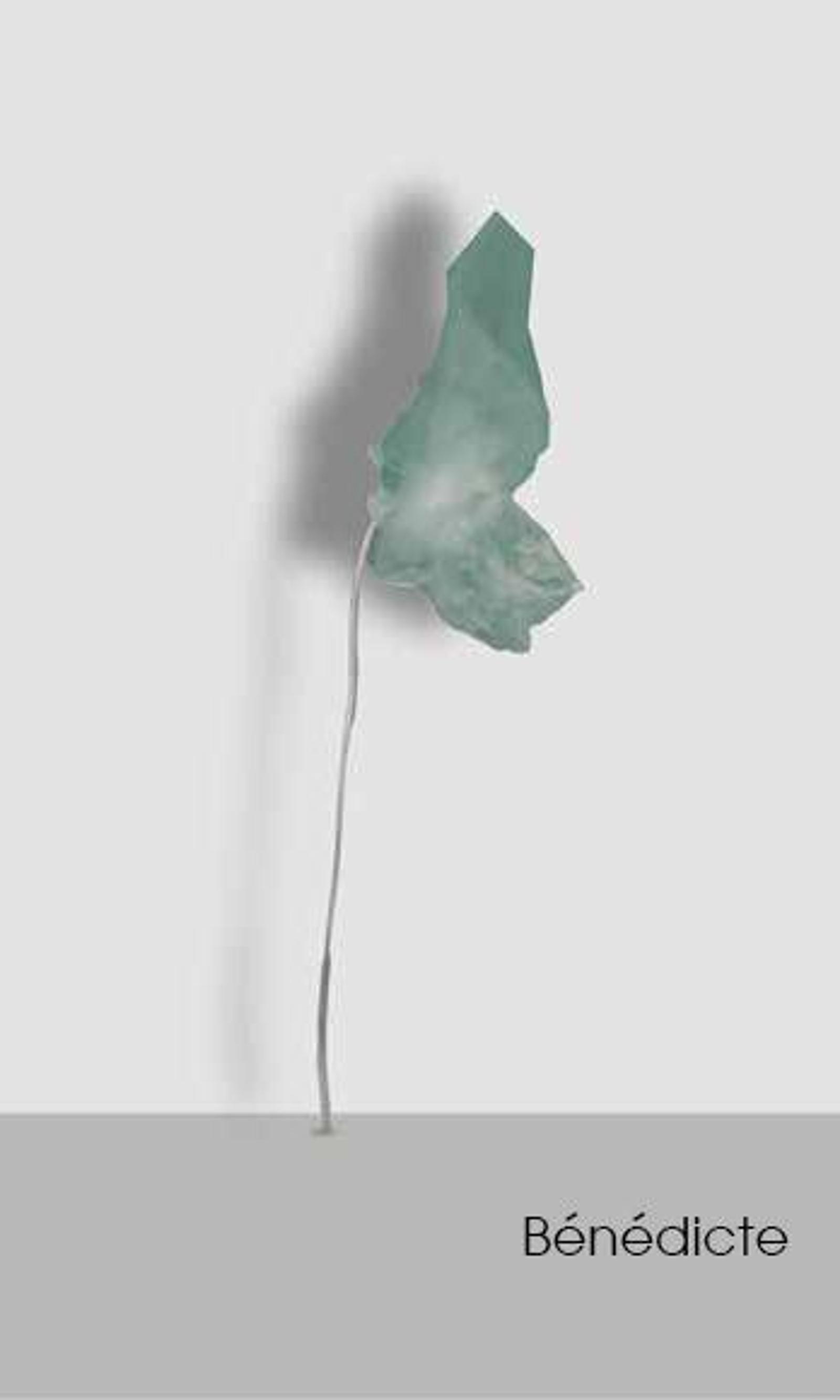
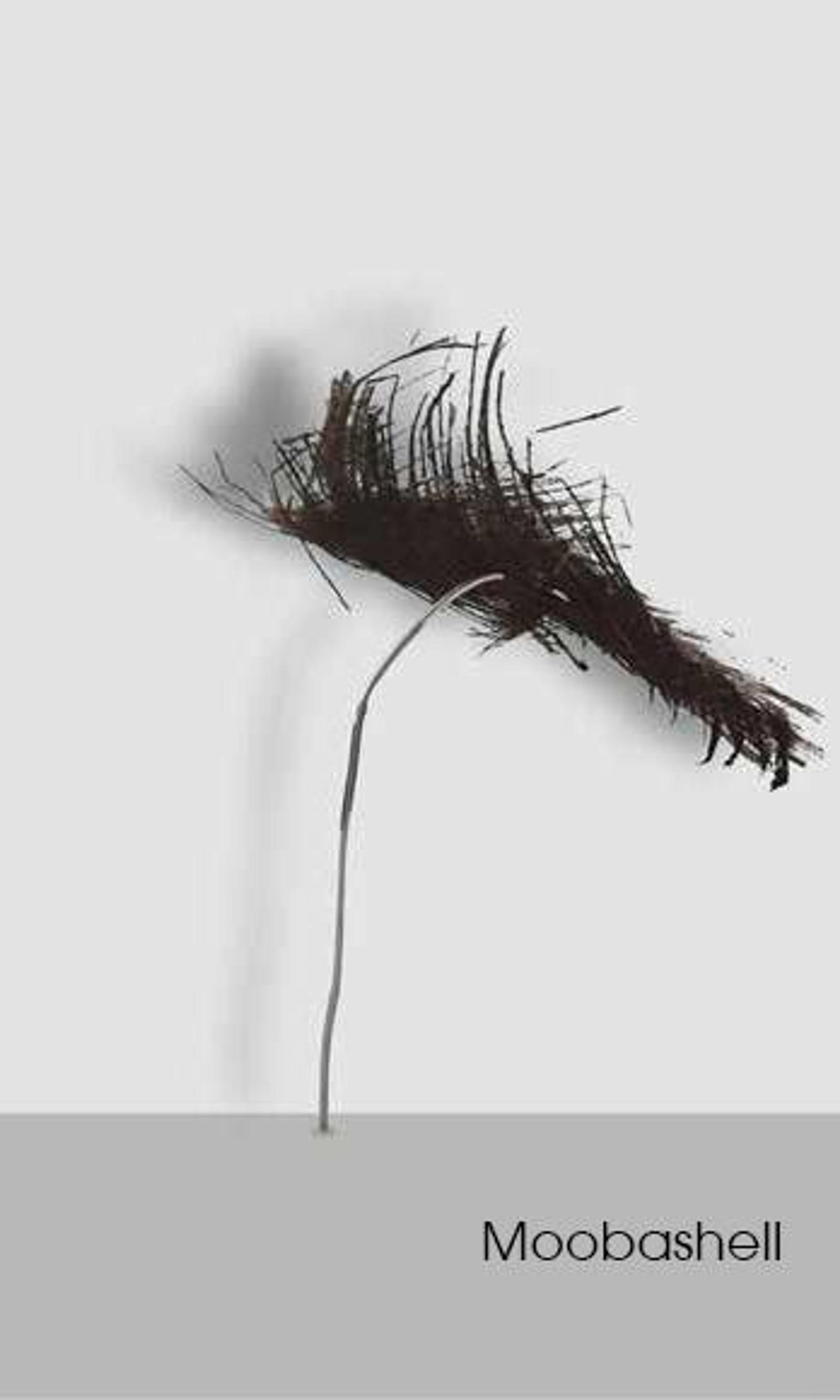
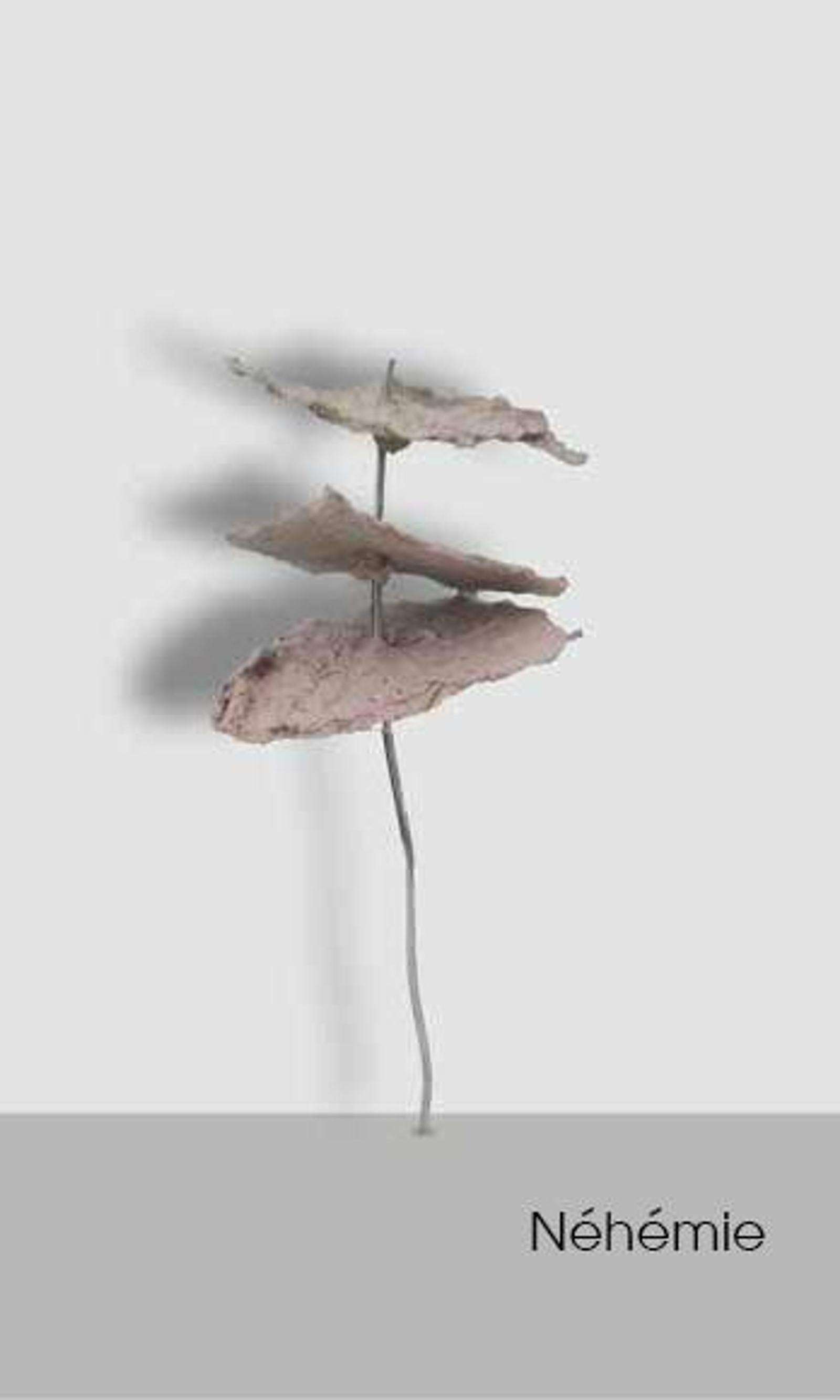
Fictions
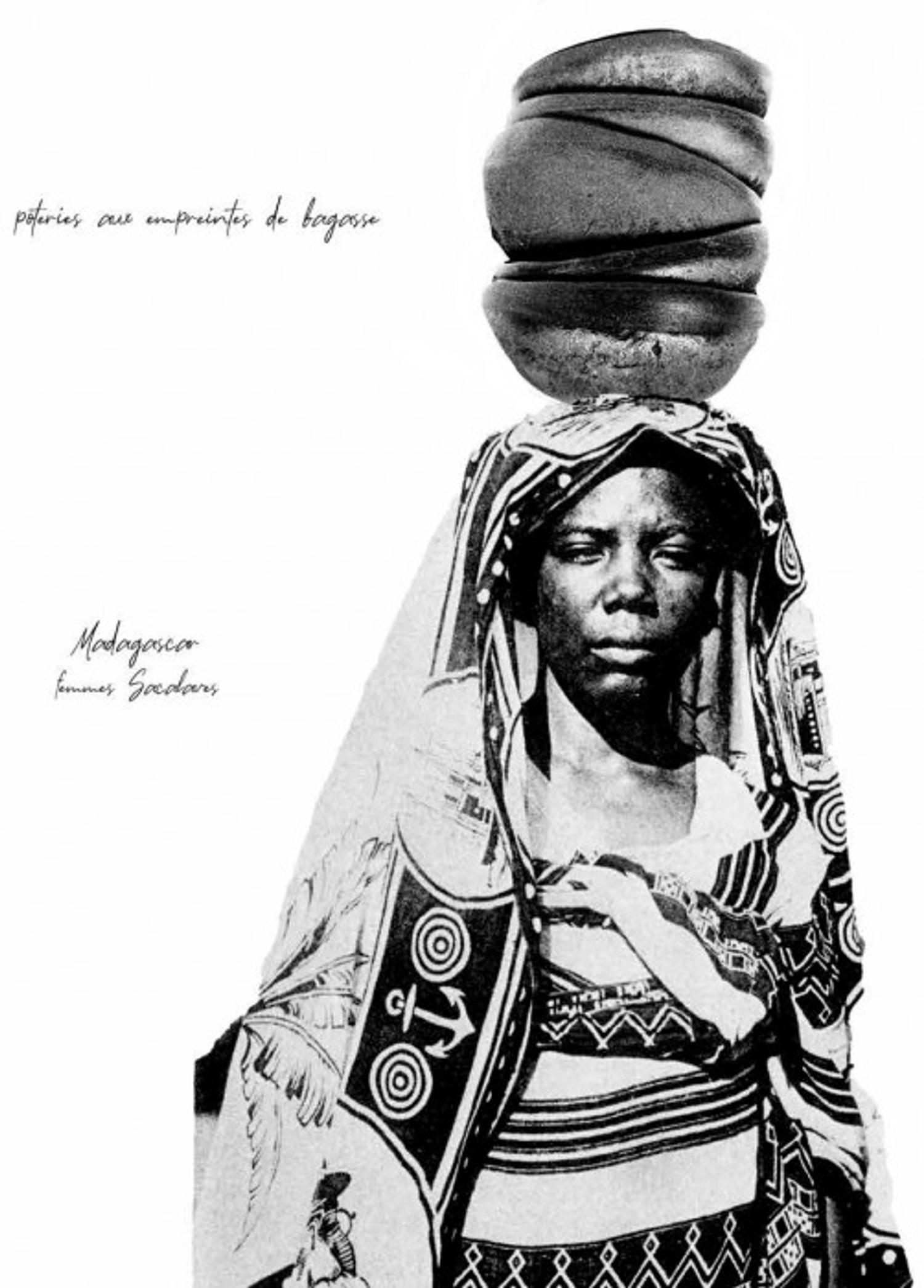
Digital collage, Johanna Grégoire 2021
Jean Legros collection
Indian Ocean image library
By finding the footpath up the volcano, taming vanilla, hoisting up his or her name “from the breaking of the waves to the peaks of the mountains”, the slave appropriated Reunion island. Those people, treated by others as mobile goods, breathed life and soul into Bourbon island. In the sugar-cane fields, in the holds of the slave-ships, on the estates where they worked as servants, they could not hope for such eternity.
Evening has fallen. Six o’clock, not quite dinner time. Under the still night sky, the dark silhouettes of men and women can be seen. A shadow moves under the pine trees, while another slips along the dirt track winding between the fields of sugar-cane in flower. Below, the figures of a few huddled women stand out through the billows of smoke.
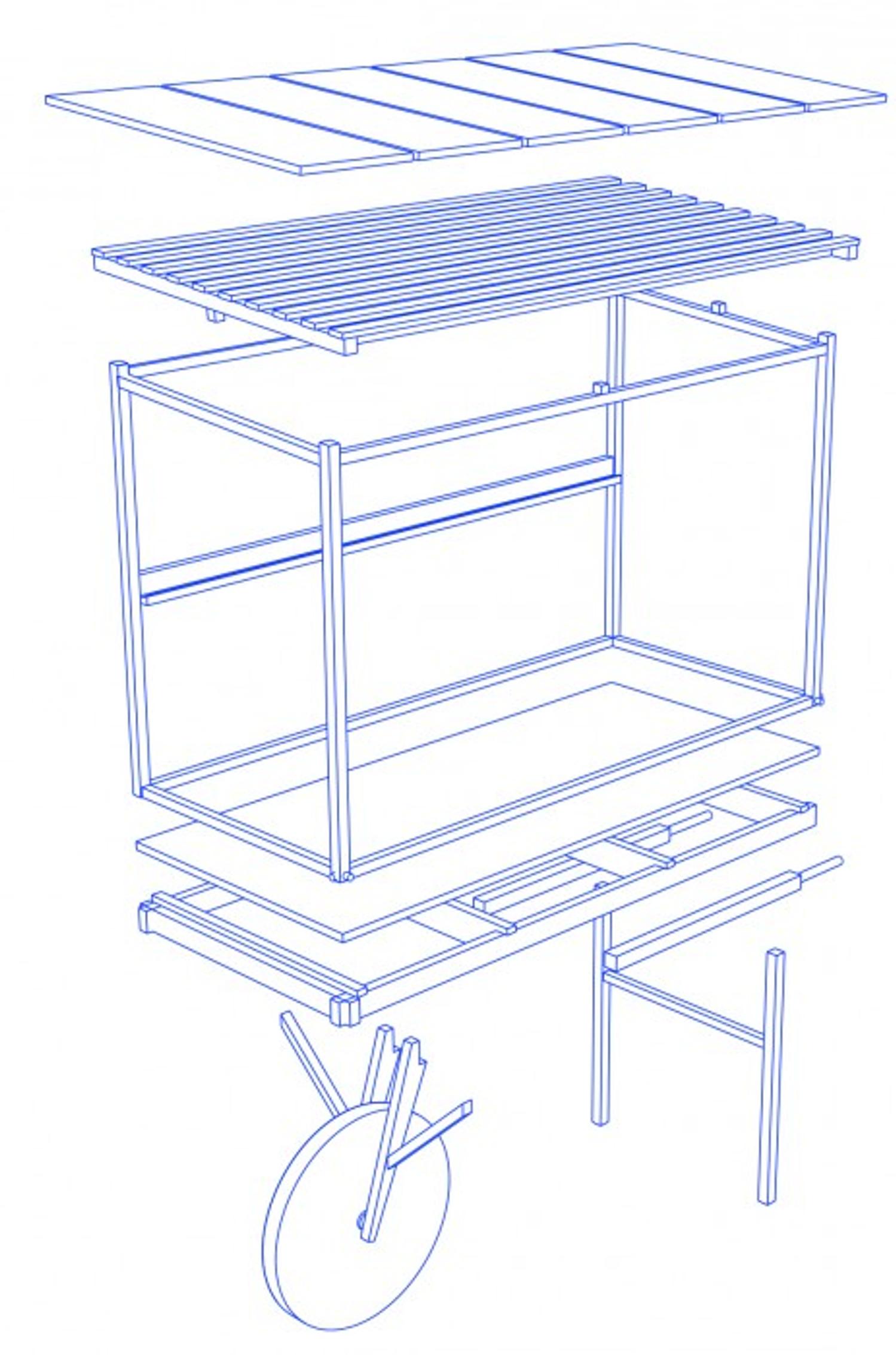
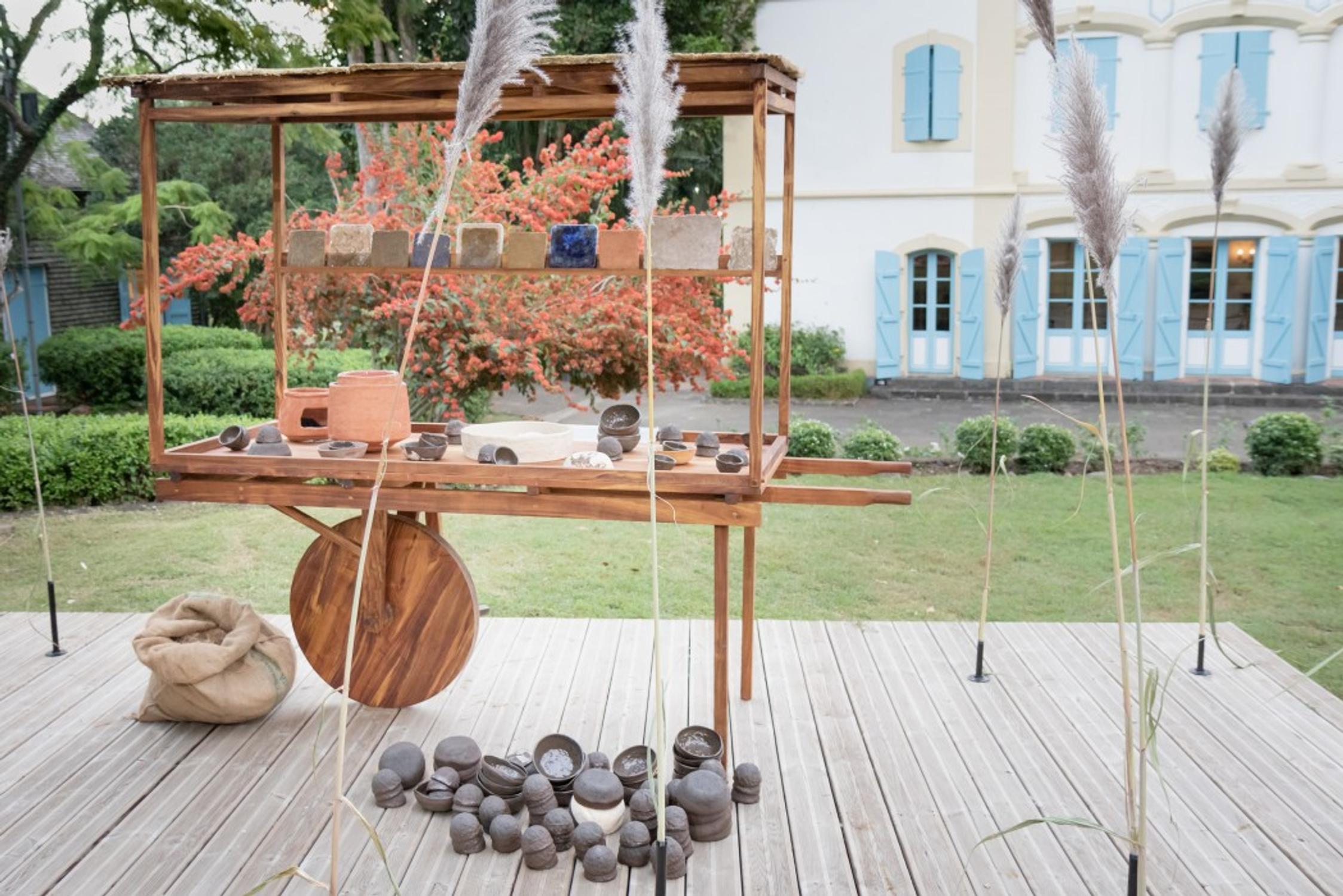
In the centre of the scene can be seen an improvised kitchen. A woman, her back bent, walks towards it, carrying a lantern. On her back, she carries a straw rucksack filled with small terracotta bowls. A faint light cast on a piece of furniture shows up a large tray balancing on two legs and a rough wheel. The kitchen appears rooted to the ground. Placed on the tamarind tray, a terracotta oven, still smoking, an enamelled basket brimming with mangoes, bananas and custard apples and a basin for hand washing, filled with water. The old lady places the lantern on the stove, topped with gold-coloured twigs. Others come to join them, sitting down exhausted on the ground. The ensuing silence is broken by the clanking of the pottery. The faint glow of the embers lights up the scene and the meal begins.
Johanna Grégoire
Enhancing
"Madame Desbassayns’ will mentions
a kitchen for the slaves.
It has never been found…
An opportunity to apply design
where it’s least expected.”
Bourette, mobile kitchen, Johanna Grégoire, 2021
Model plan
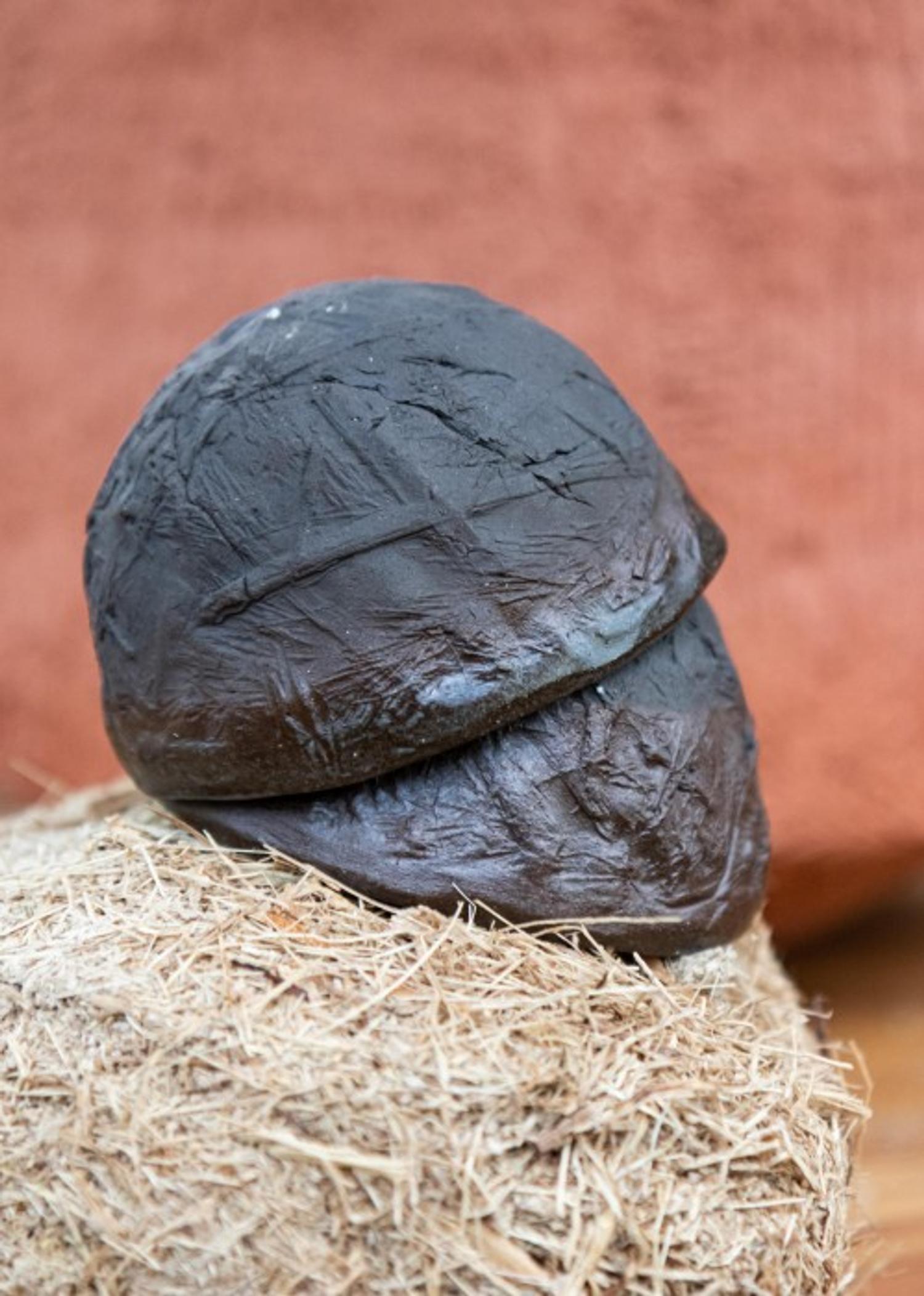
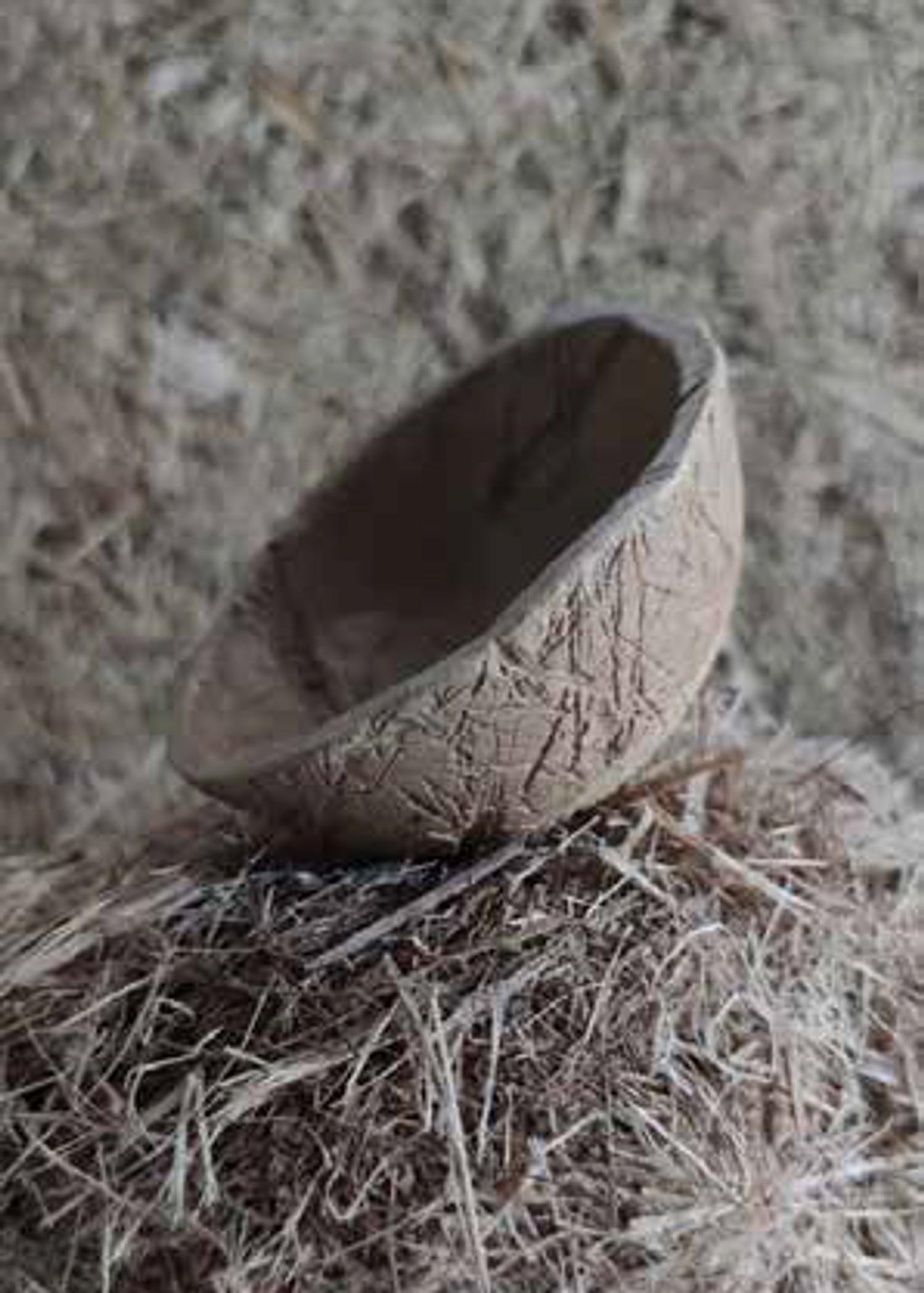
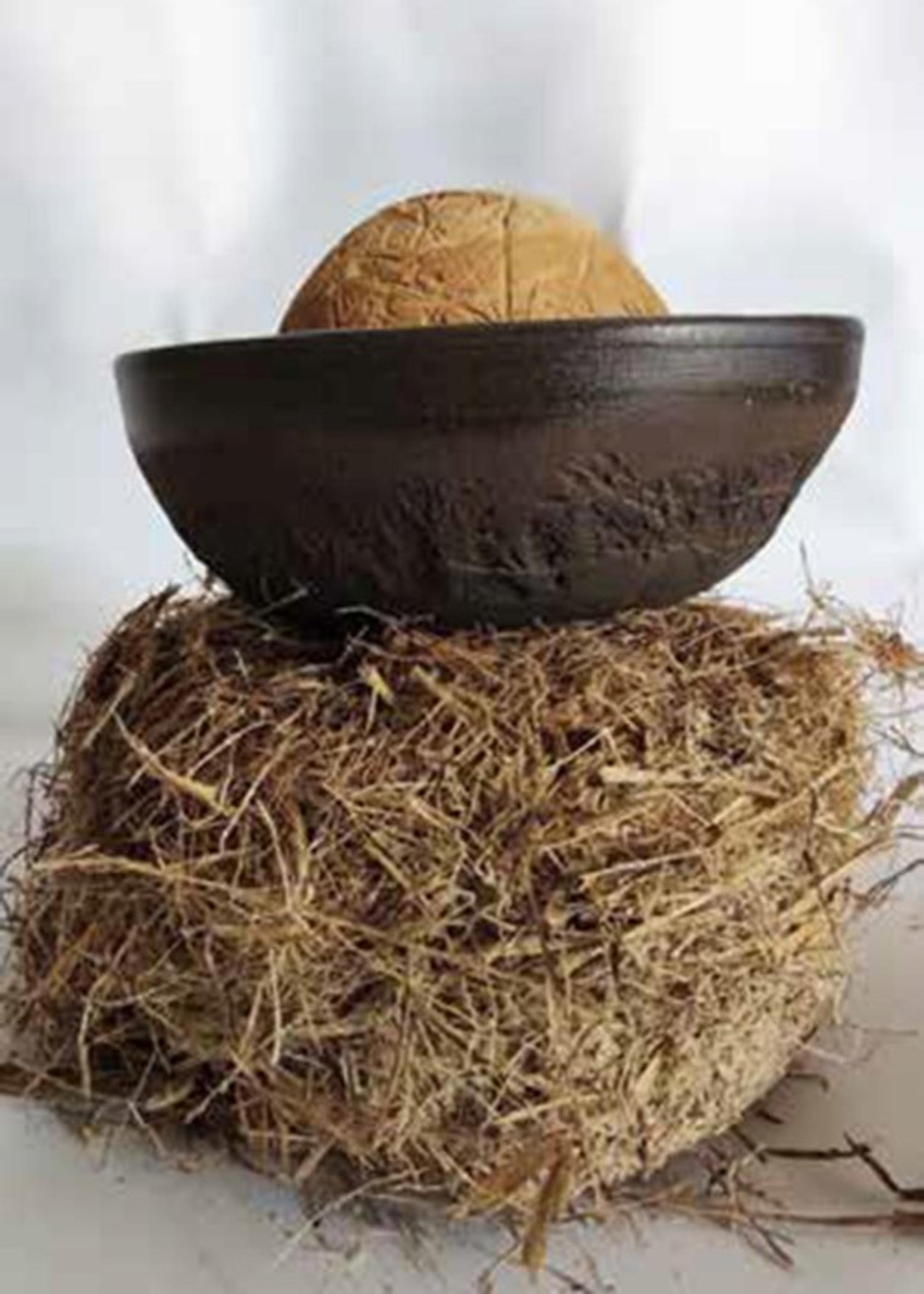
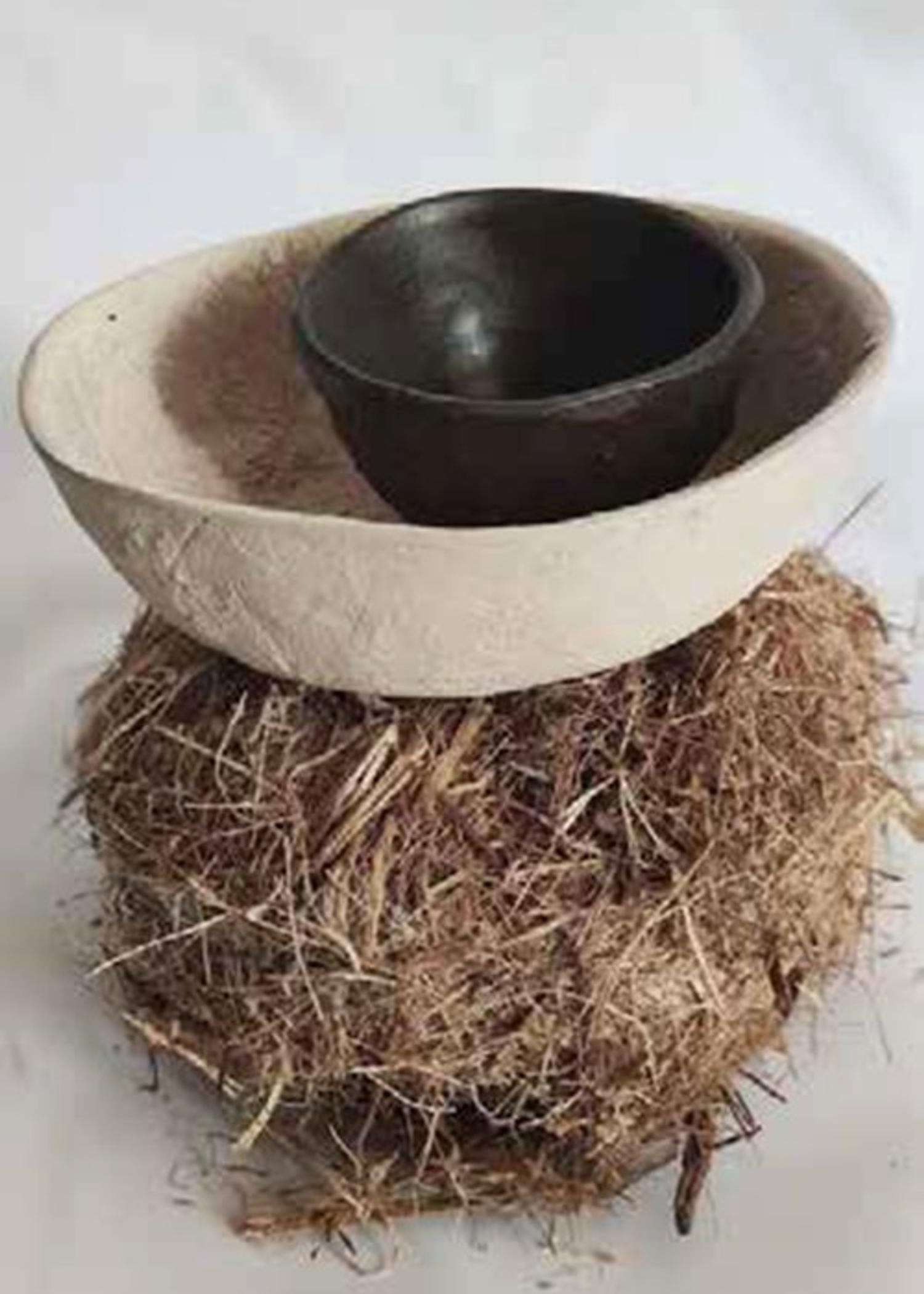
"After gathering up the bagasse, I quickly felt the need to get the feel of the substance through touch. The aim was to transform the puzzle by applying the techniques of local know-how.
To begin with, I had my first contact with the earth through the BMA workshop, a pottery studio run by Maryline, nestling in the light of Salazie. After that, I was welcomed by Richard and Isabelle among the mists of the Domaine des Tourelles estate
in La Plaine des Palmistes.
The first attempts at imprints of bagasse on terracotta were fired at 1200°C in the la Fournaise workshop.
At the same time, Michael, a glass-blower, managed to fix the imprint of bagasse on
small glass plates.
Finally, Nicolas, a carpenter, created the mobile kitchen out of mountain tamarind. In his workshop, we produced moulds to be used to create bagasse tiles for the kitchen roof.”
Acknowledgements
Our thanks to all those participating in the programme, starting with the Departmental Council of Reunion, the Villèle museum and its educational team, as well as the pupils and teachers from the Célimène Gaudieux junior high school.
Our thanks also the Reunionnese craft workers, who taught me so much: Isabelle and Richard, potters working in la Plaine des Palmistes, Nicolas, carpenter in la Ligne des Bambous, Maryline, potter in Salazie, Michael, glass-blower in l’Hermitage, Nicole and Gilbert, paper producers in Maïdo and Laurent, cyanotype photographer in Villèle.
Finally, I’d like to express my thanks to the Indian Ocean historical image library and the Legros family for making available their private collection.
Johanna Grégoire
© Photo credits, Julien Azam, 2021