Jean-Marc Grenier | Rant dann ron, maloya la pa nou la fé…
"Heritage and creation" 2022 residency at the Villèle museum
The history of the Maloya is closely linked to the early settlement of the island. People arriving from Mozambique or Madagascar would perpetuate their culture on the island’s large plantations, taking inspiration from their immediate environment to recreate their basic musical instruments, played during ‘kabars’ or night-time festivities to help them forget their troubles.
How to represent this immaterial cultural heritage?
From research to manufacture of hybrid art object
Temporality based on the rhythms of the seasons - sèzon kalbas (the calabash season: January) sèzon banbou (the bamboo season: March), sèzon konflor (the konflor or ‘wild saffron’ season: May-June, harvesting the seeds), sèzon flèr kann (the sugar-cane flower season: July-August) - highlights the link between man and the plants used to manufacture the traditional musical instruments for the Maloya : the bobre, kayanm, piker and roulèr. The seasons make it possible to take photographs and create videos, but also to harvest the natural raw materials for creating a unique installation reflecting the relationship of past and present inhabitants with their environment.
At the same time, research will continue to be carried out during ritual celebrations: many festivities are held in November, December and January, but work will also focus on the history of families paying homage to their ancestors, each following their own calendar, while the ron maloya (Maloya dances) are held all around the island every week. Research and gathering of data will thus be carried out throughout the year, with the support of photographs, video recordings and in situ sound.
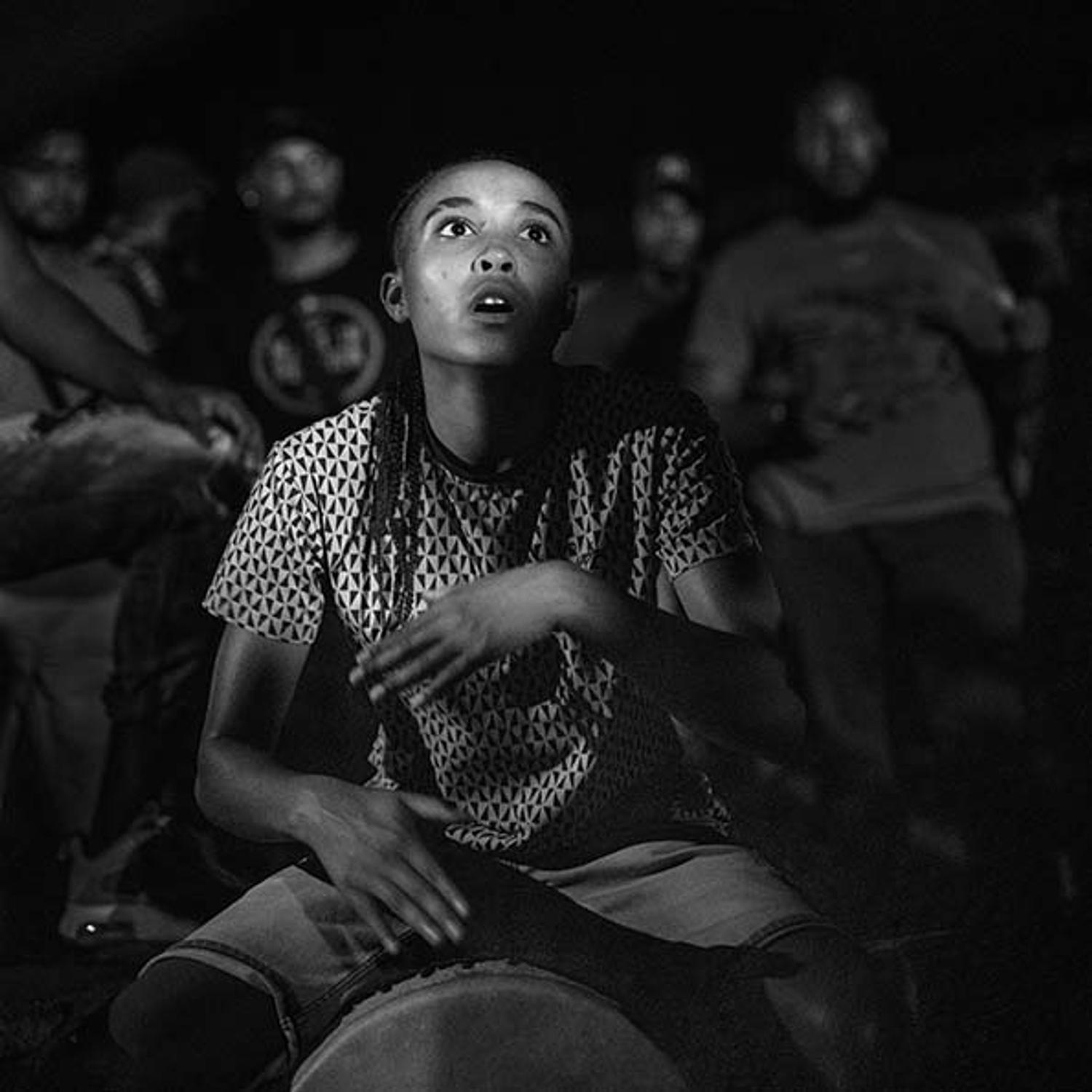
Ron maloya, Sin-Dni, February 2021
© 2021, Jean-Marc Grenier